True Leadership
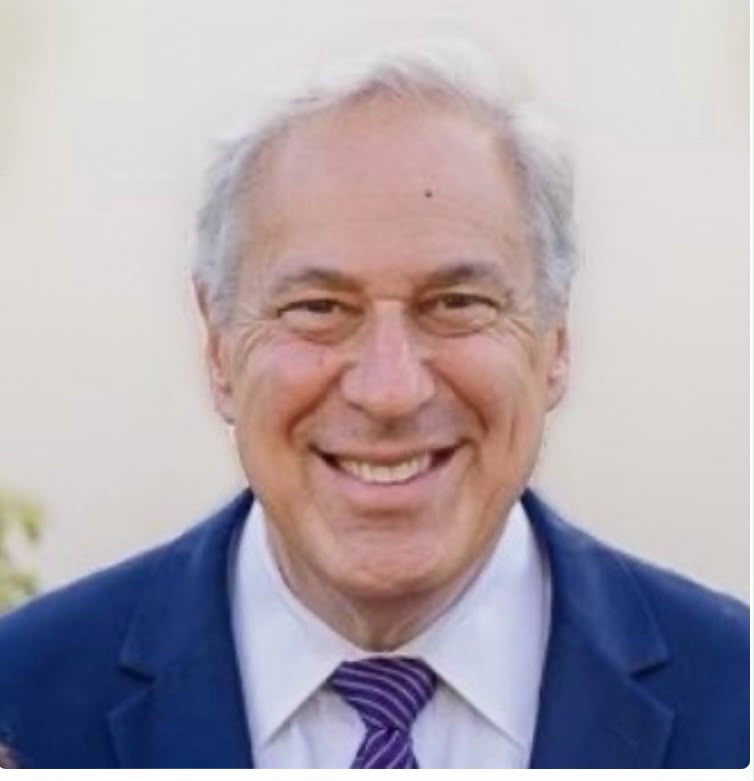
By R’ Mordechai Young
In high school, I once had a class where the teacher would reprimand me. I was innocent—I tell you! I had a classmate, Yaakov. During class he would lounge up on the windowsill. One time, as the teacher was marking me down for “disruptive behavior,” Yaakov suddenly woke up and said, “Is that Young? Put it on my tab!”
He had my back. I’m not sure it actually helped me, but it was a nice gesture, and he was funny.
In this week’s parashah, Tetzaveh, the Baal HaTurim makes a remarkable observation. Moshe Rabbeinu’s name does not appear even once throughout the entire parashah. Instead of saying, “Hashem spoke to Moshe,” it simply says, “And you shall command.”
The Baal HaTurim explains that in next week’s parashah, after the sin of the Golden Calf, Hashem wanted to destroy the nation and rebuild it from Moshe. Moshe responded, “If You forgive them, good. But if not, erase me from Your book that You have written.”
The Baal HaTurim cites the Gemara’s principle: “Klalas chacham afilu al tanai hi ba’ah.” The curse of a Chacham is fulfilled, even when conditional (and the condition was not fulfilled). In other words, the curse of a talmid chacham still takes effect even when stated conditionally.
In theory, a conditional statement should only take effect if the condition is fulfilled. In this case, Moshe said, “If You do not forgive them, erase me from Your book.” Since Hashem forgave the Jews, there was no need to fulfill the condition to erase Moshe’s name, but since the tzaddik was gozeir, Hashem just removed his name from the parashah. Therefore, Moshe’s name is absent from Parashas Tetzaveh.
The Gemara in Makkos 11a teaches this concept. It brings proof from Eli HaKohen, who adjured ShmuelHaNavi to reveal his prophecy, saying that if he did not, a curse would befall him. Shmuel told Eli the prophecy, so the condition was not triggered. Nevertheless, the consequences still occurred, demonstrating that the conditional words of a chacham carry weight regardless.
But there is a question. Why does the Gemara bring proof from Navi? We have a stronger proof in the Torah itself, from Moshe Rabbeinu saying, “If You do not forgive them, erase me from Your book.” Why not cite our case?
I once asked Rabbi Doniel Bak this question. He answered that although our case is in the Torah, it is not an unequivocal proof. The Gemara Rosh Hashanah 16b explains that “erase me from Your book” refers not to the Torah, but to the Book of Life. Since the verse is open to interpretation, the Gemara preferred to bring a clearer proof from Navi.
According to the Baal HaTurim and Rashi, who understand “erase me” to mean from the Torah itself, it is clear why Moshe’s name is missing in Parashas Tetzaveh.
But according to those who explain it as referring to the Book of Life, why then is Moshe’s name omitted from the parashah?
One might suggest that Moshe was the greatest Anav. Perhaps having his name removed from the Torah would not have been such a curse at all, but a blessing, since Moshe would prefer to not be in the spotlight.
But this is not about honor or publicity. Having one’s name mentioned in the Torah is not a matter of ego; it is an eternal zechus. To be omitted from the Torah is not humility; it is a loss of spiritual merit.
The Sforno (32:32) explains Moshe’s words, “Whether You forgive them or not, erase my merits from Your book of life and transfer them to Bnei Yisrael, so that they may be forgiven.”
According to this explanation, we can understand something profound. If Moshe’s presence in the Torah is itself an immense zechus, then by having his name removed from this parashah, that spiritual merit could be transferred to Klal Yisrael, helping to secure their forgiveness.
But if “erase me” refers to the Torah, how does that help save the Yidden? Why would Moshe offer that?
Rashi (32:32) explains that Moshe was concerned that if he did not fully advocate for the nation, people might say that he failed as a leader, that he did not beg sufficiently for mercy. Moshe was willing to sacrifice everything—even his own eternal standing—for the sake of Klal Yisrael.
The Gemara in Berachos 32a tells us that Moshe stood in prayer with total self-sacrifice, ready to give up his own existence for his people. This is what true leadership looks like. Like my classmate who said, “Put it on my tab,” except Moshe meant it completely. He was willing to put everything on his account for the sake of his nation.
May we recognize what a leader Moshe Rabbeinu was, and may his zechus continue to protect and shield Klal Yisrael.
Have a great Shabbos!
R’ Mordechai Young can be reached for comments at [email protected].