
Vayetze: Unheard Truths
Yaakov spent much of his life navigating accusations that shadowed his character and intentions. From his earliest years, he was labeled a deceiver, even when the facts supported a different account. Esav charged him with stealing the bechorah, though the exchange between them was straightforward. Esav acted in a moment of hunger and physical urgency, choosing immediate gratification over long-term responsibility. There was no coercion in the sale, no manipulation, only an impulsive decision by a brother who dismissed the spiritual and historical weight of the bechorah. These early misunderstandings set the stage for the next chapter of tension and accusation.
Guided by Rivkah, Yaakov entered the complicated moment of receiving the berachot. Rivkah recognized that Yitzchak was blinded by his love for Esav, a truth he had not fully grasped, and that his son’s choices and way of life were no longer aligned with the family’s unique mission.
Yaakov followed Rivkah’s instructions out of responsibility to the unfolding story of our nation. Yet even with his loyalty and sense of responsibility, Yaakov was once again portrayed as the offender and the wrongdoer. Yaakov’s path did not grow easier. Instead, the pattern deepened.
After securing the blessings, Yaakov fled to escape Esav’s anger. Welcomed into Lavan’s household, he worked seven years in order to marry Rachel. The Torah describes these years as passing quickly because of his deep affection for her. Yet on the night of the wedding, he was misled. Lavan switched Leah for Rachel and then defended the act by appealing to a local custom that younger daughters do not marry before older siblings. Once again, Yaakov found himself facing a situation in which others misled him while claiming the moral high ground.
Despite this duplicity, Yaakov continued to work for Lavan for another fourteen years. Throughout this period, Lavan changed the terms of Yaakov’s employment repeatedly, always angling for advantage. Wages were shifted without prior agreement. Ultimately, when Lavan imposed narrow and unrealistic terms, restricting Yaakov’s earnings to the offspring of speckled, spotted, ringed, or darkened animals, Yaakov accepted the new arrangement. He continued to work with consistency and integrity. Through careful management, diligence, and Hashem’s Siyata Dishmaya, he succeeded despite the inequitable structure of the deal.
Eventually Yaakov realized that he could no longer remain in Lavan’s home. Subtle indications of tension began to surface. Lavan’s sons voiced jealousy over Yaakov’s success. Rumors circulated that Lavan resented him. Recognizing the change in atmosphere and understanding that remaining longer would jeopardize his family, Yaakov chose to return to the home he had left decades earlier.
But Lavan pursued him, overtaking him in anger. He charged Yaakov with stealing everything: his daughters, his grandchildren, his property, even his pagan idols. The breadth and absurdity of the accusations revealed their true nature: they were not rooted in evidence but in resentment and a loss of control.
Finally, Yaakov found his voice and answered with quiet strength. He could no longer absorb unfounded charges in silence. For years he had restrained himself while others cast blame and allowed rumors to swirl around him. Now he drew a line and stood his ground.
He carefully documented his years of labor: nights of cold, days of heat, months of vigilance. Throughout his service, he guarded every animal with care. None were taken by predators, none disappeared without explanation. He absorbed losses that were traditionally the employer’s responsibility. He also dismissed the accusation that he had stolen Lavan’s idols. Such objects held no meaning for him or for his family.
His record was clear. Lavan’s accusations collapsed under their own falsehood, exposed as pure fabrication.
Yaakov’s denial was simple and straightforward, expressing both his innocence and his values. He spoke with unadorned clarity and unwavering conviction.
You would think that Lavan would see the light and acknowledge Yaakov’s integrity. Yet despite the clarity and strength of Yaakov’s explanation, Lavan offered no response. He did not concede, nor did he acknowledge the facts. His silence signaled neither agreement nor reconsideration, only indifference to the truth.
They drafted a treaty, but it reflected distance and suspicion, not genuine reconciliation. Lavan imposed conditions that were entirely unnecessary, insisting that Yaakov promise not to harm his daughters and not to cross the boundary they had set. Yaakov had never contemplated either of these behaviors.
In the end, Yaakov’s efforts to state his case and defend his record proved fruitless. He had spoken with honesty and precision, but Lavan did not even acknowledge his words. His explanations were left unanswered and unacknowledged.
Yaakov had the right to articulate his case. Unfounded accusations should never be ignored. Truth must be spoken with clarity and with courage.
Yet despite his best efforts to speak plainly and truthfully, Yaakov discovered that even the most careful and honest defense cannot sway someone who has no interest in listening. Bias, resentment, and fixed narratives form a barrier that facts cannot penetrate. Nothing Yaakov said (despite his sincerity and despite the accuracy of every word) could move Lavan, whose hostility had already eclipsed any willingness to hear.
This all sounds too familiar. Our people have faced an unrelenting campaign of misinformation and propaganda. False narratives, often backed by powerful financial and political interests, seek to undermine Israel’s legitimacy and cast us in a negative light. Modern technology enables lies to circulate with unprecedented speed. Claims that bear no resemblance to reality nevertheless shape public discourse.
Our responsibility remains clear. We must respond. We must articulate our right and our record, our history and our ethical conduct, with accuracy and integrity. We must invest effort, through diplomacy, education, advocacy, and public messaging, to clarify distortions and restore truth. These efforts matter. Every false charge we dismantle averts future harm. Each voice in the public arena that confronts slander and pushes back the shadows of distortion acts with quiet heroism to defend our people and our honor.
However, we must also remain realistic. Some narratives are not born of misunderstanding but of long-standing prejudice. Antisemitism is ancient; it lingers in the memory of nations and is carried through generations. Clarity and communication are indispensable, yet they cannot on their own uproot biases that have been cultivated over centuries. Even with our most determined efforts to expose lies and confront slander, the hatred, envy, and distortion will not disappear entirely. We must walk the narrow line between the noble task of responding and the naive hope that we can fully subdue this dark inheritance.
Too much fixation on convincing others can distract us from challenges that are more internal and often more important. After Yaakov fails to sway Lavan and returns to Israel, he is met by a cascade of inner crises. The simmering tensions between his wives and his children first erupt in the violent encounter with the people of Shechem. They surface again, later in the tragic sale of Yosef into Egyptian bondage.
While Yaakov was absorbed in the painful struggle to defend himself against Lavan, a struggle he never fully won, other urgent needs in his own home may have remained unattended. Sometimes the battles we fight on the outside blind us to the quiet fractures forming within.
We speak the truth because it is the right thing to do, not because we assume it will immediately reshape the world. At the same time, we must be careful that this effort does not eclipse the quieter but equally urgent challenges unfolding within our own home. n
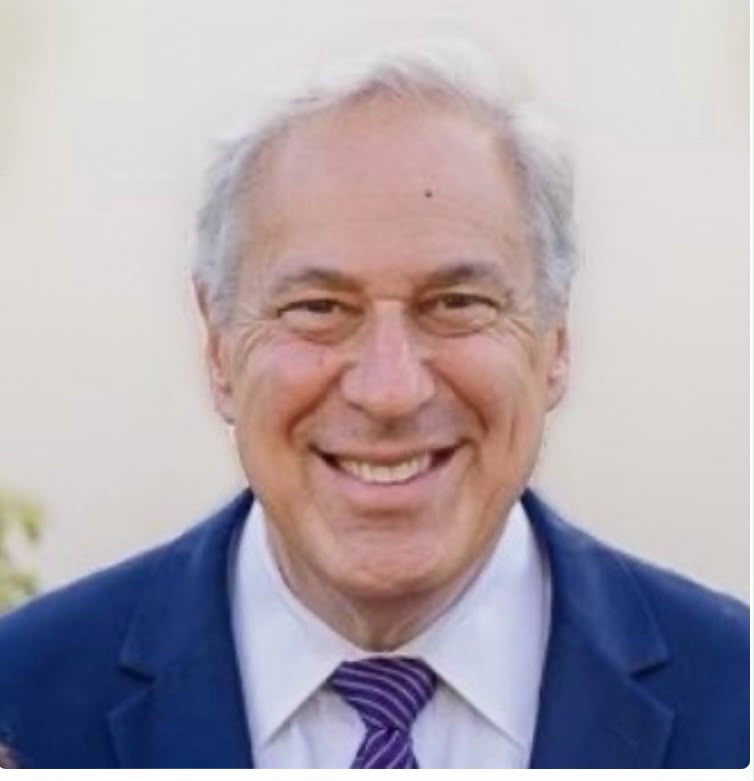
Rabbi Moshe Taragin is a rabbi at Yeshivat Har Etzion (Gush), was ordained by YU and has an MA in English literature. His books include “To Be Holy but Human: Reflections Upon My Rebbe, HaRav Yehuda Amital” at mtaraginbooks.com.