
What Rabbi Shimon Learned in the Thirteenth Year
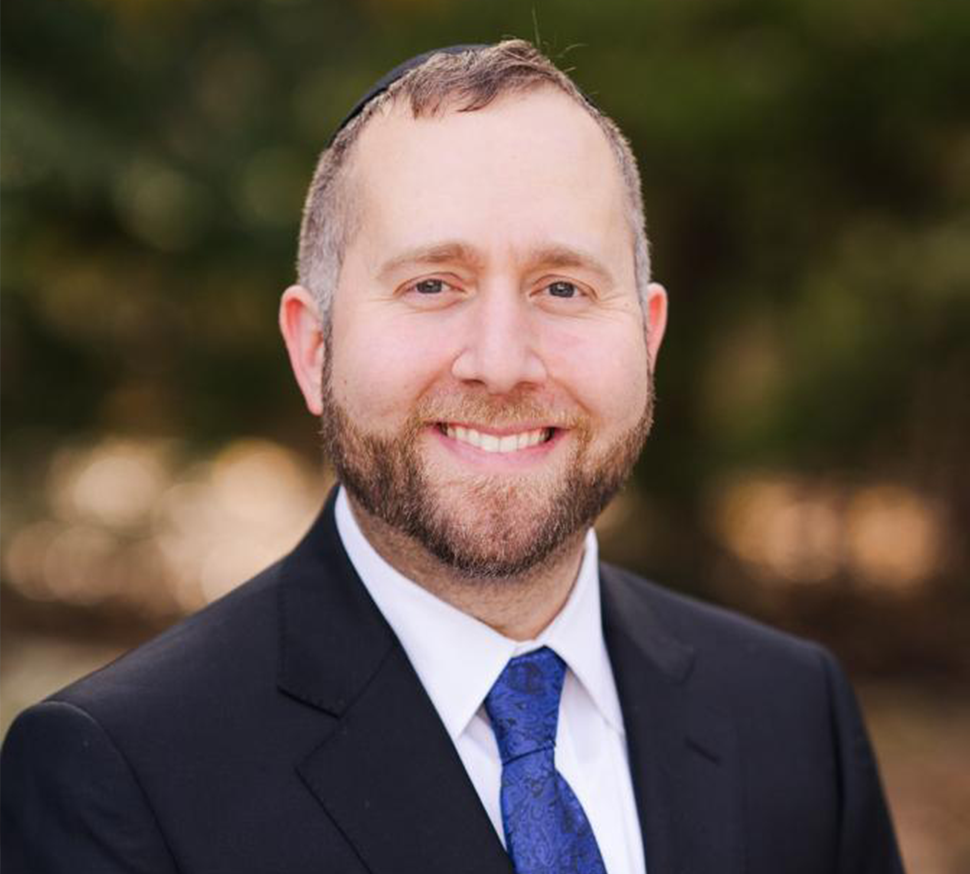
By Rabbi Benny Berlin
Everyone knows the story of the cave. Rabbi Shimon Bar Yochai fled the Roman authorities and hid for twelve years with his son, sustained by a carob tree and a spring of water (Shabbos 33b). When he emerged, his gaze was so intense that whatever he looked upon caught fire. He could not bear the world as it was. Farmers plowing their fields, merchants going about their business, ordinary people living ordinary lives, all of it seemed to him a betrayal of what we could be. Hashem sent him back, saying, “I did not create My world for you to destroy it.” One more year in the cave.
When he emerged the second time, something had fundamentally changed. He saw an old man running through the marketplace on Friday afternoon carrying two bundles of fragrant myrtle for Shabbos, and instead of burning him up, he marveled. How beautiful. A Jew, in the middle of an ordinary week, turning the physical world itself into something holy. What happened in that thirteenth year?
During those first twelve years, Rabbi Shimon was immersed in the revealed dimensions of Torah, Nigleh, Gemara, and halacha. He emerged as a towering genius who could not comprehend how anyone would spend a moment on anything else. If Torah is the only thing that matters, then plowing is a betrayal. Planting is a waste. Every minute not spent in the beis midrash is a minute lost.
The thirteenth year did not add information. It changed vision. The number twelve represents a world of parts, the twelve shevatim, a reality experienced in fragmentation. Thirteen is the gematria of echad, oneness. In that thirteenth year, Rabbi Shimon stopped seeing a divide between the holy and the mundane, between Torah and life. He began to see that the divide itself was the illusion.
This reframes a well-known tension in his own teachings. In Brachos 35b, Rabbi Shimon insists that one who involves himself in plowing and planting will inevitably lose his Torah. You cannot split your ultimate commitment between Torah and worldly pursuits, because each one demands to be primary. Yet in Menachos99b, he says that even one who recites Shema in the morning and at night fulfills “lo yamush sefer haTorah hazeh mipicha,” “this book of the Torah shall not depart from your mouth.” One statement demands total immersion, leaving no space for anything else. The other seems to define the obligation so minimally that even a brief daily connection is enough.
The Maharam Shik resolves this with a single shift. It depends entirely on the inner life of the person. If a Jew says Shema with real kabbalas ol malchus Shamayim, with a living awareness of Hashem that carries into everything that follows, then the plowing is not separate from Torah. It is Torah. One’s work becomes “bechol derachecha da’ehu,” knowing Hashem in all your ways, which the Gemara in Brachos (63a) identifies as the principle upon which the entire body of Torah rests. But if that awareness is absent, then the plowing will swallow everything. You are serving two masters.
This is also why Rabbi Shimon rules that a davar she’eino miskaven, an unintentional act, is permitted on Shabbos (Shabbos 29b). Two people can perform the exact same action. For one it is mundane. For the other it is holy. One person can be desecrating Shabbos while another is not. It all depends on the intention. The difference lies not in the act, but in the consciousness brought into it.
The Koznitzer Maggid, quoted in Shomer Emunim, captures this through the phrase avodah tama (Yoma24a), a complete service. Most people live with a quiet split. I eat so I can learn. I sleep so I can daven. The physical is always just a way to get somewhere higher. But the thirteenth year revealed something deeper. The eating itself can be avodas Hashem. The sleeping itself can be avodas Hashem. The ordinary fabric of life is not just preparation for holiness. It is holiness. This is codified in Shulchan Aruch (Orach Chaim 231), which teaches that even the most ordinary acts can be directed toward serving Hashem, when done for the sake of Heaven.
Rav Aharon of Karlin finds this hidden in the pasuk “mibsari echeze Eloka” (Iyov 19:26), from my flesh, I will perceive G-d. From Rabbi Shimon’s Torah, a person learns how to find Hashem not despite the physical world, but within it.
This Lag BaOmer, Meron was quieter than usual. Authorities capped attendance to a fraction of what it has been in past years for security concerns. The mountain that normally holds hundreds of thousands was subdued. The hadlakos were limited. The dancing was restrained. At first glance, it felt diminished, a fire burning lower than it should.
Perhaps this is the thirteenth year.
Most of us did not go to Meron this year. We lit a bonfire in a backyard or a parking lot, stood in a circle with our kids, and tried to feel something. And if we were paying attention, if we brought the right awareness into that ordinary moment, we realized that the presence we brought to it was the whole point. Because that is what Rabbi Shimon Bar Yochai spent a thirteenth year trying to show us. The light of Lag BaOmer was never only on the mountain. It lives in whatever space a person makes holy by showing up fully present. Rabbi Shimon spent twelve years discovering that Torah is everything. He spent a thirteenth year discovering that everything can become Torah.
The mountain was quieter this year. And for a generation that has learned to find kedushah in the ordinary, perhaps no Lag BaOmer has ever felt more authentic.
Rabbi Benny Berlin is the rabbi of BACH Jewish Center in Long Beach, New York. For more information, visit BACHLongBeach.com.