
The Real Deal: Remembering HaRav Itamar Schwartz
By: Menachem Poznanski
I only met HaRav Itamar Schwartz twice. I won’t pretend I knew him. But his sefer, Bilvavi Mishkan Evneh, changed my life. With his untimely passing, I would like to share what this tzaddik meant to me and, I suspect, what he meant to so many other seekers like me.
I found Bilvavi at a time when I was lost, spiritually caught between worlds, and in sore need for direction. My friend and mentor, Reb Yudi Wiener, pointed me to a series of shiurim that HaRav Moshe Weinberger was giving on the sefer. Right away, the sefer struck me. It speaks simply and matter-of-factly. It is deeply practical, teaching how we can each build what I call a “conscious contact” with Hahem. In it, I found a familiar language of spirituality that emerged from authentic Torah scholarship that explained these concepts in a down-to-earth fashion that speaks to our generation.
The sefer teaches the importance of acknowledging our feelings, even our frustrations, with regard to our relationship with Hashem. This is what true emunah is: a real relationship with G-d. That relationship has room for gratitude when we experience blessings, and frustrations during darker times. Hashem is there for us through all of it, carrying us even when we are most disappointed.
It was obvious that the author had worked hard on himself. HaRav Schwartz doesn’t just teach, he invites you to join him on a journey to meeting G-d in a very real way. The sefer had such a great impact on me that my notes on it eventually evolved into my book. More than anything, Bilvavi was the opening of the door for me to Chassidus and the wider world of Penimiyus HaTorah.
The first volume was published anonymously. For a long time, no one knew who the author was and there was plenty of speculation. We believed he was a hidden tzaddik. At the time, I joined a small group of fellow students of Rav Weinberger, and we learned the author’s teachings together. Without him knowing, the author of Bilvavi was transforming our lives in a tangible way, and we pined to find out his identity.
Later, when he revealed himself to the world and I heard he was visiting America, I worked hard to get a meeting. I had all sorts of ideas about what our meeting would be like. I assumed it would be earth-shattering and change my life.
In actuality, the meeting was quite difficult. At the time, he spoke no English and my Hebrew was far too weak. I couldn’t share with him what his work had done for me and I couldn’t ask the questions I’d longed to ask. I couldn’t find the answers I was seeking.
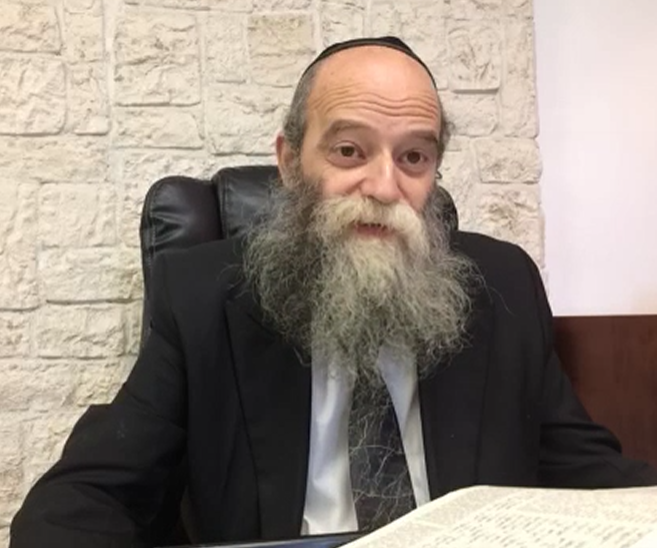
But what struck me was how ordinary he seemed. He was known as a monumental talmid chacham, yet here before me was a man you might pass on the streets of Yerushalayim or Bnei Brak without a second glance. People said he had never read a newspaper his whole life. And yet, here before me stood a man whose writings spoke to a person like me (in Cedarhurst). On the surface, you would think we had so little in common that he couldn’t understand someone like me. Yet he understood.
He was calm, kind, and showed real presence. He gave me a berachah and I was shown out. I won’t call it a disappointment, but it wasn’t what I expected. I left wanting more.
Years later, I was working at a program at Yeshiva Sh’or Yoshuv for young men in recovery. These boys wanted time in yeshiva, but were not ready yet to commit to a full schedule. We ate breakfast, learned together, and tried to strengthen whatever each boy was working on in his recovery and his life.
We began learning Bilvavi together, and many of the boys loved it. When Rav Schwartz was visiting the United States, I asked his shamash if he might speak to the boys and he agreed.
Twenty or thirty boys filled the room. He sat in front, speaking in Hebrew, and one of the rebbeimtranslated. When the Rav began to speak, he said something none of us expected. He expressed that he felt a strong kinship with the group. Although he had rarely done so in public, he wanted to tell us his own story: what led him to write that sefer.
He told us how he grew up in Israel and went through the yeshiva system as a studious, obedient boy who always did the right thing. He rose to become a prominent student at Ponevezh, learning day and night, with a real future in the Torah world ahead of him. Then, one day while sitting in the beis medrash, it struck him: He spent all his time learning Torah, learning about Hashem, yet had no real relationship with Hashem.
It shook him to his core. Right there, he resolved to go out of his way to do whatever it took to find a real relationship with Hashem. He told us it took time and there were ups and downs, and it required an open mind. He stressed that he never read a secular book of psychology or spirituality, or even a newspaper, but he was open to the whole breadth of Torah, and it led him to Penimiyus HaTorah. He didn’t just study the teachings; he looked for the experience of Hashem that he had missed within them.
He shared with us that the first part of Bilvavi Mishkan Evneh came out of that search, and it transformed his life. He wanted us to understand that he was serious. He really did have a relationship with G-d. The Ribbono shel Olam lived with him moment to moment, not in some fantastical or dramatic way, but simply and authentically. Looking at this calm, unassuming man, we could see it. He had presence. He walked with Hashem.
People tell me I’m a good judge of character. What I want to say about this great tzaddik with all the humility I can muster is that beyond being a tzaddik, a great Rav, and a great scholar, HaRav Itamar Schwartz was a real person, and he knew how we feel.
His passing is a great loss for all of us, for everyone who seeks an authentic relationship with Hashem. Above all, it’s a loss for those of us who have learned so much and still feel something is missing. HaRav Schwartz’s teachings affirm to us that this feeling is okay. It’s normal. And it’s part of the process. If you can open your heart to Penimiyus HaTorah, to Chassidus, and to mussar, and truly invest yourself, it can change your life. And when it does, it will also change the lives of the people around you as well. If it can make me feel understood, it can to others too. It can show anyone who picks up and learns the sefer that he’s not alone in the world, that he has a place in Torah, and with Hashem. Yehi Zichro Baruch.
Menachem Poznanski is the founder and director of The Living Room, the Our Place recovery program for young adults with substance abuse issues.