The Child On My Zaidy’s Shoulders
By: Yankie Goldman
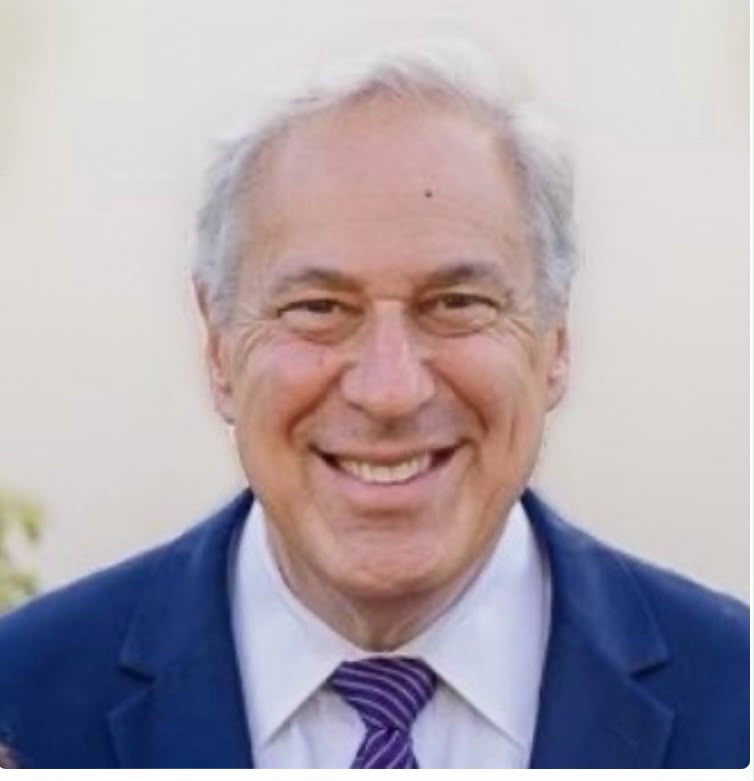
With the passing this week of Abe Foxman, longtime national director of the Anti-Defamation League, who dedicated his life to fighting antisemitism, I found myself thinking again about an extraordinary story that connected him to my own family.
In postwar Vilna, on a Simchas Torah after the Holocaust, a young Jewish soldier lifted a blond-haired child onto his shoulders and danced.
For decades, each man told the story from his own perspective.
Neither knew they were telling the same story.
The soldier was my zaidy, Rabbi Leo Goldman.
The child was Abe Foxman.
Like many stories born from the ashes of postwar Europe, it almost sounds too symbolic to be real. Yet for my family, it was a story we heard for years, long before anyone knew the identity of the little boy at its center.
My Zaidy would describe returning to Vilna after the war. European Jewry had been shattered. Entire communities had vanished. The once-great Jewish city had been devastated, with only fragments of its Jewish population surviving. Yet somehow, on Simchas Torah, Jews still gathered to celebrate.
There were no Torah scrolls left in the synagogue.
The Nazis had destroyed nearly everything.
So the surviving Jews danced with what remained—with memory, with one another, and with hope for the future.
Among those who entered the synagogue that night was a small blond-haired boy accompanied by his father. The child hardly looked Jewish. My zaidy approached the man and quietly asked, “Is this child Jewish?”
The answer was yes.
My Zaidy later recalled responding, “I have traveled thousands of miles without seeing a Jewish child.”
Then he lifted the boy onto his shoulders and danced with him through the synagogue during the hakafos.
Years later, my Zaidy explained the deeper meaning of that moment. There were no Torah scrolls left to dance with, he said. So he looked at the little boy and essentially told him: You are the Torah scroll now. You are the future of the Jewish people.
To my zaidy, the child represented Jewish survival itself.
For years, he told the story of that Simchas Torah night. Eventually, it even inspired “The Man from Vilna,” the moving song by Abie Rotenberg, based on my Zaidy’s recollections of that moment.
After the war, my Zaidy went on to become a beloved rabbi in Detroit for more than sixty years. He touched and influenced thousands of people from all walks of Jewish life. To many, he was not simply a congregational rabbi, but a rabbi for the entire community—someone who carried warmth, dignity, compassion, and a deep sense of responsibility for every Jew he encountered.
Looking back now, it feels fitting that the same man who would spend a lifetime strengthening Jewish souls also instinctively recognized the significance of one small Jewish child in a shattered synagogue after the Holocaust.
But there was another side to the story.
Long before Abe Foxman became one of the most recognized Jewish leaders in America and the longtime national director of the Anti-Defamation League, he was a hidden Jewish child trying to rediscover who he was after the Holocaust.
As a very young child during the war, Foxman’s parents made the impossible decision that so many Jewish parents were forced to make in Nazi-occupied Europe: in order to save their son’s life, they had to give him away.
They entrusted him to the care of the family’s Catholic nanny in Vilna, hoping the separation would keep him alive while Jews were being forced into ghettos and deported. During those years, the little Jewish boy was raised publicly as a Catholic child. He was baptized, given a Christian identity and name, and taught the customs and rituals of the Church as the world around him descended into catastrophe.
Miraculously, his parents survived the war and found their son again. But the child they recovered no longer understood himself to be Jewish.
Foxman later recalled that he instinctively crossed himself when passing churches and knew to kiss the hand of a priest. He remembered hearing the word “Jew” used as an insult without understanding why it applied to him.
His father understood that reconnecting his son to Judaism could not begin merely with explanations. It had to begin with belonging, pride, warmth, and joy.
So on Simchas Torah after the liberation, he brought his son to synagogue in Vilna.
The building itself still carried the scars of destruction, but inside there was singing, dancing, and surviving Jews celebrating with fierce determination.
Then came the soldier.
Foxman would later describe how a Jewish soldier in uniform lifted him onto his shoulders and danced with him through the synagogue. In later years, he spoke about that moment as one of the experiences that helped awaken his connection back to Judaism after the trauma and confusion of the Holocaust years.
For decades, my Zaidy told the story of the child.
For decades, Abe Foxman told the story of the soldier.
Neither realized they were speaking about one another.
Then, more than sixty years later, an Israeli researcher heard Foxman recount the story at Yad Vashem and began searching for the identity of the mysterious Jewish soldier. That search eventually led to “The Man from Vilna,” and from there to Rabbi Leo Goldman.
In 2010, the two men finally reunited.
Each had carried the memory for a lifetime.
In October of 2023, when a cousin of mine got married, I reached out to Abe Foxman and invited him to join us at a sheva berachos held at Congregation Beth Abraham, in Bergenfield, New Jersey only about a block from where he lived.
And he came.
Standing before our family, Foxman personally retold the story of that Simchas Torah in Vilna—the ruined synagogue, the singing, the dancing, and the Jewish soldier who lifted him onto his shoulders as a child after the Holocaust.
Hearing him tell the story in person was profoundly moving. What had long existed for me as family history suddenly became something living and immediate. I realized I was not simply hearing about Jewish memory: I was witnessing it being passed from one generation to another.
There was something extraordinary about hearing these two perspectives finally converge: my Zaidy’s memory of the child, and Foxman’s memory of the soldier.
What makes the story so powerful is not merely that two men reunited after sixty-five years. It is what the story represents.
A hidden child survivor reconnecting to Judaism.
A Jewish soldier who had survived war and loss lifting that child onto his shoulders like a living SeferTorah.
A ruined synagogue still filled with dancing.
And generations later, the story still being told.
The Nazis tried to destroy Jewish continuity. Instead, the dance continued.
For the world, Abe Foxman will rightly be remembered as a towering Jewish leader, a defender of the Jewish people, and a fierce voice against antisemitism.
For my family, he will also always be remembered as the little boy on my Zaidy’s shoulders in Vilna on Simchas Torah after the Holocaust.
May the memories of Abe Foxman and my zaidy, Rabbi Leo Goldman, be for a blessing. n
Yankie Goldman is a principal of LoHo Realty in Manhattan. He enjoys spending time in the Five Towns to visit his sister and her family. He counts his grandfather, Rabbi Leo Goldman, and Abraham Foxman among his greatest role models and sources of inspiration.