


Out There, In Here
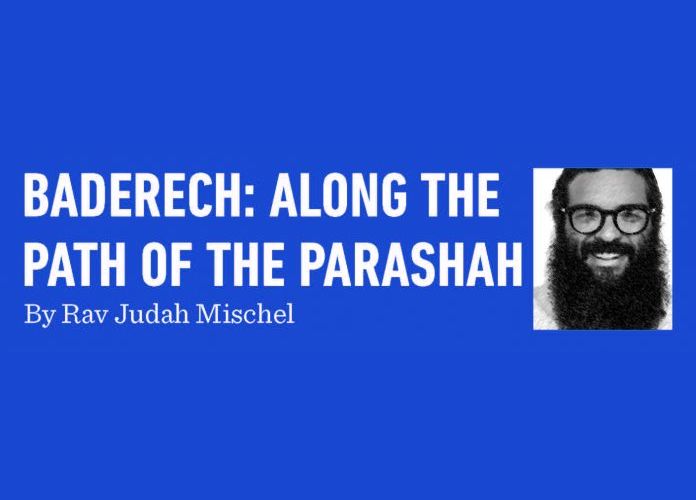
By: Rabbi Judah Mischel
Rav Shimshon Pincus, z’l, once related an extraordinary encounter he had with a granddaughter of the holy Chofetz Chaim, zt’l. She was already an elderly woman, recently emigrated from Russia, and was temporarily staying in a mercaz klitah, absorption center for new olim in the southern Israeli city of Beer Sheva.
Soon after WWI, she had left home as an idealistic teenager to attend university and was studying science and technology when she returned to Radin to visit her grandfather for the last time. With great emotion, the woman recalled the final conversation she had with her saintly grandfather:
“‘Zeide,’ she asked. ‘Why do you sit here all day in the finsternish of the shtetl, in the darkness of our small town? There is a big bright world out there of enlightenment and technological advancement. Just look outside! There are airplanes in the sky and no limits to where mankind can advance!’
“For a few moments, my holy grandfather gazed out of the window of his tiny study in his simple home in Radin, then looked at me intently and answered with both love and fiery conviction: ‘One day, Zei, they, with their enlightened technology will build airplanes and drop bombs that can destroy the entire world. Ubber mir machen menschen, but in here,’ he said, placing his hand on the wall of that holy room, ‘We are making people! Darling, do you hear? Mit Torah, mir machen menschen…’”
“Take a census of the sons of Gershon, of them too, following their fathers’ houses, according to their families” (Bamidbar 4:22).
The descendants of Gershon, the eldest of the sons of Levi, were charged with the care of the outer Mishkan, including the tent and its covering, doors and hangings. Rashi explains the straightforward pshat of our pasuk’s instruction: following the counting of Bnei Kehat, the Torah instructs all of those Bnei Gershon who are able to perform the service of the Mishkan to be counted.
Different terminology is used throughout Torah to describe counting: pekidah, sefirah, and also the term that is the name of our sidrah, “Naso,” which literally means “lifting up.” Our sidrah is read on the Shabbos following Shavuos. Rav Moshe Feinstein, zt’l, notes that every man, woman, and child was present at Har Sinai, and each one of us experienced revelation. At Sinai, we became “lifted up” or elevated. After the chag of Shavuos, too, we are different people. It follows to reason that we be “counted” again this week, after we have received the Torah. Matan Torah fills us with a renewed awareness that each one of us counts. We have come to believe in our potential for growth and ascension. The power of Torah has “built us up.”
The students of the Baal Shem Tov point out that the particular avodah assigned to Bnei Gershon on the outer elements of the Mishkan represents individuals who are “on the outs.” Those among us who have travelled some distance away from their spiritual home-base and tradition, can feel megorashim, or foreign to their identity and roots. This resonates with the meaning of the name Gershon itself: “a sojourner there.”
Reb Simcha Bunim of Peshischa, explains, however, that even those who see themselves as “Bnei Gershon” are also included in the census and are lifted up by being counted “following their fathers’ houses, according to their families.” Even those who have strayed and drifted away to sojourn in foreign territory, “following their fathers’ houses, according to their families” remain essentially connected to the Avos, to their whole ancestral line and to the collective family of Israel.
May we be inspired by the reverberations of Zman Matan Toraseinu, and may we be counted among the menschen who are aware of the power of our holy Torah to uplift and build us, no matter where we have sojourned.
Excerpted from Rav Judah’s upcoming “Baderech: Along the Path of the Torah” (Summer 2026/5786).
Rabbi Judah Mischel is Executive Director of Camp HASC, and Mashpiah of OU-NCSY. He is a member of Mizrachi’s Speakers Bureau (Mizrachi.org/speakers).