
Musings Of A Shliach From Montana
By: Rabbi Chaim Bruk
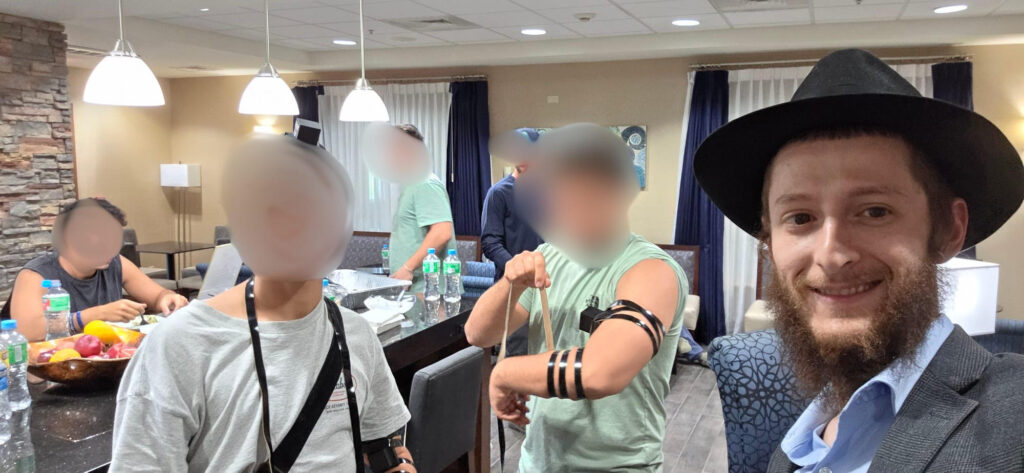
Rabbi Mendel Spiero laying tefillin with soldiers
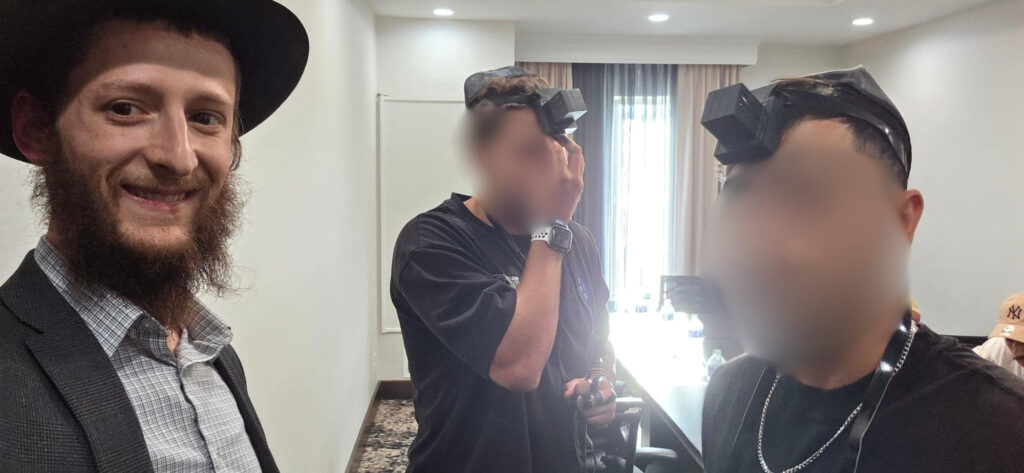
Rebbi Mendel Spiero with soldiers
Three times a day, we recite the berachah in the Shemoneh Esrei (Amidah) beseeching Hashem to take us back to Jerusalem: “Velirushalayim ircha—Return to Jerusalem Your City with mercy and dwell within it, as You declared, speedily establish the throne of David, Your servant, within it, and rebuild it soon in our lifetime as an eternal structure. Blessed are You, G-d, Who rebuilds Jerusalem.”
No matter where you may find yourself in the debate about modern Zionism and the more recent demand by some influencers that every Jew should move to Israel tomorrow, even before Mashiach comes, one thing is certain: Klal Yisrael’s yearning for all Jews to return to Eretz Yisrael with the coming of Mashiach and the building of the Third Holy Temple is foundational in Jewish belief and isn’t, chas v’shalom, secondary to being a Yid.
Thursday, July 2nd marks the 17th of Tammuz, one of the three fast days referred to by the Prophet Zachariah, and is the beginning of the Three Weeks leading up to Tishah B’Av. It was on this day that five devastating events happened to Klal Yisrael: 1) Moshe broke the Luchos (tablets) when he saw the Jewish people worshipping the Golden Calf in the desert. 2) During the Babylonian siege of Jerusalem, the Jews were forced to cease offering the daily Tamid sacrifices due to the lack of sheep. 3) Apostomus, a Greek general, burned the holy Torah. 4) An idol was placed in the Holy Temple. 5) In 69 CE, the walls of Jerusalem were breached by the Romans after a lengthy siege, and according to the Jerusalem Talmud, this is also the date when the Babylonians breached the walls of Jerusalem on their way to destroy the first Temple.
If thousands of years later we are still mourning the breach of Yerushalayim and praying for its rebuilding so we can return, it’s clearly important and worthy of our focus. Israel is not just a tourist destination or a place to attend yeshiva or seminary, it’s the Holy Land, a place of kedushah, of inner focus to align with its spirituality.You don’t have to serve as Israel’s spokesman, but a Jew should always exude a love and yearning for Eretz Yisrael and its holiness.
In this week’s parashah, Pinchas, we read about the daughters of Tzelafchad approaching Moshe and demanding a parcel of land in Israel since their father had died and they had no brothers. Moshe conferred with Hashem and indeed Hashem changed the law for all eternity, that when there’s such a case, a family of just girls, they indeed inherit a piece of land in Israel. This happened because these five women, Machlah, Noa, Hoglah, Milcah, and Tirzah were willing to speak up about their love for Israel. Not only did the women of that generation stand up against the Golden Calf episode, not only did they ignore the gossip of the spies and forge plans to enter Israel, they fought for an individual portion in Israel so they too could call Israel home in the most practical sense, which is land ownership.
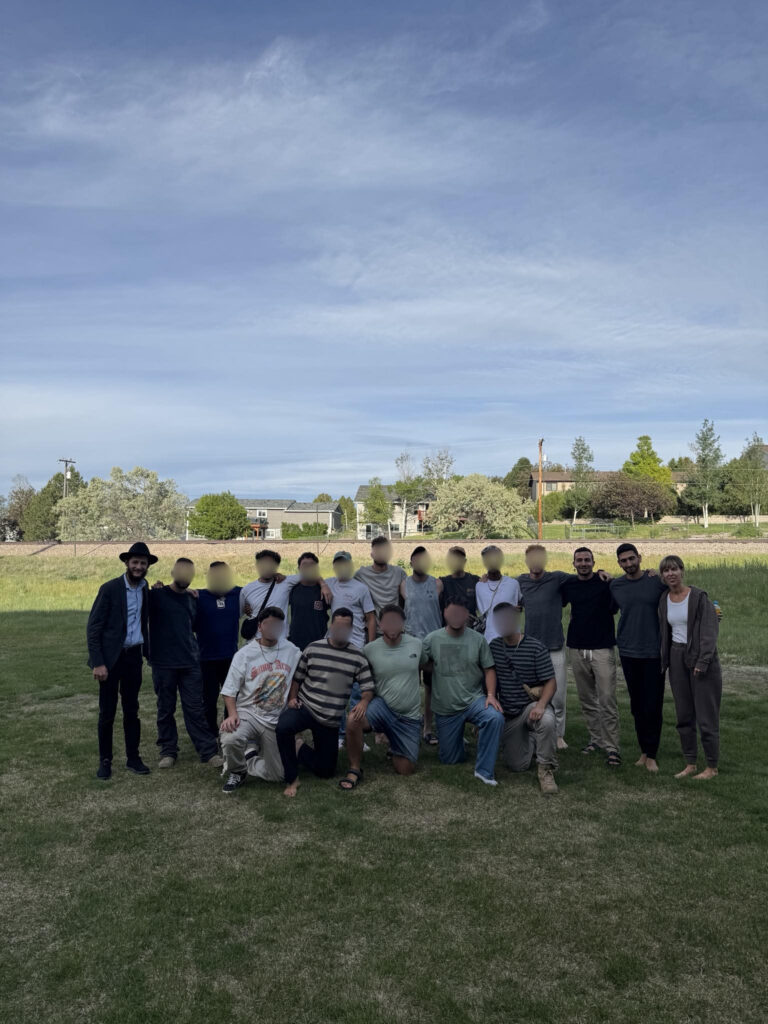
There is an incredible organization called Healing in Nature (HiN), run by a beautiful soul named Omri Barkin. They bring groups of IDF soldiers who experienced trauma to find healing in the wilderness of Montana. The fifty-one soldiers who arrived this month in two groups were welcomed in Great Falls by my colleague, Rabbi Mendel Spiero, who oversees the kashrus at Touro’s campus in town. With the help of generous donors, we provided the soldiers with a delicious catered kosher dinner when they arrived after their long trip from Israel to Montana. Reb Mendel also had the opportunity to lay tefillin with almost two dozen of them before heading out.
Somehow a rabid antisemite (who we know is not a Montanan but visiting from a neighboring state) found out that they were in the area and without permission, placed a sign in the local mom and pop store saying “X is hosting baby killers right now.” It’s uncertain how they found out where they were going to be, but what happened next is comforting and reassuring. The owner of the local shop posted this on his social media:
“To whom it may concern (you know who you are). Yesterday, we were astounded, furious, and disappointed in learning that someone hung a hate poster on our business—which is a privately owned building—as well as at several other locations around town and up the canyon. We didn’t think we’d ever have to say this, but turns out you proved us wrong, so we’ll say it nice and clear: HATE IS NOT WELCOME HERE. In a world that is wildly imperfect, but also wildly wonderful, we strive to show love, kindness, consideration, and understanding to our fellowman. The kind of propaganda that was placed on privately owned businesses and public locations yesterday (and was targeted at a specific group of people) was disappointing, disgusting, and shameful.
“So, to whoever was brazen enough to do this, shame on you. Truth be told, you must already feel shameful for your hateful beliefs, as you wore a ski mask for many of the postings you put in our community.
“Your hate is not welcome here. If you’re from here (and by golly we certainly hope you’re not), may you quickly realize that this isn’t a place for you to hang your hat (or your ski mask). And if you’re not from here (which we’re hoping you don’t call our sweet community home as we’d be disgusted to have any neighbors like this), this isn’t a place you want to come back to. This is a place where kindness wins, love prevails, and your type of hatred is not welcome.
May your heart be softened and may you have the day you deserve.”
We mustn’t hide our connection to Eretz Yisrael, we mustn’t chill our love for our homeland, we mustn’t ever give off the impression that we are Jewish without Israel, because our bond with Israel is embedded in every Jewish prayer, so much of our Jewish experience and Jew-haters shouldn’t be dictating how we practice our faith.
May the IDF combat veterans find space to heal in the Montana wilderness and may all those who suffer trauma receive a refuah shleimah.
Rabbi Chaim Bruk is co-CEO of Chabad Lubavitch of Montana and spiritual leader of The Shul of Bozeman. For comments or to partner in our holy work, e-mail [email protected] or visit JewishMontana.com/Donate.