
A Glatt Kosher Retirement
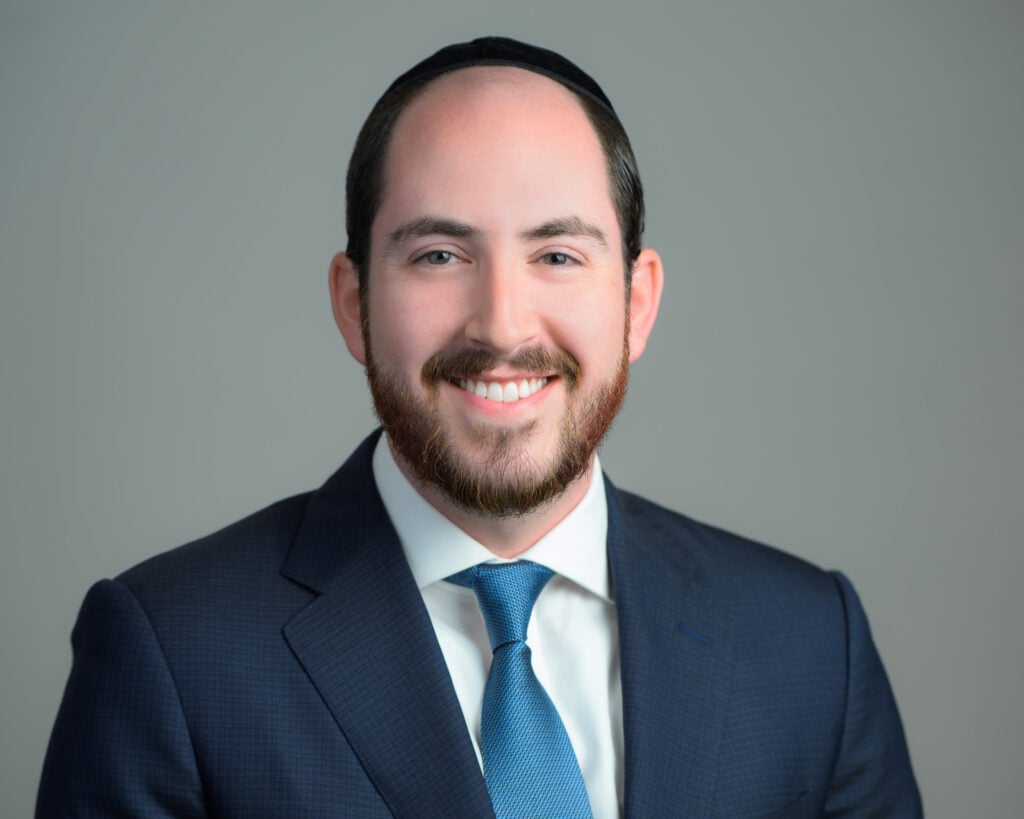
By: Jack Strulowitz
Every financial advisor’s website has the same stock photo of a silver haired couple on a bench, or playing golf, or walking barefoot on a beach. That’s the retirement dream they’re selling, and it’s a nice picture, but is it really how retirement looks for a typical Five Towns couple? I recall walking past the Chase bank in Cedarhurst and seeing a poster of a couple sitting across from a financial advisor holding their pet pig. The financial planning world isn’t built with our community in mind, and that’s part of why so many of us never engage in retirement planning at all. It feels like it’s for someone else, but it doesn’t have to be. It might just look different for us.
I recently sat with a couple in their mid-60s who came to me looking for help with retirement planning. With combined income above $500,000 and roughly a million dollars in a 401(k), on paper it sounded like they were in great shape. But in practice, they were nowhere near able to retire.
Here’s the math. A common rule of thumb is that you can safely withdraw about 4% of your retirement savings per year without running out. Four percent of a million dollars is $40,000. Add Social Security and maybe you’re looking at $70,000 to $80,000 a year for household income. For a couple that’s been living on half a million in one of the most expensive communities in the world, that’s an 85% pay cut. That needs to cover your mortgage, property taxes, groceries, and medical bills, and that’s before helping any grandchildren, which this couple was doing. And that money needs to last 20, 30, maybe even more years. A million dollars sounds like a fortune until you divide it by the rest of your life.
So, how does a couple earning that kind of money end up with only a million saved? Because money in our community is an uphill battle at every stage of life. When you’re a young family, you’re on financial aid at your kids’ schools, but when you start earning more, you’re moved up the tuition scale until you’re paying full tuition. By the time your kids are grown and you think you might financially get ahead, your grandchildren are entering the picture and now you’re the family that can afford to help cover their tuition too. It’s not lifestyle creep in the traditional sense. It’s that the system is built to absorb whatever you earn. Nobody decides to fund their entire extended family until they’re broke. It happens one reasonable commitment at a time, like a wedding, an apartment, tuition, or camp, and after 10 or 15 years, you look up and realize there’s no exit plan.
A lot of people in our community are fine continuing to work, and there’s nothing wrong with that. They find meaning in it; they want to be there for their kids, and they’re not in a rush to stop. But the dangerous assumption baked into that mindset is that you’ll always be able to work. A health scare, a layoff, or a business downturn can change everything overnight and retirement can show up at your door whether you planned for it or not.
And for business owners, established doctors, attorneys, and other professionals, retirement doesn’t have to mean walking away completely. A lot of what we do is help people build succession plans and restructure their businesses so they can stay involved without carrying the stress that was manageable at 40 but just isn’t anymore. A lot of people reach the point where they simply don’t want the weight of running everything day to day, and stepping back from that isn’t quitting. It’s being smart about the next chapter.
Here’s the part nobody talks about: retirement can actually be incredible. Imagine spending real, unhurried time with your grandchildren, or finally taking your health and fitness seriously in a way that a busy work schedule never allowed. You could volunteer at one of our wonderful local organizations, learn an instrument you’ve always wanted to play, or develop a skill or hobby you never had time for. You could finish Shas, or sit in on the incredible shiurim given by our community’s wonderful rabbanim, not rushed before or after work, but actually learning because you have the time. Retirement doesn’t mean doing nothing; it means finally having time for the things you pushed aside for 40 years.
But getting there takes planning, and sometimes that plan isn’t a spreadsheet or an investment strategy. Sometimes it’s an honest conversation with your adult children about what’s sustainable long-term. Not an ultimatum or cutting anyone off, just being open about reality so everyone, including them, can plan accordingly.
Taking care of yourself financially isn’t selfish; it’s the most responsible thing you can do for the people who depend on you. Retirement in our community may not look like the stock photos, but that doesn’t mean it can’t be something worth looking forward to. It might require some hard conversations with the people who depend on your income, and it might mean restructuring how you work rather than stopping entirely. There are more options than most people realize, and I’m always happy to help explore them. n
Jack Strulowitz is a Financial Advisor at Bernath & Rosenberg in Cedarhurst, NY, where he helps high–net worth individuals and families manage their investments and build comprehensive strategies for retirement, tax, and estate planning. For questions or to schedule a consultation, please contact [email protected] or 847-962-3352.
The opinions voiced in this material are for general information only and are not intended to provide specific advice or recommendations for any individual.
Securities and advisory services offered through LPL Financial, a registered investment advisor, member FINRA/SIPC.