An Unexpected Two Hours With Ambassador Mike Huckabee
Some meetings are, well, just that—a meeting. Then there’s what unfolded earlier this week in Jerusalem.
A Monday morning meeting at the U.S. Embassy between Ambassador Mike Huckabee and the co-founders of Israel’s Be A Mensch Foundation was scheduled to last just thirty minutes. Dr. Moshe Kaplan and Rabbi Mordechai Geduld planned to present the ambassador with a Be A Mensch Award in recognition of his steadfast friendship and service to Israel and the Jewish people.
A sudden internet outage, however, forced the meeting from the Embassy to a nearby Jerusalem office. What had been planned as a brief ceremonial visit quickly gave way to something far more meaningful: a relaxed, wide-ranging conversation that lasted nearly two hours.
As the morning unfolded, the discussion naturally traced the evolution of the Be A Mensch Foundation—from its beginnings more than a decade ago to its newest initiative aimed at strengthening Jewish and Christian Zionist students on American university campuses.
Dr. Kaplan began by recounting the organization’s origins.
The catalyst was one of the most painful episodes in Israel’s recent social history. Following the widely publicized harassment of young Naama Margolese in Beit Shemesh, Dr. Kaplan wrote Be A Mensch, a book calling for greater personal responsibility, civility, and mutual respect within Israeli society. When Rabbi Mordechai Geduld read the manuscript, he concluded that its message deserved more than publication. It needed to become a movement.
Together they founded the Be A Mensch Foundation.
Over the next twelve years, the organization expanded from the ideas contained in that first book into an ambitious program of social dialogue designed to bridge Israel’s religious, social, and ideological divides. Through carefully facilitated encounters, Be A Mensch has brought together secular and religious Jews, educators, students, military officers, professionals, community leaders, and others in conversations built upon the principles of shared responsibility, respectful dialogue, and national unity. Tens of thousands of Israelis have participated in these encounters, demonstrating that honest disagreement need not become lasting division.
The conversation with Ambassador Huckabee then turned to the aftermath of October 7—a tragedy that would profoundly shape the next chapter of the foundation’s work.
Recognizing that Israel faced not only physical destruction but also deep psychological and societal wounds, Dr. Kaplan drew upon the insights and perspectives of numerous writers and thought leaders in producing Extreme Trauma: October 7th as an Outlier in Human Potential. Rather than focusing solely on tragedy, the book explores the extraordinary resilience of individuals and communities confronted by unimaginable suffering and asks how a society can emerge stronger from profound national trauma.
Yet the founders explained that the book itself was never intended to be the destination.
Instead, it became the springboard for the foundation’s newest undertaking: ROC—Resilience on Campus.
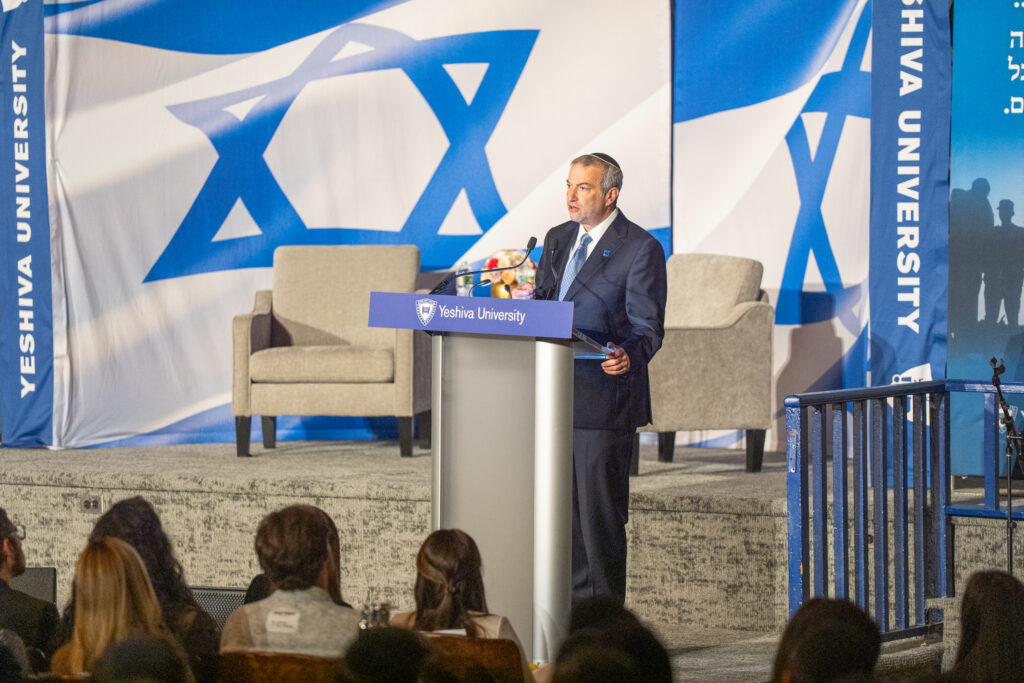
Introduced last month at the Israeli Embassy in Washington, the ROC initiative represents the Be A Mensch Foundation’s next step in addressing the challenges facing Jewish and Christian Zionist students on American university campuses. Drawing upon the principles explored in Extreme Trauma, ROC is designed to combat the effects of campus antisemitism by developing what speaker Shabbos Kestenbaum described at the Embassy launch as “an inner armor”, the resilience, self-regulation, and ability to remain focused under stress that enable students to respond thoughtfully rather than react emotionally. The goal is not simply to help students respond to campus hostility, but to cultivate the resilience and self-regulation that enable them to build meaningful relationships, represent Israel with confidence, and remain focused under pressure.
In accepting the Be A Mensch Award, Ambassador Huckabee underscored the very themes that had shaped the morning discussion:
“I’ve been very honored today to receive the Be A Mensch Award, and I’m delighted for that. But I’m even more grateful for the work that is being done by the Be A Mensch Foundation because the publication ofExtreme Trauma is an extraordinary milestone in helping not just Jewish, but also Christian Zionist students really understand how to combat the hatred and the bigotry that is hoisted against them, even on some of the most prestigious college campuses.
“The movement is designed not to cause people to curl up under the bed in a fetal position with fear, but how to face the day, face it with confidence and with a sense of purpose and direction. This is what we need. Not people who are afraid to leave their homes or to leave their personal space, but people who will go out, face the world—but more importantly, will change the world and never be afraid of it.”
As the meeting ended, Dr. Kaplan and Rabbi Geduld formally presented Ambassador Huckabee with the Be A Mensch Award.
By then, however, it had become apparent that the award represented something larger than ceremonial recognition. An internet outage no one at the Embassy had ever experienced before turned a thirty-minute meeting into a two-hour story of vision, resilience, and hope. n