




An Unusual Week
By: Larry Gordon

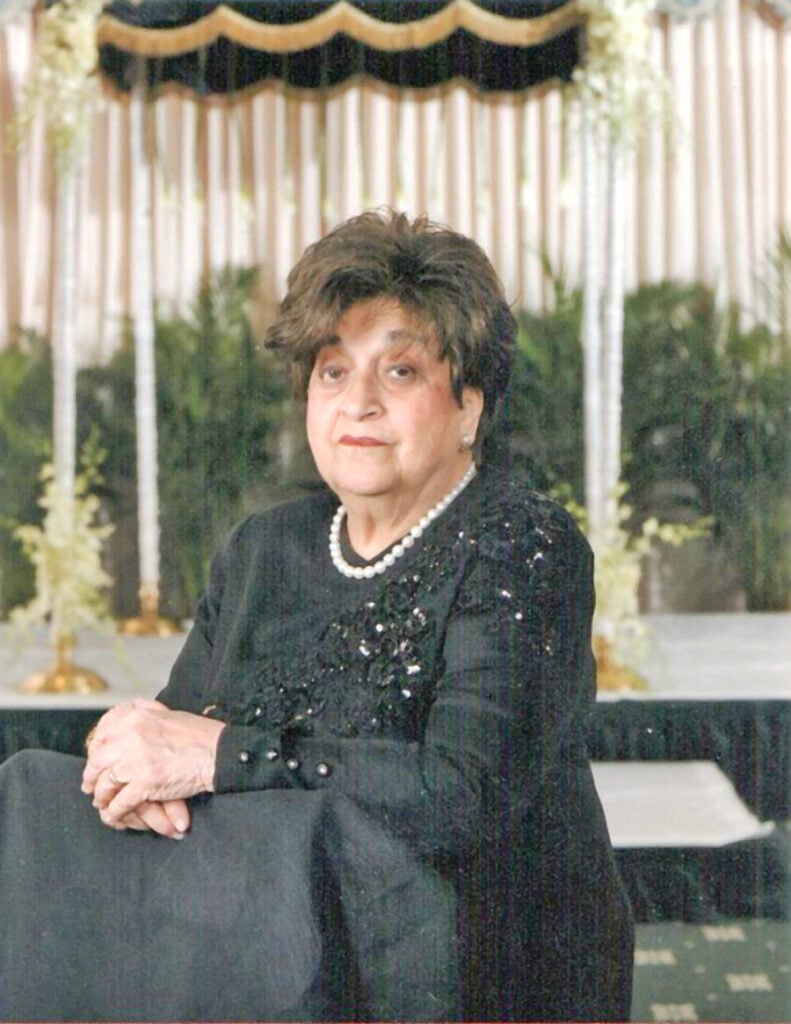
Mr. and Mrs. Nudel, a’h
This week we observed three major events which I’m fairly certain I’ve written about in the past, though perhaps not as a singular unit.
Here’s the important thing. It’s now eight years later.
This week, just before we went to press, we observed the 8th yahrzeit of my mother, Sara Rosa basAharon. Next week, on the 5th of Nissan, it will be the 8th yahrzeit of Esta’s dad, my father-in-law, Aharon Tzvi ben Moshe Asher. Sandwiched in between, our children, Nison and Shayna, will be celebrating their 8th wedding anniversary.
Today, my mom has four great-grandchildren named after her, mostly known as Rosie or Sora, and three other babies are named after my father-in-law, Aharon Tzvi. During his lifetime, no one called him by that name as is often the case. All his life—and he lived to be 95—he was known as Hershel.
Some things are different about this year. One is that I’m still saying Kaddish for my brother, Binyomin, who was niftar five months ago. He has three daughters who are obviously not saying Kaddish. I’m not exactly on my own as my brother Yossi, my nephew, and my brother’s son-in-law, Rabbi Yossi Bennett, are also saying Kaddish. So, in effect, Binyomin’s neshamah is covered from several directions.
As you may know, Nison and Shayna got married while I was sitting shivah. Today, eight years later, when I reflect on that experience, I feel the same thing I felt back then, which is uncertainty about how I would handle all that.
First, while my two brothers and sister traveled to Israel for the kevurah on Sunday afternoon, I stayed behind because my son was getting married during that week. Certainly, this was going to be a unique experience. I’ve recounted some of these details as they come to mind in no special order. I have to admit that over the first few days, I was in a bit of a daze wondering how all this was going to work out.
Upon reflection, I do recall a number of people visiting the shivah house that were not coming to the wedding, and before leaving, wished me mazel tov. And then a number of people at the wedding, especially at the “chosson’s tish,” in addition to wishing me mazel tov on the simcha, added in Hebrew, “May you be comforted among the mourners of Zion and Jerusalem.”
I’m not going to go out on a limb and say that it was a funny situation, but I think I can certainly characterize it as odd.
My mom passed away late on Saturday night. My siblings left for Israel the next afternoon. As mentioned, I stayed behind. Thinking back now, I suppose I could have gone with them as they were back by Tuesday morning. I’m still a little conflicted, but I think my wife and the chosson might have been uncomfortable with one of those whirlwind trips to Israel in context of the forthcoming Wednesday wedding.
And then there’s the matter of the emotional rollercoaster that is the definition of celebrating a wedding while sitting shivah for a parent. Additionally, it is the wedding day itself, Wednesday, that will always be etched in my mind.
My plan was to sit for half the day, then at 2 p.m. stand up, go upstairs to take a shower, shave, and somehow adjust my frame of mind, put on a nice crisp white shirt, nice tie, black suit, shiny shoes, and then head out to the ballroom to take pictures with the family.
The next morning, it was all somewhat surreal. Just as I took off that shirt with the torn collar on Sunday, I put that ripped shirt back on the next morning along with the same suit pants and jacket that were also torn at the lapel. After that, I was back downstairs in the living room nice and early in that low shivah chair that was much different and greatly improved from the one 27 years ago that I used to sit shivah for my father.
Back in 1989, the shivah chair that was provided to aveilim was just a square box that you could feel at the base of your back after a day. It was only years later that you were afforded the opportunity to sit on a more conventional chair, one that had legs closer to the ground.
The wedding was very festive. We had a great band led by Shloime Dachs and singing led by Benny Friedman. For the chuppah, Benny was joined by Eli Schwebel. Together the duo sang, “Im Eshkachech Yerushalayim—If I forget thee, O Jerusalem” in a riveting and emotional fashion that seems tailor-made for an authentic mourner like myself.
The wedding was extremely joyful as is the case in circumstances like this. Prior to the wedding, during the shivah period, there was some talk and even a bit of a debate about how I was supposed to celebrate. The funniest thing I heard was that I should wear sneakers instead of shoes at the wedding. That struck me as odd considering that many women and men change into sneakers as a matter of fact at a wedding for comfort.
In my case, I think the advice was to dispense with the wearing of leather shoes as we do on Yom Kippur and Tishah B’Av as a sign of aveilus. The day after the levayah, I spoke with Rabbi Lessman of Bnei Brak, who so long as R’ Chaim Kanievsky was alive would escort us into the encounter with R’ Chaim. It was at that point that I called Rabbi Lessman and asked him to inquire of R’ Chaim how I should conduct myself at our children’s wedding, which was a day or two away at that point. Rabbi Lessman called me back a few hours later to say that according to R’ Chaim, the simcha of the chosson and kallah should not be diminished even to the slightest degree, and that is the way it was, baruch Hashem. Happy anniversary, Shayna and Nison.
So, we got through the wedding with the next stop being sheva berachos, and in particular Shabbos sheva berachos. I attended the Shabbos sheva berachos considering that generally speaking we do not mourn on Shabbos.
That was all well and good and I was perfectly prepared to not participate in the Sunday or Monday night sheva berachos even though I was no longer sitting shivah, but was still in the midst of the Shloshim.
That was until Esta called her mom after Shabbos and learned that during the day, her father, who was not well and was a resident in a nursing home, had passed away.
Change of plans.
There was a levaya on Sunday and my brothers-in-law traveled to Israel for the kevurah, which was also in Bet Shemesh like that of my mom the week before and my dad’s 27 years prior.
On Sunday morning, before we left to go to Borough Park for the levayah, the Misaskim truck showed up to pick up the chairs and other shivah-related material. I opened the door but had to tell the young man that we would be needing the chairs, table, and even pushka boxes for another week. I’m fairly certain that he might have had an experience like that before, but it could not have been too often.
My father-in-law was 95 years old, but had been ill for a few years. Like my mother-in-law, he was a Holocaust survivor, the only member of a large family. He managed to survive with his yeshiva, Bais Yosef, in Siberia. In 1946, he left with the yeshiva to the U.S. While on the ship crossing the Atlantic, the rosh yeshivaand the rebbetzin decided that since neither of them had any family left, they should get married when and if the ship docked in Paris for a few weeks.
At the time, my father-in-law was 24 years old; my mother-in-law was 16. Their families knew one another from the Polish shtetel where they lived, Tishevetz.
The rest is history. Esta began sitting shivah for her father that Sunday afternoon. I was eight days into my aveilus at that point, but since I was up from the shivah, I attended the sheva berachos on Sunday night.
It was an unusual week.
Read more of Larry Gordon’s articles at 5TJT.com. Follow 5 Towns Jewish Times on Facebook, Instagram, and Twitter for updates and live videos. Comments, questions, and suggestions are welcome at 5TJT.com and on Facebook, Instagram, and Twitter.