


Bakol Mikol Kol
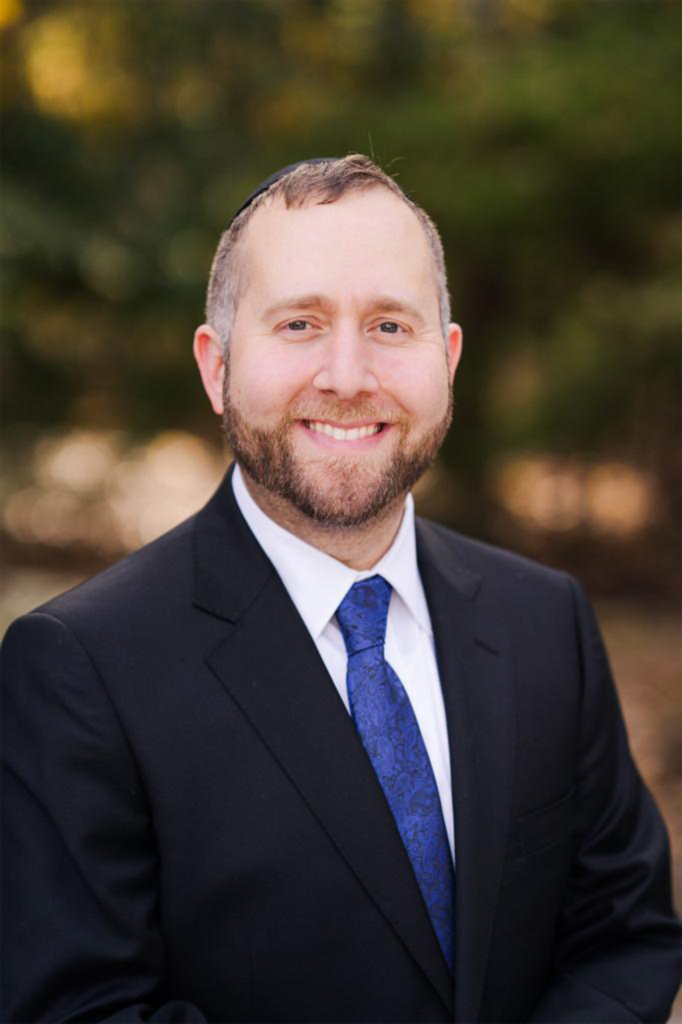
By: Rabbi Benny Berlin
This Thanksgiving, millions of Americans will sit down to a table full of food and, at least for a moment, say thank you. But anyone who has tried to be grateful knows how hard it is to stay there.
I have tried to work on this in my own davening. During Modim, I try to think of three things I am grateful for, and what I have found is that halfway through thanking Hashem, I start asking Him for something. Hashem, thank You so much that the fridge is fixed. And while we are talking, the oven is still giving us trouble. Could You help with that too? Hashem, thank You that our children are healthy. But the sleep training is not going well. Is there any way the kids could sleep through the night? We could really use the rest. I hate to admit that this is where my mind goes, but it is human nature. Even our gratitude comes with a list attached.
There is a pasuk in Parashas Ki Savo that speaks directly to that list. In the middle of the painful words of the tochacha, the Torah gives the reason it will all happen. “Tachas asher lo avadta es Hashem Elokecha b’simcha uv’tuv levav merov kol.” Because you did not serve Hashem your G-d with joy and gladness of heart, amid an abundance of everything.
Rav Mordechai Machlis shared a beautiful approach to understanding the last two words. Rov does not only mean abundance. It also means majority. Merov kol can be read as “from most of everything.” That, he suggests, is the root of so much spiritual disappointment. Nobody has everything. In every life there is rov kol. Most things are a blessing. But it is not kol kol, not all of it, and so we fixate on what is missing. The list grows and the joy shrinks. The problem was never a lack of blessing. The problem was where we chose to look.
Now look at how the Torah describes our Avos. Avraham waited decades for a child and was then told to bring him up as an offering. After burying Sarah, he is an old man sending Eliezer to find a wife for Yitzchak, and right there the Torah says, “V’Hashem berach es Avraham bakol,” Hashem blessed Avraham with everything. Yitzchak, old and blind, says “Va’ochal mikol,” I ate from everything. And in this week’s parashah, Yaakov meets Esav after twenty years of running and working for Lavan. Esav refuses the gift and says, “Yesh li rav,” I have plenty. Yaakov insists and answers, “Yesh li chol,” I have everything.
Notice the word Esav uses. Rav, the same root as rov. Esav had plenty, and plenty is still not everything. Yaakov lived a life of kol. That is exactly what we ask for every time we bentch. At the end of Birkas Hamazon, we ask Hashem to bless us “k’mo shenisbarchu avoseinu Avraham Yitzchak v’Yaakov bakol mikol kol,” just as He blessed our forefathers. Those three words are not just a poetic phrase. Bakol is Avraham. Mikol is Yitzchak. Kol is Yaakov. Each one is lifted straight from a pasuk describing one of our Avos. We are not only asking for their blessings. We are asking for their eyes.
The very first sin came from the opposite place. Hashem gave Adam and Chava every tree in Gan Eden except one, and that one tree was the only one they could see. Chazal ask where Haman is hinted to in the Torah and answer with the words “hamin ha’etz,” from the tree. Haman had wealth, power, a large family, and the favor of the king. Everyone bowed to him except Mordechai. And Haman went home and said, “V’chol zeh einenu shoveh li,” all of this is worth nothing to me. He had rov kol, and it destroyed him because it was not kolkol.
So here is a suggestion for this Thanksgiving. Most of us rush through bentching. We know the words so well that we stop hearing them. This time, think about what is in front of you and who is sitting around you.
The world will tell us the opposite the very next morning. Black Friday is built entirely on the list of what we still don’t have. But when we bentch bakol mikol kol, we have already answered that list.
The oven may still be broken. The kids may still be up at night. But this Thanksgiving, when I reach those three words in bentching, I want to mean them. Bakol. Mikol. Kol.
Rabbi Benny Berlin is the rabbi of BACH Jewish Center in Long Beach, New York. For more information, visit BACHLongBeach.com.