
By The Book
By: Larry Gordon
It was nasty and more than a little antagonistic.
Am I referring to a debate at the United Nations? A meeting between the leaders of the U.S. and Iran? Nope. Except for the combative nature of the meeting, it was absolutely nothing like that.
There were raised voices and multiple opportunities for participants to express their opinions at a fairly high decibel level.
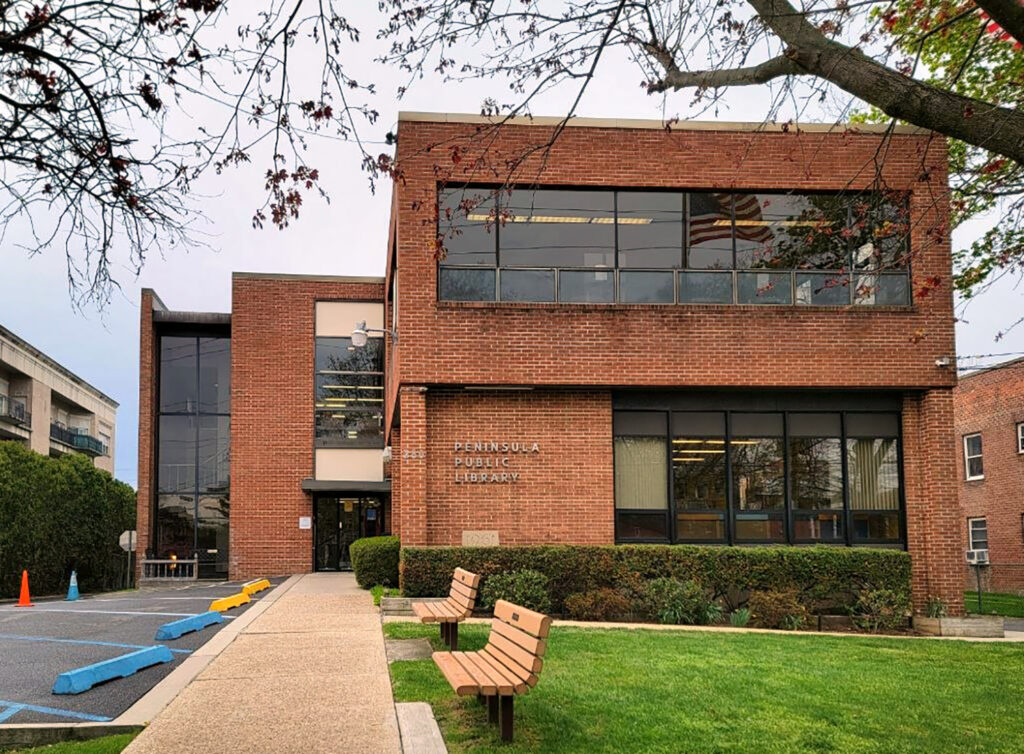
Okay, you give up? So here goes: It was a meeting of the board of trustees of the Peninsula Public Library on Central Avenue in Lawrence.
Actually, it was more tug-of-war than actual meeting. Frankly, it was a throwback to the contentious way the Lawrence School District used to operate in years past when those who ran the public schools mistakenly assumed the influx of Orthodox Jewish residents into the Five Towns was a temporary event or a passing phase.
The next question is: How can issues that impact the running of a local library create such conflict and contention in a community? What is it about the power of books that can get folks to debate and argue for hours on end? Apparently, there is a lot to argue, debate, and discuss when it comes to that vital institution known as a public library.
Here in the Five Towns, we are once again confronted with an us versus them face-off. In this case, it was a face-off between the Orthodox Jewish residents that set up shop here decades ago versus those whose families may have been here longer and might not necessarily agree with the changes the demographic shift brought.
But this is about books on library shelves. And there were numerous issues to deal with, with most amounting to complete and utter nonsense.
Last week’s meeting was called for 4 p.m. on Wednesday. Most people cannot come to a meeting at that time, so who ended up attending the meeting? Members of the board of trustees plus library staff and their families.
The Peninsula Public Library is a broken-down, dilapidated building in the heart of one of the most upscale communities not just in Long Island, but in the country. The debate about where and what to build has been going on for decades. At this stage, the main obstacle is about where to build. Where is the safest location for our kids to ride their bicycles and deal with traffic in the Five Towns?
Another ongoing issue is where library patrons can park their cars. Right now, the parking lot behind the library is taken up mostly by the employees. This means that the library patrons have to search the nearby streets to park at a meter and risk getting ticketed.
For a library, while these are annoying issues, the most pressing matter concerns the types of books they feature on the shelves. Taking this a step further, should they feature books that reflect the cultural tastes and sensitivities of the community they serve? Or is it incumbent upon a library to offer books that reflect the tastes and preferences of the general society we live in?
It’s no secret that the Five Towns has become a premier Orthodox Jewish community over the years with yeshivas, shuls, and a predominance of kosher stores that are Sabbath observant.
And the observance of Shabbos is one of the defining features of any community. When considering the Five Towns, should the library be open on Saturday to accommodate the minority of residents who are not Sabbath observant? Or should the library be closed on Sunday, as many libraries customarily are?
Presently, here in the Five Towns, the library is open for a full day on Saturday and a half-day on Sunday. Perhaps, considering the reality of the demographics, the library should be closed on Saturday and open all day on Sunday. When asked, librarians will tell you that the number of books checked out on an average Saturday can be counted on one hand, while on a Sunday, the library is busy non-stop.
And then there’s the matter of the titles that are featured on the shelves. Board President Akiva Lubin says he’s been trying to secure more Hebrew titles for over a year. The response he received from the last library director was that none of the Talmudic or biblical volumes have been on the best seller list.
According to Lubin, that’s not necessarily a benchmark for a library to feature a book. In fact, Judaica titles by publishers like Artscroll and Feldheim can be found in numerous libraries throughout Long Island and the five boroughs. He adds that the fact that a book is not a best seller did not stop one of the recently retired librarians from featuring titles like Genocide in Gaza and other similar titles that many in the community would find offensive and incendiary.
Almost every item brought up on last week’s agenda was vociferously debated. Those present (mostly speaking out of turn) wanted to know why there was no increase in the library’s 2026–2027 budget of $3.6 million. $3 million of the budget is allocated to salaries and benefits, a figure that matches the previous year’s allocation. $454,000 is dedicated to the purchase of new books and library programming, with the balance dedicated to other operating expenses.
Lubin and other board members tried to explain that many budget items from the current year have a surplus, thereby not necessitating an increase. It was almost impossible to hear the explanation as the attendees were shouting so loud, they drowned out the board. They were simply not interested in listening to logic or reason. They just wanted to know when they are getting an increase in their salaries, health insurance, and other benefits they feel entitled to.
Growing up, there were few places that we could escape to on a Friday afternoon for the chance to peruse the shelves for something interesting to read.
A library is an important staple in any community. It’s an important educational tool for all members of a community, young and not so young. However, it’s not the place for the various factions in a community to display their differences.
I told several of the board members afterwards that the next meeting should have just one agenda. And that should be a meaningful discussion on our differences and how we can bridge them and find a position we can all agree on and live with. Animosity and hostility should be checked at the door. If you don’t like it or if you disagree with a board member—even the president—don’t vote for them in the future.
If members of a community cannot agree on the subject of books and how best to serve the public, how will we be able to deal with more pressing matters?
When a library director places a book like Genocide in Gaza on a conspicuous shelf, the intention was clearly to offend. We have a school board election coming up soon and after that, a vote for who’s going to represent us in Congress.
Let’s try to get along on matters like library hours and which books to feature and encourage our children to read. Then maybe we can move forward from there. What do you think?
Read more of Larry Gordon’s articles at 5TJT.com. Follow 5 Towns Jewish Times on Facebook, Instagram, and Twitter for updates and live videos. Comments, questions, and suggestions are welcome at 5TJT.com and on Facebook, Instagram, and Twitter.