
Cultivating Character In An Age Of Challenge: Yeshiva University Professor’s New Book Charts A Path For Growth
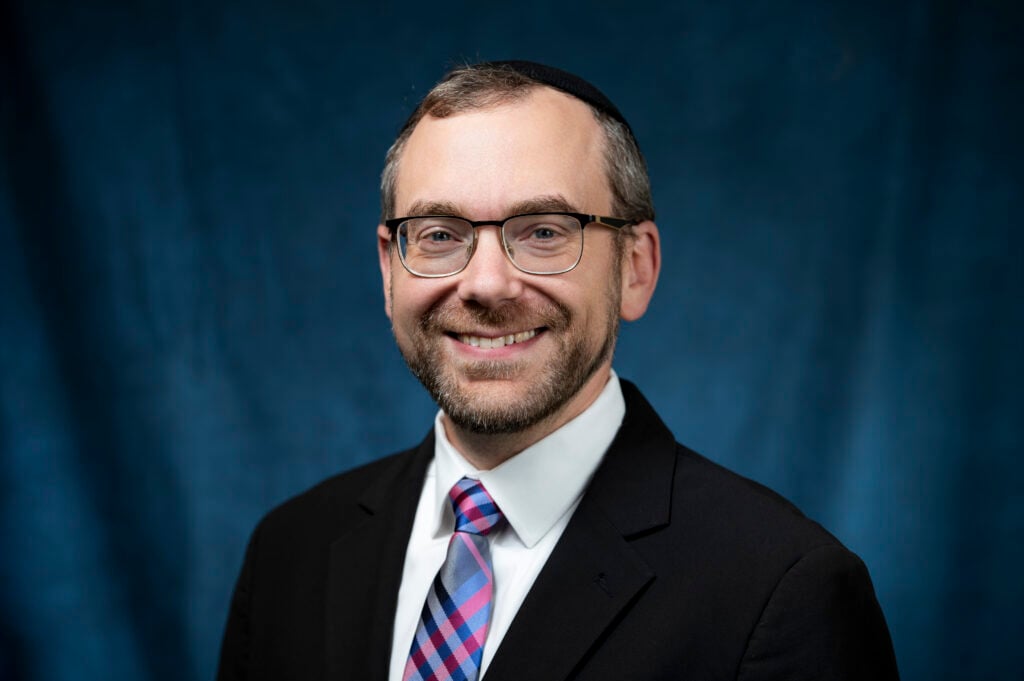
In The Torah of Character: Psychological Growth Through the Weekly Parsha, Rabbi Dr. Mordechai Schiffman blends Torah wisdom with psychology to chart a path for growth.

There are only two moments in his adult life when Rabbi Dr. Mordechai Schiffman—a psychologist and a faculty member at Yeshiva University—found himself crying intensely. One was when Rabbi Lord Jonathan Sacks passed away. The other came at the end of a post–October 7 visit to Israel, where he was struck not only by the devastation but by the acts of chesed unfolding everywhere he looked.
Those experiences open and frame his new book, The Torah of Character: Psychological Growth Through the Weekly Parsha. They capture its animating idea: that character is forged where Torah, psychology, and real-life meet—especially when emotion runs close to the surface.
Grounded in research and framed through weekly Torah readings, the book offers a practical guide for personal and communal growth. It blends classical sources, contemporary psychology, and the moral vision of Rabbi Sacks to help readers navigate uncertainty with resilience, compassion, and clarity.
“It’s a book about character development through the lens of the parashah,” explained Rabbi Schiffman, assistant professor at Azrieli Graduate School, director of Leadership Scholars at the Sacks-Herenstein Center, and an instructor at RIETS. “It weaves together Torah insights, psychological ideas, and the values I learned from Rabbi Sacks.” Rabbi Sacks’ influence runs throughout—sometimes subtly, sometimes unmistakably—shaping the way he thinks about ethical life and personal growth.
The project began as essays for YU’s Sacks-Herenstein Center under the direction of Dr. Erica Brown. Each chapter pairs a single character trait—gratitude, resilience, humility, compassion—with a parashah, weaving together Tanach’s moral dilemmas with modern psychological insight.
Some weeks the theme appeared immediately; other weeks required deeper searching. “For each parashah, I didn’t walk in knowing what the trait would be,” he said. “I’d read, think, explore—and see what the moment demanded.”
The result is a book that integrates Torah wisdom with positive psychology, moral philosophy, and cognitive-behavioral tools—all aimed at helping readers flourish spiritually and emotionally. Each chapter ends with a short “Character Challenge”: a concrete step for translating insight into action.
Much of Rabbi Schiffman’s academic work focuses on the intersection of Torah and psychology—a relationship he sees as mutually reinforcing. Positive psychology’s emphasis on well-being, personal growth, and inner strength proved a natural partner for Torah-based reflection.
“The overlap is vast,” he said. “Ninety-five percent of the time, they’re pushing in the same direction: living with purpose, building virtues, becoming the best version of ourselves.”
Rabbi Sacks, he noted, viewed psychology—especially positive psychology and cognitive-behavioral therapy—as key ingredients in creating “a new Mussar,” a modern framework for cultivating moral character.
What traits are most essential today? Rabbi Schiffman points to resilience shaped by empathy and compassion.
“We’re all living through tremendous ups and downs,” he said. “The ability to bounce back, to learn from challenges, and to treat ourselves with compassion is essential. And part of resilience is looking outward and strengthening others.”
Tanach, he noted, offers vivid portraits of exactly that: Yosef adapting to upheaval, Yaakov facing Esav, characters navigating fear, responsibility, and change with courage.
In his teaching across YU—at Azrieli, RIETS, and with Leadership Scholars—Rabbi Dr. Schiffman focuses on helping students grow ethically, spiritually, and emotionally.
“Values-based education is the core of what we do at YU,” he said. “We’re trying to build character and virtue, not abstractly but in real human beings.”
He teaches teachers how to cultivate social-emotional skills, works closely with leadership students, and helps future rabbis integrate psychological insight into pastoral work. “The themes in the book are the themes I teach every day,” he added.
For anyone overwhelmed by the idea of character development, he offers simple advice from the literature:
“Start small. Pick one tiny habit. Do it. Celebrate it. Then build from there. The Character Challenges at the end of each essay guide readers toward this approach.”
The Torah of Character arrives at a moment when individuals and communities are searching for grounding. By combining scholarship, psychology, and deeply personal reflection, Dr. Schiffman offers not just commentary but companionship—a roadmap for building resilience, compassion, humility, and purpose in a complicated world.