Did You Look Forward To The Geulah?
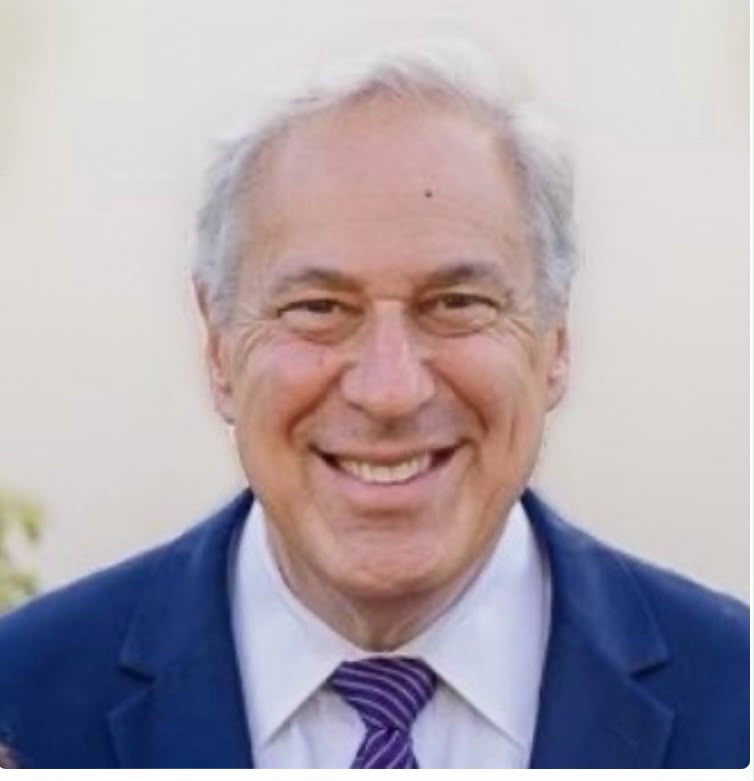
By: Dr. Alan A. Mazurek
I’ve been accused of not only looking forward to the geulah, but of being obsessed by it. My columns, essays, and talks are replete with references to the subject of the coming of Moshiach and the Final Redemption. Given the times we live in, I don’t see how one cannot be consumed by this belief. In my defense, the Gemara in Masechet Shabbat 31a tells us that when we arrive after 120 years and meet our Maker, He will ask us, “Tzipita l’yeshua?” Did you actively await the coming of Moshiach and do everything in your power to hasten the redemption?
This time of year, the 9 days of Av, is a particularly propitious time to be thinking about redemption. We are engaged in active mourning over the destruction of Jerusalem and the loss of our Holy Temple, the Beit HaMikdash, not once but twice, culminating in the saddest day of the Jewish year, Tishah b’Av. Furthermore, the Talmud Yerushalmi (Masechet Berachot Chapter 2, Halacha 4) and Midrash Eichah Rabbah 1:51) tell us that Moshiach will either be born or reveal himself on Tishah b’Av. If we are not going to feel that urgent need to have Moshiach here and now, when are we going to feel it?
When Israel and the Jewish people worldwide can see prophecy come to fruition daily with the prominence and power exhibited by the small Jewish State, Israel’s increasing influence in world affairs, with the increasing hatred for Jews and the Jewish State, and when Jews are still engaged in brutal and bloody conflict with all the world’s nations, including Persia, Edom, and Yishmael, how can we not desperately long for Moshiach’s arrival?
Yet, we are wary and rightfully so. We’ve been literally and figuratively burned before, by the arrival of false Messiahs, some from our own ranks, some from outside, who have seduced many of our co-religionists along with the rest of the world. Nevertheless, our tradition compels us to eagerly anticipate his arrival.
How do we do that? In a fascinating article by Rabbi Shimon Schenker (YU Torah.edu 2019), he cites three distinct ways.
Maimonides cited the custom to recite daily the 13 Principles of Faith that he articulated, known as the “Ani Ma’amins.” The most famous of these is, “I believe with absolute faith in the coming of the Moshiach.” This, according to the Rambam, the ultimate “rationalist,” is not a metaphysical concept but a direct fulfillment of the act of “Tzipita l’yeshua—expecting the Moshiach” as described in Gemara Shabbat 31a cited above. Perhaps that is why in Israel, especially in the Dati Leumi community where so many have bravely fought and fallen, this declaration is sung to an emotional tune at the end of ceremonies of both tribute and tragedy, rivaling only the Hatikvah in meaning and importance on those occasions.
Rabbi Shimon Schwab, the preeminent leader of the Breuer Kehillat Adas Yeshurun, post-WWII community in Washington Heights notes that the verse from Tehillim (10:16): “May the nations be removed from His (Hashem’s) land” that we recite daily in the Yehi Kavod morning prayer, doesn’t mean the nations will be physically removed or destroyed; rather, the whole concept of “other nations,” those separate from Hashem, will be removed. During the time of Moshiach, all of the world will be united, committed, and faithful to the One G-d, Hashem. We proclaim this belief in our morning davening every morning.
At the first Knesset HaGedolah in 1923, the legendary Chafetz Chaim, Rav Yisrael Meir Kagan, asked the assembled gedolim, “When we say every Shabbat morning the kedushah in Shacharit, ‘From Your place, our King, You will appear…and reign over us, for we await You.’ Are we really waiting?” Raising his hands dramatically, the Chafetz Chaim said, “We must show we are waiting like a mother and father desperately yearning and waiting for their only child whom they haven’t seen in a long time, and who is on the next train. And even if their child isn’t on the train that passes by, they eagerly await, expecting him on the next train.”
That’s what it means to expect, to look forward to Moshiach and redemption. We need not be embarrassed or apologetic. This is what our tradition, our belief, compels us to do. This is what Hashem expects of us! With so many of the signs of redemption around us, we must dedicate all our strength, souls, and prayers to this belief so that we can make it happen, bimheirah b’yameinu. Amen.
Shabbat Shalom.
Dr. Alan A. Mazurek is a retired neurologist, living in Jerusalem and Florida. He is a former chairman of the ZOA.