
From Synagogues To Campuses: Why Antisemitism Thrives When Consequences Don’t
Antisemitism doesn’t grow in a vacuum. It grows in environments where it is tolerated, excused, rationalized, or met with silence. From college campuses to city streets, from social media feeds to houses of worship, what we are witnessing today is not a sudden misunderstanding of Jewish history or Jewish identity. It is the predictable result of a failure to enforce consequences.
For years, antisemitism has been treated as a social problem to be debated rather than a crime to be confronted. Too often, leaders respond with statements instead of action, sympathy instead of accountability, and rhetoric instead of results. And as history teaches us, painfully and repeatedly, when hatred goes unanswered, it metastasizes.
Today’s antisemitism is not subtle. Synagogues require armed security. Jewish students are harassed and intimidated on campus. Protest movements openly flirt with violence and glorify terror organizations while insisting their hatred is merely “political speech.” Jewish Americans are told to accept this climate as the price of living in a pluralistic society.
That is not pluralism. That is surrender.
There is a persistent myth that antisemitism survives because people “don’t understand” Jews or Israel. That explanation may be comforting, but it is no longer credible. When mobs chant for violence, when Jewish students are blocked from classrooms, when houses of worship are vandalized or threatened, this is not ignorance, it is intent. And intent demands consequences. The problem is not that antisemitism is hard to define. We know exactly what it looks like. The problem is that too many institutions—universities, local governments, and even federal agencies, are reluctant to enforce rules when the offender claims a political or ideological justification. When antisemitic conduct is tolerated because it is framed as activism, it sends a clear message: Jews are fair game.
Nowhere is this clearer than on college campuses. Universities have codes of conduct that prohibit harassment, intimidation, and disruption of academic life. They enforce these codes vigorously until the target is Jewish. Suddenly, administrators grow hesitant. Disciplinary processes slow to a crawl. The rights of Jewish students are weighed against the “feelings” of those who harass them. The result is predictable. Harassment escalates. Jewish students self-censor, avoid campus spaces, or feel compelled to hide their identity. And those engaging in antisemitic conduct learn a dangerous lesson: there is no price to pay. Antisemitism flourishes not because universities lack policies, but because they lack the will to enforce them consistently.
The same failure shows up when houses of worship are targeted. A synagogue is not a protest venue. It is not a public square. It is a sacred space protected by law. Yet we have seen repeated attempts to intimidate, disrupt, or threaten Jewish congregations, often under the guise of political protest. When that line is crossed, the response must be swift and unequivocal. Law enforcement exists to protect communities from intimidation and violence, not to negotiate with those who believe their cause entitles them to disregard the law. When protesters face no consequences for targeting synagogues, it emboldens others to escalate. That is how rhetoric becomes action. That is how hate crimes happen.
One of the strengths of the Jewish community and of Long Island in particular is that the fight against antisemitism does not come from a single voice or a single lane. Some leaders fight this battle through enforcement and policy. Others do it through executive action, community engagement, or the power of media. And that diversity of voices matters. When local leaders like Bruce Blakeman take a firm stand on public safety and refuse to tolerate intimidation or disorder, it sends a message that Jewish safety is not optional. When voices like John Ferretti speak clearly and unapologetically about the need for consequences and accountability, it reinforces that this is not a partisan issue—it is a moral one. And when communicators like Sid Rosenberg use their platforms to call out antisemitism plainly and forcefully, they break through the noise and reach audiences that policy papers never will. Different roles. Different styles. Same mission. That matters because antisemitism is not defeated in one arena alone. It is defeated when enforcement, leadership, and public clarity work together—each reinforcing the other.
This is not a question of creating new laws. The tools already exist. Federal and state statutes protect religious freedom, prohibit intimidation, and criminalize threats and violence. Civil rights laws exist to ensure equal access to education and public life. Disorderly conduct laws exist to prevent disruption and harassment. The failure is not legal, it is cultural and political. Too many officials fear being labeled intolerant if they enforce the law against the “right” offenders. Too many institutions confuse neutrality with passivity. And too many leaders worry more about headlines than about Jewish safety.
That is how antisemitism thrives.
One of the simplest truths in law enforcement is also one of the most ignored: behavior changes when consequences are real. When individuals are arrested, prosecuted, and held accountable, deterrence works. When institutions enforce their own rules, misconduct declines. When leaders draw clear lines and back them up, extremism loses oxygen. Conversely, when antisemitic acts are excused, minimized, or ignored, they multiply. This is not theory. It is lived experience. Jewish communities understand this because we have paid the price when societies failed to act.
Silence is not neutral. Silence is a signal.
When antisemitism is met with silence from elected officials, university presidents, or community leaders, it tells Jewish families that their safety is negotiable. It tells bad actors that the risk is low. And it tells society that some forms of hate are more tolerable than others. That double standard is corrosive, not just for Jews, but for the rule of law itself. A society that selectively enforces its values will eventually lose them.
For decades, Jewish communities have been among the strongest supporters of law enforcement—not out of ideology, but out of lived reality. We understand that security is not abstract. It is concrete. It saves lives. Protecting Jewish communities requires more than funding for cameras or guards. It requires prosecutors willing to prosecute, administrators willing to discipline, and leaders willing to take political heat in defense of principle. Antisemitism will not be defeated by hashtags or task forces alone. It will be defeated when those who engage in it face real consequences—every time, without exception.
Every leader faces a choice: comfort or courage. Comfort lies in issuing statements, condemning hatred in general terms, and moving on. Courage lies in enforcing the law, backing law enforcement, and refusing to tolerate intimidation, no matter who the offender is. Jewish history leaves us no doubt about which choice matters. From synagogues to campuses, antisemitism thrives when consequences don’t. If we want it to stop, we must stop pretending the problem is complicated. It isn’t. Hate persists when it is allowed to. And it ends when society decides it won’t be.
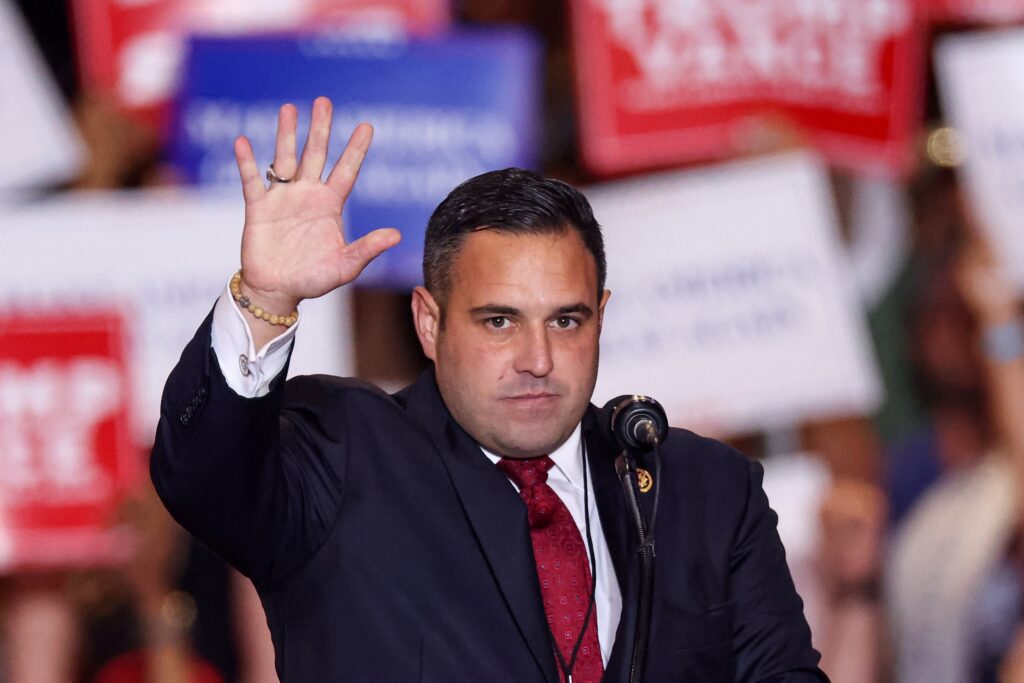
Anthony D’Esposito serves as Inspector General of the Department of Labor. Previously, he served in Congress, representing New York’s 4th Congressional District. Anthony served as a Councilman in the Town of Hempstead after retiring from the NYPD as a highly decorated Detective. He also served as Chief of the Island Park Fire Department and helped lead the all-volunteer organization’s response to Super-Storm Sandy. The Congressman appears frequently on Fox News, Newsmax, ABC National News, and 77 WABC Sid and Friends in the Morning. To contact, email [email protected].