





Grand Openings
By: Larry Gordon
When your grandchild decides that he or she has met the right person, Baruch Hashem, and takes that next step as a responsible young adult, you get to play a new and undesignated role in the process.
That is, you’re not the parent of the bride or groom, but the grandparent, which means you’re meant to mostly stay out of the way, which is a challenge unto itself.
There are a number of circumstances you can find yourself in while at the same time you ask yourself what your new role is, what you’re supposed to be doing, and even more importantly, what you’re not supposed to be doing.
Perhaps one of the most important and predictable things you can do is sit closer to the chuppah so when they call your name, im yirtzeh Hashem, you can bounce up and recite the berachah that is assigned to you by the family. However, you should be tactful and not sit too close or be too presumptuous about being given one of the seven berachos under the chuppah.
But then again, if you’re the Zaidy, you can sit close because in that case, even AI would guess that you’re the one most likely to be given a berachah at the chuppah.
You can be fairly certain of that honor along with one of the Sheva Berachos at the benching at the end of the meal. That is, if you’re not too exhausted and decide to leave early for one reason or another. One of which can be something as simple as having a ride home with a neighbor or one of your other grandchildren.
So, what exactly is the proper role of a grandparent as far as being involved in finding a suitable shidduchfor your grandchild? And what is the right balance between being too involved in the process and staying as far away as possible from all the action connected to these types of matches these days?
Did we somehow skip a generation, with our own children standing clear of what is best for their own children and seemingly leaving it all up to us now that we’re rapidly becoming the current senior generation?
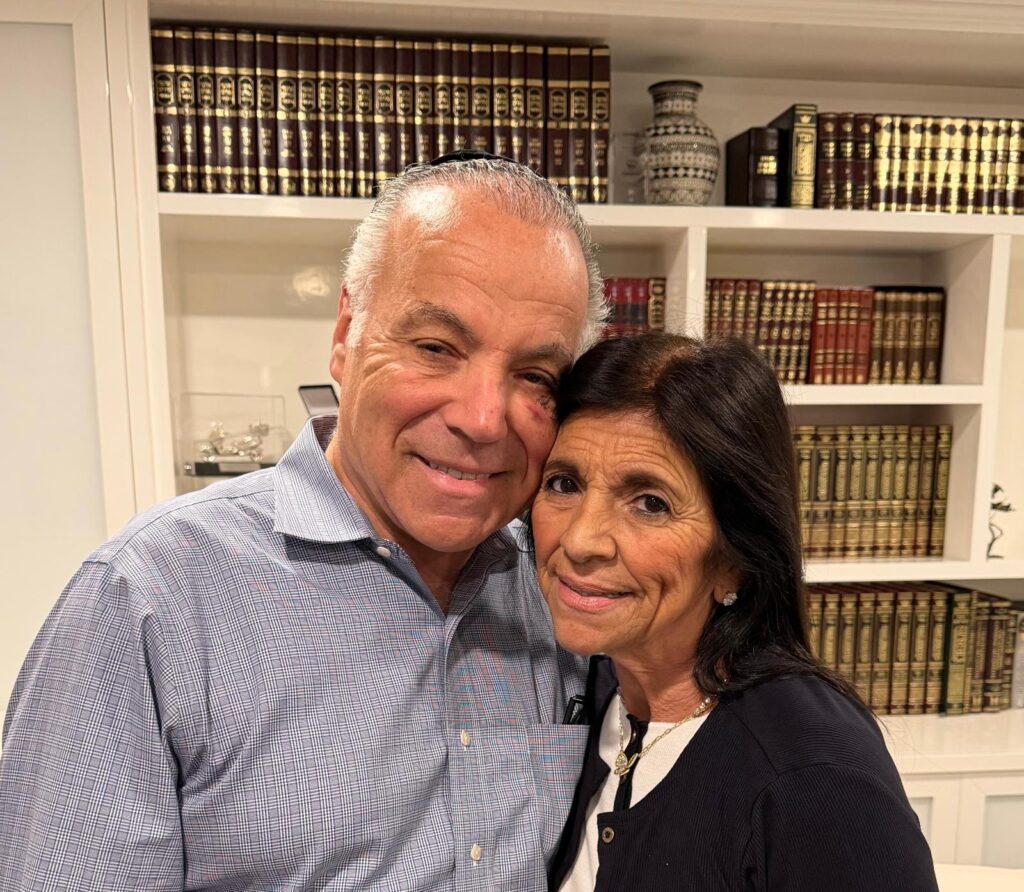
My wife, Esta, and I are zocheh to be very much involved in the shidduch process of our grandchildren, and even in some cases, the children and grandchildren of our friends, family, and people we know. It’s not that anyone called and asked us to get involved, but I can tell you that people genuinely appreciate when you look out for their welfare, especially without being asked to do so. We have personally experienced that and the question asked more often than not is: Does anyone have a shidduch or an idea for a shidduch for these young people?
Believe it or not, when dealing with people other than your family, it’s imperative to tip toe around the process more carefully than when it comes to your own children.
With our eldest granddaughter, who is, Baruch Hashem, engaged to be married, from the outside it looked like a combination of good fortune and people who were determined to find the right shidduch and knew what they were doing.
For this latest generation, is there anything more important than getting your child or grandchild married? Sure, you can say that they’re too young and they’re not ready, but no one seems to know what that really means.
Then again, how do you deal with the simple and fundamental issue of having some input into managing your kids in the right direction (even quietly from the background) but somehow getting the job done correctly?
And then there’s the matter of saying yes or no, very often based on the flimsiest and most superficial information. That is, if your children of marriageable age are solely dependent on matchmakers and you’re depending on other people’s opinions or even that of their parents, then you’re going to be saying “No, thank you” many more times than yes.
It’s a sensitive topic, and as would-be matchmakers that have in the past had some success making matches, the fact of the matter is that in some cases, parents might just not want their kids to leave home and move on with the rest of their lives.
In my humble opinion, I believe that both my parents and my wife’s parents wanted us and our siblings married with our own families and on our own with the ability to support our families accordingly.
So, the question is: Is it truly possible that some parents want to hold on to their kids for as long as possible, and if that’s the case why would that be? No, I’m not imagining things, but over the years I’ve observed that parents don’t encourage their children to move on for no other reason than they prefer to keep the family unit intact as it has always been with no changes.
The conflict begins to show as the children reach deep into their 20s and then 30s and 40s. There are indeed situations like that and it would seem that with the passing of time, the parents would begin to reluctantly let go. You can’t blame them because how long should a parent devote his or her life and efforts to finding a shidduch for their son or daughter?
As for my observation, it’s a matter of being able to hold on and search for the right shidduch on a continuous basis. At some point, even the parents who are aging themselves cannot be assigned blame for letting go and encouraging the child to search for a lifelong mate on his own.
Which brings us back to the grandparents, which in this case is us.
Is it a grandparent’s fundamental role to look after what’s best for their grandchild or even to make sure their children are doing right by their children, who happen to be our eineklach?
Or does everyone involved prefer that we just mind our own business? As grandparents—Bubbies and Zaides—shouldn’t we have the right to step in and use our many years of experience to not just do what’s right for our kids, but for our grandchildren as well?
And if they should tell us to mind our own business, who says we have to listen? Don’t grandparents always know what’s right? n
Read more of Larry Gordon’s articles at 5TJT.com. Follow 5 Towns Jewish Times on Facebook, Instagram, and Twitter for updates and live videos. Comments, questions, and suggestions are welcome at 5TJT.com and on Facebook, Instagram, and Twitter.