
Intercultural Airport Exchange
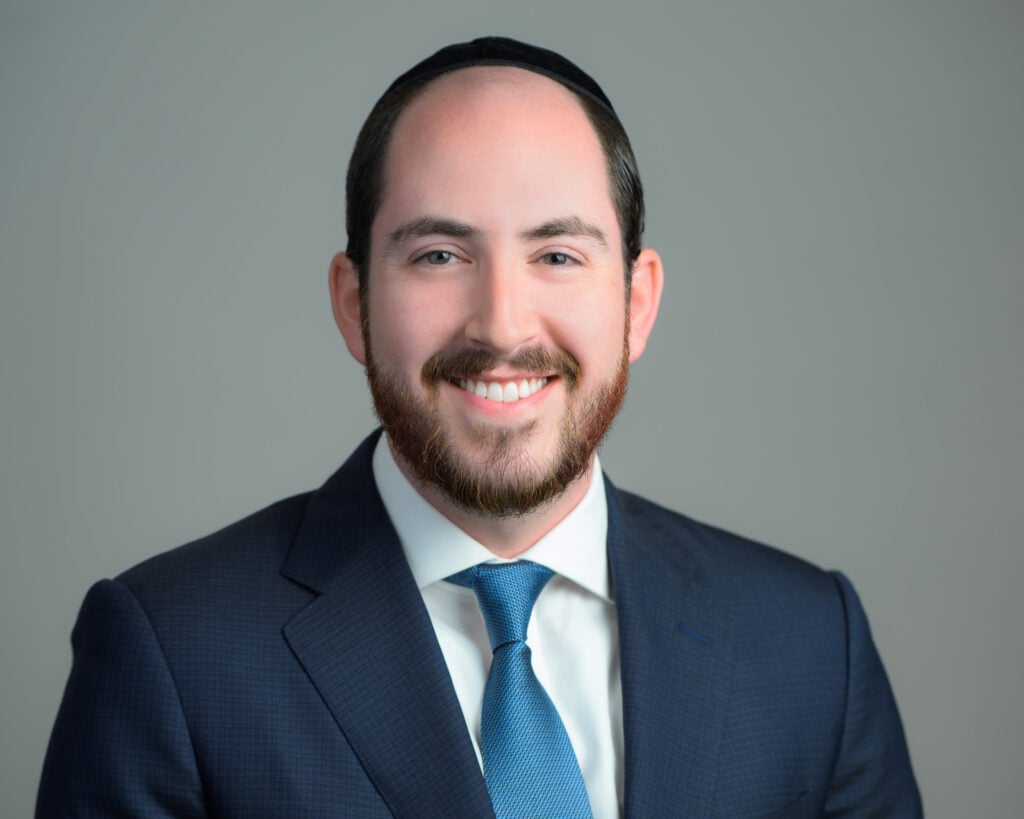
By: Rabbi Dr. Dovid Fox
When one of my recent flights was canceled, I was rerouted to a foreign city. Though I was relieved to have a new return-trip possibility, it was also clear that making a series of connections in huge airports would be an ordeal, particularly when I had only minutes to spare to make my connecting flights.
Fortunately, sensing my dilemma, the airline provided me with a special aide to help me make my connections. I suppose they felt somewhat responsible for canceling my original flight at the last minute—in fact, just as we were boarding!
The aide they provided me was an affable man with a heavy accent who told me he was Pakistani. He confirmed that he would escort me through the terminal to my gate so I could make my last-minute flight. Then he mentioned that he had a wheelchair-bound passenger to escort as well, and asked that I walk alongside them as he pushed the lady in the wheelchair. I readily agreed, not having any other choice in the matter.
When we reached the wheelchair area, I saw an elderly Muslim woman in the clothing of an Islamic cleric who clearly was in need of assistance. I smiled and wished her a good morning. She scowled back at me, remaining silent. The aide greeted her first in Arabic, then in French when she showed him her Lebanese passport. She made conversation with him while ignoring me. I caught our aide’s eye and saw that he looked bothered that she was clearly uncomfortable with my presence. I remained silent, chalking it up to the current tensions in the Middle East.
We had a long way to go through the various terminals, and at one point, she asked something in French, which he didn’t hear, so I responded to her in French. She cringed and looked away. Our aide’s French was limited; her Arabic dialect was different than his, and after a while he asked her where she was coming from and she said Canada, at which point he resorted to his heavily-accented English, which she understood.
As we inched our way through the throngs of bustling travelers of many nationalities moving through the terminals, the aide made small talk with me, asking if I was okay with the long walk and where I had traveled from that day. He then asked me if I had noticed that many people we passed seemed to be staring at us in our mismatched trio, which surely raised a few eyebrows. He said that some of the people had confused looks on their faces. I also noticed this and concluded that it was probably strange to see a man in Orthodox Jewish garb strolling alongside an elderly woman in the garb of a Muslim cleric. I said nothing at first, other than to acknowledge that indeed, many of the travelers who passed us seemed to have puzzled expressions on their faces. Meanwhile, my wheelchair “companion” said nothing, just stared ahead, blank-faced.
It was clear to me that we had a long walk ahead. I knew that I was facing a very long flight and would have nothing to eat since the ticket was a last-minute rebooking. Fortunately, the aide asked if I needed to stop for anything and when we passed an airport store, I asked if I could run in to get something. He was fine with it, while she said nothing. I inquired if either of them would like a drink from the store. He thanked me; she said nothing, and a moment later I was back with a small snack to take on board which would be my sole sustenance for the day and night ahead.
We continued making friendly small talk—the aide and I—and when he attempted to include her in the conversation, she refused to answer. By this time, both he and I concluded that my presence was making her uncomfortable. I pondered over this, not taking the matter personally, but still wondering if there was a way I could make a “Kiddush Hashem” under this uneasy atmosphere. Our aide asked me again why people seemed to be staring at us and I felt this was my chance.
Speaking carefully and thoughtfully, loud enough for my taciturn fellow-traveler to hear, I said, “People are staring at us because they think that she and I are husband and wife.” After a slight pause, I added, “For something like that to happen in our world, that would be a real miracle!” The woman burst into hearty laughter and for the first time, she looked at me and smiled. We reached her gate and I wished her a pleasant flight and she replied with, “Merci.” When I tried to tip the aide, he refused my money, telling me that I had had been very kind to him already. Then he brought me to my gate and we parted.
Who knows? Maybe lightening the mood and the moment found favor from Above. n
Rabbi Dr. Dovid Fox is a forensic and clinical psychologist, and director of Chai Lifeline Crisis Services. To contact Chai Lifeline’s 24-hour crisis helpline, call 855-3-CRISIS or email [email protected]. Learn more at ChaiLifeline.org/crisis.