





Introducing Nishmasi: Turning Emunah Into A Way of Life
Most of us don’t wake up in the morning wondering whether we believe in Hashem. If we were directly asked, we would no doubt say that of course we believe in Hashem and trust that He created the world and is involved in our lives. We start our day with Modeh Ani, we make berachos, daven, learn Torah, and then the day begins.
An email arrives that makes our hearts race, someone doesn’t return our call, a child is struggling, a shidduch doesn’t work out, the doctor wants another test, business is slow, the flight is delayed, someone says something hurtful, or a plan we were counting on suddenly falls apart. In that moment, the question isn’t whether we believe in Hashem, but whether our belief actually makes a difference.
Does emunah change how we react to the email, how much we worry about our children, how we experience waiting for a shidduch to appear, struggling to have a child, facing illness, navigating difficult relationships, or wondering how we’re going to pay the bills?
Is emunah something we know, or something we live?
That question is why we are launching Nishmasi. There has probably never been a generation with greater access to Torah and inspiration than ours. We have thousands of shiurim available at the touch of a screen, podcasts on every subject, books, WhatsApp groups, social media accounts, newsletters, clips, and messages arriving all day long.
Yet, more access to inspirational material doesn’t necessarily produce greater emunah. We can listen to a powerful shiur about bitachon on the way to work and lose our minds five minutes later. We can forward a beautiful quote about hashgachah pratis and then spend the next three hours obsessing about why something didn’t go according to plan. We can sing “Ein Od Milvado” with enormous feeling and then behave as though everything depends entirely on us. The problem isn’t necessarily access to information. Too often, knowledge lives in one compartment and life lives in another.
Of course, there’s nothing wrong with inspiration; I spend a significant part of my life trying to provide it. But inspiration without practice is just a feeling, and feelings inevitably fade. We understand this in almost every other aspect of our lives. Nobody goes to the gym once and says now they are strong. Nobody eats one healthy meal and declares themselves healthy. Nobody has one meaningful conversation with their spouse and assumes their marriage will now flourish without any further attention.
Muscles grow through exercise, relationships deepen through investment, and habits are formed through repetition. Why should emunah be any different? Emunah isn’t binary. It is not something we either have or don’t have, something we acquired in school or settled intellectually years ago. Emunah isn’t a mitzvah you check off, discharge, or fulfill. Emunah is something you have to exercise, nurture, revisit, and practice. It is an ongoing, dynamic relationship with Hashem, and like every meaningful relationship, it needs time and attention every day.
Indeed, the Ramban, at the end of Parashas Bo (Shemos 13:16), makes an extraordinary statement about the purpose of creation: “And the purpose of all the commandments is that we believe in our Hashem and acknowledge that He created us—and this is the purpose of creation.” The purpose of the mitzvos is that we should believe in Hashem, acknowledge that He created us, and recognize His presence in our lives. This, says the Ramban, is the very purpose of Creation. He goes on to explain that the great, supernatural miracles of Yetzias Mitzrayim are meant to teach us to recognize the hidden miracles that surround us constantly, concluding that we must believe that in all our affairs and experiences (all of which are miracles), that everything that happens to us is under Hashem’s direction. The purpose of spectacular miracles isn’t simply to marvel at what Hashem did thousands of years ago, but to train ourselves to notice what He’s doing in our lives right now. We don’t need the Yam Suf to split in order to encounter Hashem; we need to open our eyes to the countless ways He’s already present.
There is an enormous difference between believing in a Creator and living as a creation. The former is a theological conviction, the latter a relationship and a way of life. Living as a creation means recognizing and internalizing that I didn’t put myself here; I’m not navigating this world alone, and while I have an obligation to make responsible choices and exercise my free will, I am not the sole author of my story. Emunah doesn’t mean pretending that painful things don’t hurt, suppressing legitimate questions, or convincing ourselves that whatever we want will certainly happen. It means knowing that whatever happens, we are not abandoned, alone, or forgotten. It means learning to see our lives not as a series of random events that we have to control, but as an ongoing encounter with Hashem.
That kind of emunah has to be practiced in real time. When an upsetting message arrives, before firing back a response, we can pause and remind ourselves that this moment is also from Hashem and ask Him to help us respond correctly. When something wonderful happens, instead of immediately reaching for the phone to tell everyone else, we can first turn to Hashem to thank Him. When we are lying awake worrying about a child, we can remind ourselves that as much as we love that child, Hashem created and loves that child too, and we aren’t carrying the burden alone. When a shidduch doesn’t work out, we can be disappointed and hurt while still reminding ourselves that we haven’t been forgotten. When a deal falls through, we can work hard to find the next opportunity while remembering that our parnassah never actually came from that external source in the first place. When the doctor calls, we can pursue every responsible avenue of treatment while knowing that we aren’t walking into the appointment by ourselves. That is what it means to live emunah, not as a slogan to post or a concept to study, but as the lens through which we experience the world via ordinary moments.
That is why I’m so excited to introduce Nishmasi, a new movement we have founded around one simple concept: Emunah shouldn’t just be something we learn, but something we internalize and practice every day.
We are launching Nishmasi with a modest, but hopefully impactful project. Through eight WhatsApp communities dedicated to different areas and stages of life, Nishmasi brings short, daily doses of emunah and chizuk straight to your phone. Whether you are navigating shidduchim, marriage and relationships, illness, fertility, business and finance, loss and grief, anxiety and stress, or simply looking for personal growth, there is a community designed to help you find Hashem in the particular chapter you are living through. The goal isn’t to give you another message to read and quickly forget, but to offer a perspective to carry into your day, a thought to remember before a difficult meeting, a reminder before the date, a way to process a disappointment, or a sentence to hold onto during an anxious night. Find the chapter that speaks to you and bring a little more emunah into your everyday life.
Part of what makes this necessary is that life isn’t generic; therefore, the emunah we need at any particular time can’t be generic either. The person waiting to find a spouse needs a different conversation than the person struggling in a marriage. Someone going through infertility is living a different emotional reality than a person facing a business crisis. Someone grieving a loss needs something different than someone raising young children, and someone celebrating enormous success has a different emunah challenge than a person who feels that nothing is going right.
That is why Nishmasi is organized not primarily around demographics, but around chapters of life. People of completely different ages, backgrounds, and locations can find themselves living the same chapter, carrying similar uncertainty, asking similar questions and trying to find Hashem in the same kind of experience. Our hope is to bring people together not only through the challenges they share, but also from their shared determination to grow through those challenges with greater emunah.
We chose a fingerprint as the symbol of Nishmasi because it captures so much of what we hope this movement will inspire. No two people in the world have the same fingerprint, and no two people have the same neshama, the same strengths, challenges, opportunities, and circumstances. Each of us is a unique expression of Hashem’s creation, placed in this world for a reason, entrusted with a mission that nobody else can fulfill quite the way we can. We are not interchangeable, replaceable, or here by accident. So much of our unhappiness comes from comparing ourselves to others, competing with people whose lives look different from ours, or measuring our success against someone else’s journey. But Hashem didn’t create us to be somebody else, and He isn’t asking us to live another person’s life. Our task is to discover our own mission, embrace our own place, and become the person Hashem created us to be. Just as our fingerprint is uniquely ours, so is our relationship with Hashem, and that relationship must be nurtured in the particular circumstances and chapter in which we find ourselves.
A fingerprint also unlocks things, and our hope is that Nishmasi will help people unlock the enormous potential that already exists within them. We want to help people discover their best selves, to live with greater happiness, calm, confidence, clarity and purpose, not because life will always go according to plan, but because they know Who is guiding the plan. And a fingerprint is also something we leave behind, a mark that testifies that we were here. Each of us has the capacity and responsibility to leave our fingerprints on this world: to make an impact, influence others, contribute something meaningful, and leave a legacy that endures long after we’re gone.
That is why we called this movement Nishmasi, not a soul or the soul, but my soul. My fingerprint, my mission, my potential, my impact, and my unique, personal relationship with Hashem. Whatever chapter I’m in, whatever challenges I’m facing, and whatever opportunities lie ahead, my neshama has a purpose that only I can fulfill. Nishmasi is about discovering that purpose, unlocking that potential, and living with the emunah to fulfill it.
Importantly, emunah isn’t only for people whose lives are falling apart. The person who just got engaged needs emunah and the person who is still waiting needs emunah. The person whose business is struggling needs emunah and the person whose business is booming needs emunah. The person waiting anxiously for test results needs emunah and the person who just received wonderful news needs emunah. The person going through a challenge needs emunah and the person simply going about a routine day needs emunah. We need emunah not only to survive our disappointments, but to properly appreciate our blessings, not only to get through what is painful, but to understand what is pleasurable, not only when we desperately need Hashem to change our circumstances, but when we need to remember that the circumstances we’re enjoying came from Him in the first place.
Nishmasi’s message is, “Faith in Every Chapter” because every person is somewhere in their own story, and a relationship with Hashem isn’t something we need during one particular season of life, but during all of them.
This is only the beginning. Our dream is for Nishmasi to become much more than a collection of WhatsApp communities or simply another source of inspirational content. We envision a growing movement of people committed to developing a deeper, more personal, ongoing relationship with Hashem, supported by practical tools and meaningful opportunities to grow together. In time, we hope to introduce emunah workbooks that help translate inspiration into daily exercises, emunah retreats that allow us to step away from the noise and reconnect with Hashem, and interactive forums where people navigating similar chapters can share experiences and strengthen one another, and much more. Ultimately, we hope Nishmasi will become a place where people don’t simply come to hear about emunah, but find the tools, encouragement, and community to make it a defining part of who they are and how they live.
Instead of asking ourselves whether we have emunah, perhaps we should ask a much more challenging and practical question: Where did my emunah show up today? Did it show up in how I reacted when something didn’t go my way, in how I worried about my children, in how I responded to success, in how I spoke when I was frustrated, in whether I noticed a blessing, or whether I turned to Hashem when I was scared? We need to bring Him into our routine: our Monday morning, the office, the boardroom, the waiting room, the tense phone call, into our dating life and marriages, into our parenting and parnassah, into our celebrations and disappointments: into any chapter of life you are experiencing now.
I invite you to visit Nishmasi.org, click Find Your Chapter, and join one or more of the communities that speaks to where you are in life. Whether you’re facing a challenge, celebrating a blessing, searching for answers, or simply looking to grow, I hope you will join me on this journey. Hashem gave each of us a unique fingerprint because He gave each of us a unique mission, and our task is to discover that mission, unlock our potential, and leave our mark on His world. Emunah isn’t built in one dramatic moment or secured by one inspiring shiur. It is built when we remember in the ordinary moments that we are living in Hashem’s world, that He is present in our story, and that whatever chapter we find ourselves, we can choose not merely to believe in Him, but to live with Him. That is Nishmasi, faith in every chapter. n
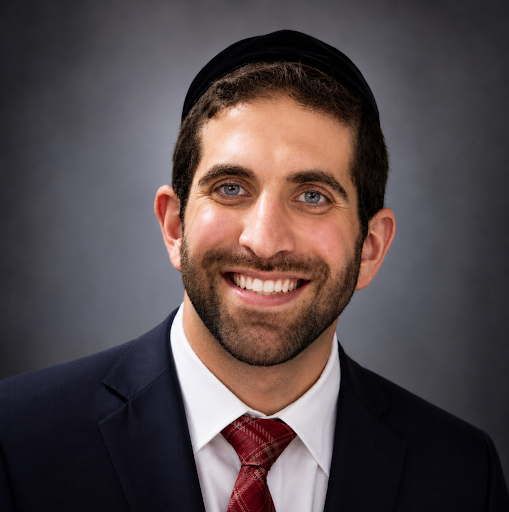
Rabbi Efrem Goldberg is the Senior Rabbi of the Boca Raton Synagogue (BRS), a rapidly-growing congregation of over 850 families and over 1,000 children in Boca Raton, Florida.