
Ki Tavo: Word Traps
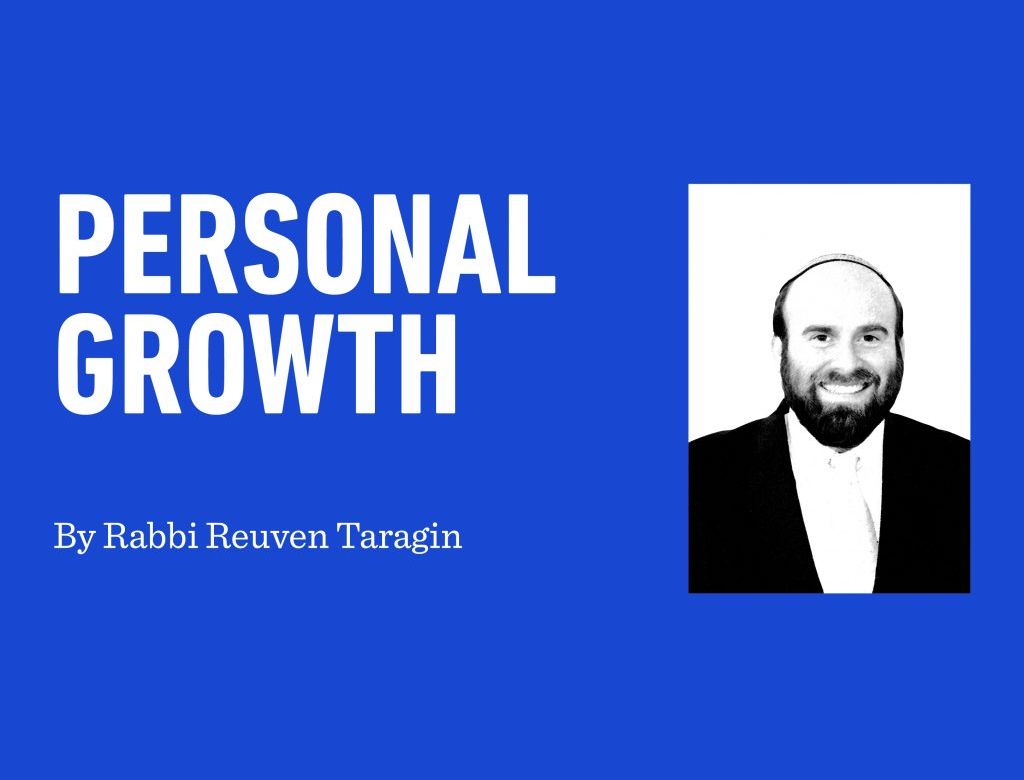
By: Rabbi Moshe Taragin
Few ceremonies in Jewish life compare with the pageantry of bringing Bikkurim. The drama begins as the first fruits of the seven species associated with Eretz Yisrael begin to ripen. A farmer steps into his field, identifies the first fruits as they emerge, and ties a band around them to designate them as Bikkurim. As the crops mature, the anticipation builds. Bikkurim are first brought on Shavuot, after which until Sukkot, farmers brought their first fruits to Yerushalayim and recited the accompanying declaration.
As the pilgrims approached Yerushalayim, they were greeted by residents of the surrounding towns and villages and escorted toward the city with great fanfare. The Bikkurim were presented to the Kohanim, placed beside the Mizbeach, and subsequently eaten by the Kohanim, much like Terumah.
The ceremony celebrated the agricultural success of the past year and the extraordinary produce of Eretz Yisrael. But it also placed that success within the larger sweep of Jewish history. The farmer did not simply thank Hashem for his crops. He returned to the origins of our national story, recalling Yaakov Avinu, the descent to Egypt, our suffering there, and ultimately our arrival in the land, whose fruits he now carried to the Beit Hamikdash.
This proclamation must be recited in Hebrew. The farmer cannot convey these sentiments in his own words or in another language, but must adhere to the precise text prescribed by the Torah. Each word carries echoes and allusions to Jewish history, particularly to Yetzias Mitzrayim. Indeed, these four pesukim, commonly known by their opening words, Arami Oved Avi, became the centerpiece of the Haggadah. The Haggadah carefully deconstructs these verses, attaching midrashic meaning to individual words and phrases in order to more fully portray the story of Yetzias Mitzrayim.
Words do more than communicate ideas; they create consciousness. Different words can frame the same experience differently and can subtly reshape the meaning attached to it. By remaining faithful to the Torah’s exact words, the farmer bringing his Bikkurim remembers the history behind them and the story of which he is a part. These words shape the way he understands both his harvest and his place in Jewish history.
The significance of language becomes even more striking when Mikra Bikkurim is compared with another declaration that appears only a few pesukim later. After completing the distribution of his tithes, a person recites Viduy Maaser: “And you shall say before Hashem your G-d: “I have removed the holy portion from the house.” Yet Chazal distinguish sharply between these two declarations. While Mikra Bikkurim must be recited in lashon hakodesh, Viduy Maaser may be recited in any language.
Perhaps the difference lies in what these declarations are meant to accomplish. Viduy Maaser primarily testifies to a person’s religious conduct: he has properly distributed his agricultural gifts and fulfilled his obligations. The essential concern is that the content be accurately expressed.
Mikra Bikkurim, however, is meant to shape the way a person understands himself. It locates him within a national history. He is not merely a successful farmer enjoying the fruits of his labor. He is the descendant of Yaakov, the child of slaves redeemed from Egypt, heir to a land promised generations earlier.
When words merely convey information, equivalent language may suffice. But when words shape identity, terminology matters.
The words we use to describe people and communities do more than identify them. They emphasize certain qualities and, often without our realizing it, suggest how those people should be understood. Once a term becomes familiar, we rarely stop to examine what it implies. We simply begin accepting the assumptions built into the language itself.
This is especially consequential when we adopt terminology that others have created about us. Without intending to, we may begin seeing ourselves through categories that do not accurately reflect our identity or values. Sometimes we even adopt these labels for ourselves without first deciding whether we accept the assumptions behind them.
Religious consciousness therefore requires a certain vigilance about language. We should periodically ask where our terminology came from, what assumptions it carries, and whether those assumptions genuinely reflect how we understand ourselves.
This question has particular relevance to the vocabulary Orthodox Jews use to describe the different religious communities. Our people are engaged in a fierce ideological debate over conscription into the IDF. Both sides believe that they are fulfilling the will of Hashem: one through military service and the other through intense Torah study. This is a machloket l’shem Shamayim, though an especially painful one.
Unfortunately, some of the rhetoric surrounding this debate has spiraled out of control, deepening an already painful divide. As Elul approaches, we must be especially careful with our words and resist statements that raise the temperature of the debate. Even amid profound disagreement, our language should preserve respect and leave room for closeness rather than widening the distance between us.
The debate itself is framed by certain terms commonly used to define the different Orthodox communities. If we do not examine these terms and the assumptions they carry, we risk slipping almost unconsciously into categories of identity that we may not actually accept.
Charedi society is often described in English as ultra-Orthodox. A Charedi person is certainly entitled to embrace that description. But should not every religious Jew aspire to be ultra-Orthodox? When we reserve that term exclusively for Charedim, those of us who are not Charedi implicitly define ourselves as something less than fully or intensely Orthodox.
Every religious Jew should aspire to the highest level of commitment to Torah and mitzvot. If someone believes that the Charedi lifestyle represents the ideal form of Orthodoxy, they should seriously consider embracing it.
I do not view Charedi life as the ideal for me; I have chosen a different religious path because I believe deeply in its values and aspirations. I certainly fall short in practice, as we all do, but this is the Orthodox ideal I aspire to live as fully as possible. The great people I have encountered who embody this value system with exceptional consistency represent to me the ideal of Orthodox religious life.
We should be careful about reserving the term ultra-Orthodox for one particular religious community. Every Orthodox Jew, whatever their hashkafah, should aspire to live Torah as fully and seriously as possible. If we believe that another community represents a more authentic or complete form of Orthodoxy, then we should ask ourselves why we have not chosen that path. But if we believe deeply in the religious path we have chosen, we should see ourselves as aspiring to be no less “ultra” in our Orthodoxy.
There is another set of terms that can create an equally serious religious and psychological trap. In a perfect world, we would all devote ourselves entirely to Torah study, endlessly exploring the word of Hashem. That is the world of Gan Eden. But we live in an imperfect world, one that requires human effort and responsibility. We need professionals and businesspeople, scientists and doctors, and of course soldiers to protect us. The Charedi model seeks to preserve a community in which as many people as possible are freed from these responsibilities in order to devote themselves fully to Torah study.
It is undeniable that Charedi society devotes more time per capita and more communal resources to Torah study, but that should not lead one to assume that Torah study matters less to those who follow a different path. Nor need we deny the spiritual power of Torah or its capacity to protect our people. We simply believe that this protection does not relieve us of the duty to actively defend ourselves.
Which makes the expression “Olam HaTorah” a potential word trap. This expression is often used within Charedi society as a designation for the Charedi community, just as the term “lomdei Torah” is frequently used to describe its members. There is nothing objectionable about a community using these expressions to describe itself; however, we should be careful before adopting these terms as exclusive descriptions.
For me, Olam HaTorah is much larger than any one community. Torah was given at Sinai to the entire Jewish people. It belongs to those who study many hours each day, those who study less, and even those who barely study at all. Torah is too vast and too cosmic to be confined to one social sector, even one that has distinguished itself through exceptional devotion to Torah learning. The Olam HaTorah cannot be reduced to one social sector; it includes the entire Jewish people, and certainly every Jew who actively studies Torah.
Similarly, lomdei Torah should describe Jews who learn Torah whether they learn Torah all day or only a few hours out of their busy schedule. Someone who serves in the army, practices medicine, builds a business, or works as an accountant does not cease to be a lomed Torah because he does not sit and learn full-time.
By adopting terminology that reserves Olam HaTorah and lomdei Torah for someone else, we subtly define ourselves as standing outside the Torah world and as something other than Torah learners. This linguistic mistake can gradually shape our identity and lower our expectations for the place Torah should occupy in our lives. Words shape identity, and we should be careful not to let someone else’s terminology define us in ways that minimize our devotion to Torah. The language we use about ourselves should reflect who we believe we are and who we aspire to become.
Rabbi Moshe Taragin is an educator at Yeshivat Har Etzion (Gush). Find his latest book, Reclaiming Redemption, Vol. II: Faith, Identity, Peoplehood, and the Storms of War, at mtaraginbooks.com.