
Leaving A Mark That Will Last A Lifetime
By: Sivan Rahav Meir
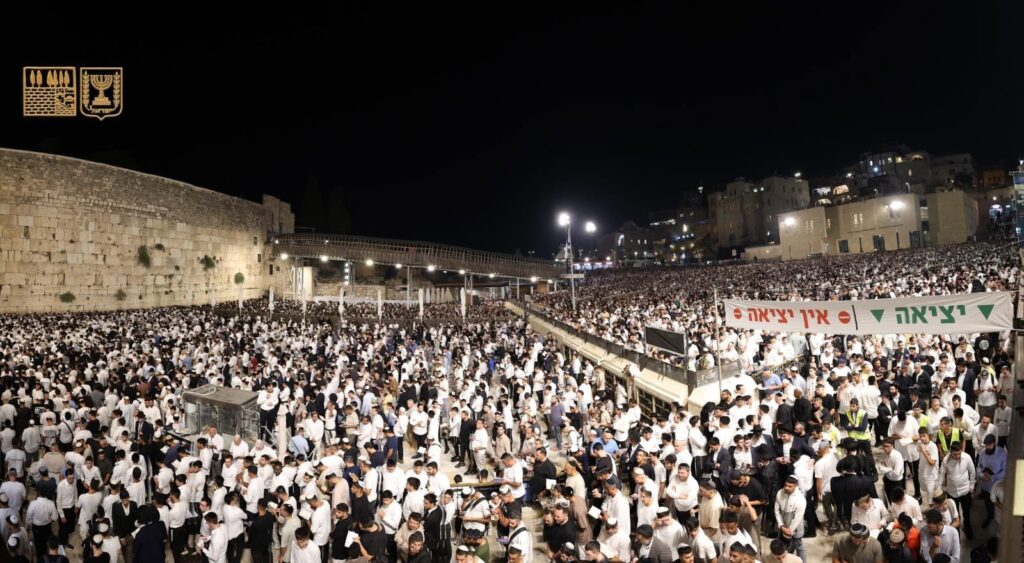
One night at the Western Wall in the midst of Selichot prayers, I wondered when the thousands of teenagers around me would get up the next morning. It was already after 1 o’clock in the morning and they were still chanting, if not roaring, piyutim. They would probably be late for school the next day, but this unique experience would provide a lesson and leave a mark on them that would last a lifetime.
We learn not only from classes and lectures; we educate ourselves through internalized experiences and events. The Torah portion of Vayelech is concerned precisely with this idea. It describes the mitzvah performed when the entire nation gathers together in Jerusalem at the close of the Sabbatical year to hear the reading of the Torah. Everyone must come—even babies who do not understand what they are hearing. Why? In order for the experience to leave a mark. “Let their children also, who do not understand, hear and learn to fear the Lord your G-d.” How is it possible to teach fear of G-d? It’s the atmosphere that leaves a mark, that engraves an indelible impression on the heart. The power of the moment affects us for generations to come.
The Yamim Nora’im are the perfect time for education through experience. From Selichot to hearing the shofar on Rosh Hashanah; from the seudat hamafseket on erev Yom Kippur to the building of the sukkah. Even children raised on cell phones and computer screens are thrilled by the experience of hearing—and sometimes even blowing—a real shofar, or shaking an actual lulav. These are moments that bring our traditions to life, creating powerful memories and lessons that can remain with our children, and with us, for a lifetime.
{Good Thoughts, at the Right Time and Place
Have you ever heard the expression machshavot zarot —foreign thoughts? We tend to assume it means inappropriate or negative thoughts. But if that were the case, why not simply call them forbidden thoughts? What exactly makes a thought “foreign”?
Rabbi Menachem Brod offered a beautiful explanation in the Sichat HaShavua newsletter: A thought can be perfectly good and worthwhile yet still be “foreign” to that particular time and place. It simply does not belong there right now.
For example, thinking about something we learned in Torah is wonderful. But if that thought distracts us in the middle of prayer, it becomes a “foreign thought.” This is simply not the time or place for it. Thinking about a new volunteer project is positive, too. But if it pops into a father’s mind in the middle of a heart-to-heart conversation with his son, it is a “foreign thought.” And there are countless other examples.
Here is one that is especially relevant right now: We are in the month of Elul, and also in the midst of a heated election season. Politics can and should be discussed. But we have also been given an entire month devoted to drawing closer to G-d, to working on ourselves, to beginning again. Spending all of Elul consumed exclusively by political updates—that, too, is a “foreign thought.”
May we be blessed with as many good thoughts as possible—thoughts that belong to the moment and the place.
{The Final Shabbat of 5786
This coming Shabbat is the final Shabbat of the Jewish year. Our sages teach that the last Shabbat of the year gives us an opportunity, in a sense, to “repair” all the Shabbatot of the past year, but it also sets the tone for the year ahead. That is why many people make a point of doing something extra on this Shabbat, honoring it more than usual: bringing Shabbat in a little earlier and extending it a little longer, making a special effort in the way they treat their family, inviting guests who may have nowhere to spend Shabbat, and more.
As on every Shabbat, we will continue with the weekly Torah reading. Parashat Nitzavim is part of Moshe Rabeinu’s final address to Am Yisrael—and, through them, to all of us. It is one of the shortest portions in the Torah, just 40 verses long, and the eighth parashah in the Book of Devarim.
The parashah opens with the words: “You are standing today, all of you.” Despite everything you have endured, despite all the difficulties along the way, you are not weak or defeated. You are nitzavim—standing firm, with strength, confidence, and unity.
The parashah reminds us that these days before the new year are an opportunity to return to ourselves, both as individuals and as a nation. Moshe Rabeinu teaches that the ability to return, to change, and to repair is always there. It is possible. The goals he sets before the Jewish people, and before each one of us, are not impossibly distant. They are very close: “For this commandment that I command you today is not beyond you, nor is it far away. It is not in heaven, that you should say: ‘Who will go up to heaven for us and bring it to us, so that we may hear it and do it?’ Nor is it across the sea, that you should say: ‘Who will cross the sea for us and bring it to us, so that we may hear it and do it?’ Rather, the matter is very close to you—in your mouth and in your heart—to do it.”
After the Torah reading comes the haftarah. Every Shabbat since Tishah B’Av, we have read a haftarahof consolation. This Shabbat brings the final one in the series. It speaks of joy, redemption, and return to the Land of Israel, and includes this Divine promise: “For Zion’s sake I will not be silent, and for Jerusalem’s sake I will not rest.”
Shabbat Shalom, shanah tovah, and may we all be written and sealed for a good year.
Translated by Yehoshua Siskin and Janine Muller Sherr.
Read more by Sivan Rahav Meir at SivanRahavMeir.com.