
Make America Grateful Again
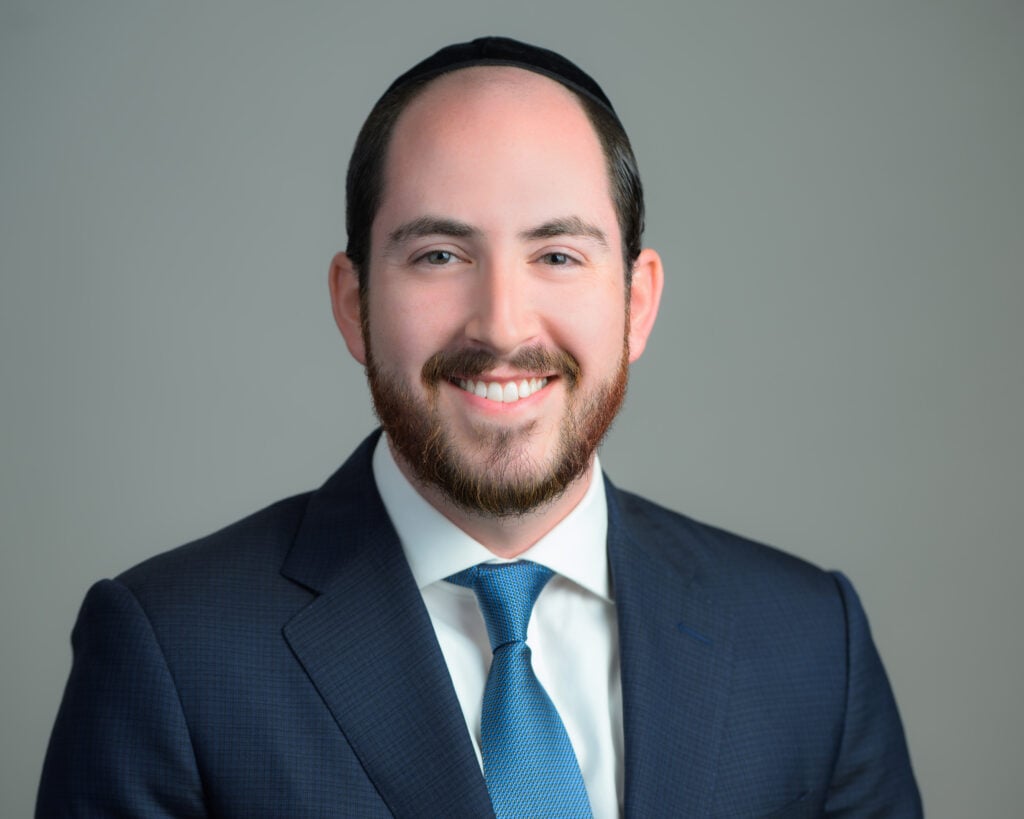
By: Rabbi Dr. Dovid Fox
One of my weekly shiurim focuses on the laws pertaining to the Beis HaMikdash and the sacrifices that were offered there. We recently studied the section about the Korban Todah, the thanksgiving offerings brought by individuals who had overcome a dangerous situation. These were animal offerings that people brought after recovering from an illness or completing a hazardous voyage as a means of expressing relief or gratitude to Hashem. The meat of the Korban Todah was eaten with a shorter time restriction of one day and one night, which is shorter than the usual time allotted for eating a sacrificial offering. Moreover, the Korban Todah was brought along with thirty matzos and ten loaves of bread, all of which had to be eaten in this condensed time frame.
The commentaries of the Abarbanel and the Sforno explain that since it would be almost impossible for a single person to devour so much meat, bread, and matzos in so short a time, and since it was prohibited to leave sacrificial offerings uneaten, the person would have to invite guests to partake of the meal in order to finish all the food in the allotted time. This, they write, is the Biblical source for what we call a seudat hodaah, a festive meal of thanksgiving. Many of us are familiar with the practice: when someone who has survived a difficult ordeal and wishes to express gratitude and relief to HaKadosh Baruch Hu, they host a seudas hodaah and invite others to participate in the gratitude. Usually we invite family and relatives; sometimes friends and distinguished guests. A seudas hodaah is an event meant to be shared, reminiscent of how the Prophet Yonah (1:16) described the non-Jewish sailors who made it back to port and prepared a sacrificial offering of thanks to Hashem. It seems like basic decency when offering thanks to Hashem that we do not do it in private. Giving thanks is a transactional process, requiring both the one who is expressing gratitude and the One who is the recipient of the gratitude, which in this case is Hashem. In this case, it is proper to express our gratitude in a public manner. We express our gratitude in the company of others to share our joy with them by including them in the seudah.
When good things happen, it is healthy to acknowledge them. It’s important to recognize that we can’t take for granted that things will always work out favorably and we should express our gratitude openly. One of the first gestures that Adam HaRishon made, according to our Midrashic tradition, was an offering to Hashem. His sons, Kain and Hevel, likewise did the same. We have a Talmudic tradition of giving gifts of food and fruit to Torah scholars. Although there is no sacrificial rite anymore, in the absence of a holy Mikdash in Jerusalem, we observe many rituals whereby we show appreciation to those who make our lives better and even holier.
At the heart of these practices is the act of acknowledging or expressing that we are indebted to those who are good to us. At the spiritual level, this includes recognizing that everything comes from Above, which we express in our prayers of thanksgiving. These days, when someone does you a favor, the popular response is to say, “Thank you, I appreciate that.” The word appreciate also applies to invested funds. When our money increases, it appreciates. This means its value is greater. When we express appreciation to someone, we are actually saying that we value what they did and we are paying them back verbally via our gratitude. This makes the one who did us a favor feel appreciated since the recipient of his beneficence “paid him back,” so to speak, with words of praise and thanks.
In the Torah laws concerning not charging interest, the Talmud adjures us not to thank a person who lent us money since our verbal thanks is a form of payment, and would constitute paying them a type of “interest” in the event that we paid off the loan and further thanked them for the loan. Of course, some contemporary authorities opine that nowadays, verbalizing “thanks” has no value, and has been reduced to a social formality since people who say “thanks” may not be feeling appreciation.
Rav Moshe Feinstein, zt’l, who I studied under, differentiated between giving thanks and giving a berachah to someone who has lent him money. Giving a berachah is permitted, even if paying them with a “thank you” might not be permitted. Try that some time: when someone does you a favor (not a monetary loan), offer them a berachah. Bless them for their kindness. It may go a lot further than a dry “thanks.”
Of course, we can get by with saying no words of appreciation. Some people do that. A gift is given but no note of thanks is sent. A favor is extended, but accepted with silence. Some people find it uncomfortable to reciprocate acts of chesed, or else they have some private rationale for accepting a gift without verbalizing a thank you. But what is clear from the Korban Todah is that the Torah instructs us to demonstrate our thanks. Moreover, the halacha is that when we recite Psalm 100, which is Mizmor l’Todah, which was said when the todah offering was brought, we should sing it with a tune! Giving thanks is more than just lip service: it is a religious service. It pays to be thankful.
Rabbi Dr. Dovid Fox is a forensic and clinical psychologist, and director of Chai Lifeline Crisis Services. To contact Chai Lifeline’s 24-hour crisis helpline, call 855-3-CRISIS or email [email protected]. Learn more at ChaiLifeline.org/crisis.