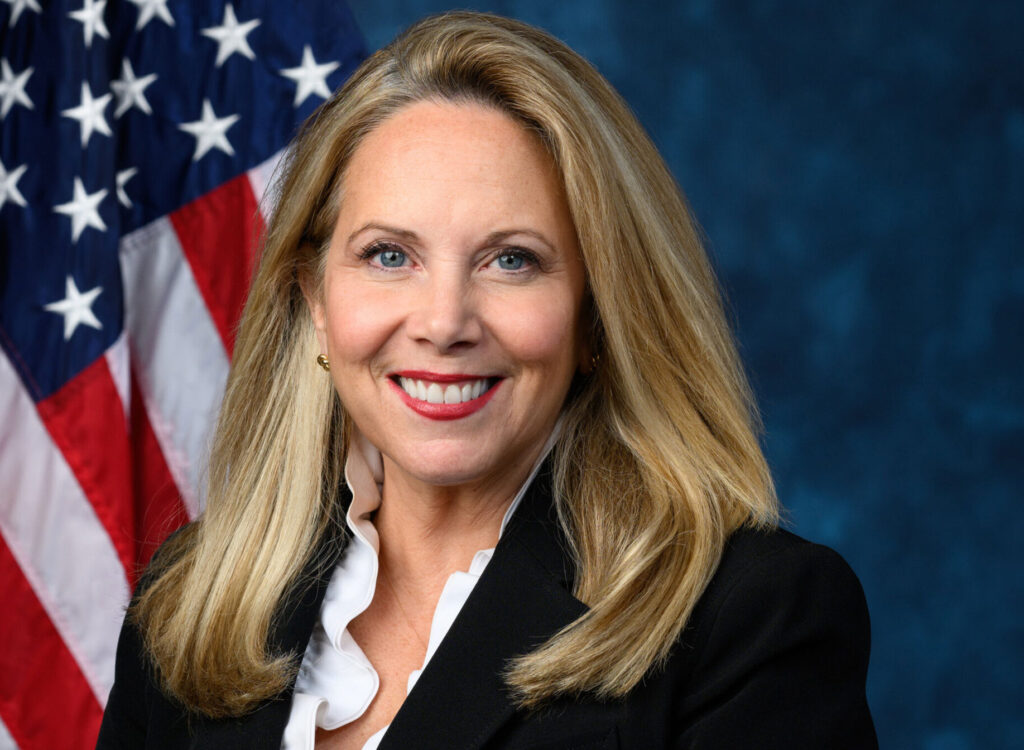

Marvin Williams: Republican Candidate for U.S. Congress, New York’s 4th District
The following responses were provided to 5TJT as part of our 2026 congressional candidate profile series.
What is it about the issues impacting Long Islanders that motivates you to run for Congress?
Long Island families are getting squeezed from every direction. Sky-high property taxes, rising energy costs, out-of-control inflation, and federal policies that make it harder to run a small business or raise a family. The people of this district work hard, play by the rules, and ask for little. What they get back from Washington is bureaucratic mandates and politicians more focused on ideology than results.
I spent nearly three decades serving this country in uniform and retired as a Lieutenant Colonel in the United States Air Force. In the military, failure carries consequences and leadership requires accountability. Washington today operates the opposite way. Waste grows, regulations multiply, and nobody takes responsibility.
I’m running because the country needs serious leadership again. That means restoring limited government, defending the Constitution, securing our borders, rebuilding American energy independence, and putting American families first. Long Islanders deserve a representative who believes in freedom, law and order, and the values that made this country strong in the first place.
You’re a military man. What is your assessment of the current situation in Iran?
What we’re seeing right now is a major turning point in the Middle East. The United States and Israel have launched direct strikes against Iran’s military infrastructure and leadership, and Iran has responded with missile and drone attacks across the region. This is no longer a proxy conflict. It is a direct confrontation with the world’s leading state sponsor of terrorism.
Iran spent decades funding Hamas, Hezbollah, and other terror groups whose stated goal is the destruction of Israel and the targeting of Americans. That threat has now escalated into open conflict. Iranian missile barrages have targeted Israel and American forces in the region, while Israel has struck key Iranian military and energy infrastructure in response.
As a retired Lieutenant Colonel in the United States Air Force, I believe American leadership must be clear and strong in moments like this. Israel is America’s closest ally in the region and the only stable democracy. When Israel faces existential threats from a regime that openly calls for its destruction, the United States must stand firmly at its side.
We must never allow the Iranian regime to obtain nuclear weapons. That would endanger Israel, destabilize the entire Middle East, and put the global economy at risk.
Peace through strength remains the only strategy that works with regimes like Tehran. That means maximum economic pressure, unwavering military deterrence, and an ironclad alliance with Israel. Weakness invites aggression. Strength prevents war.
Our district is very heterogeneous. What are the issues that overlap and interest everyone in the district?
The 4th District is incredibly diverse. You have families whose roots go back generations and others who came here from around the world to pursue the American dream. People come from different cultures, different faiths, and different backgrounds.
I am a Black American, and am proud of that. At the same time, the most important word in that description is American. Before anything else, we are citizens of the same country, bound together by the same Constitution and the same promise of freedom and opportunity.
When I talk to people across Long Island, I hear the same basic things. They all want safe streets and law enforcement that is respected and supported. They want schools that focus on education and achievement. They want to afford a home, start a business, and build a future for their children. They want a government that respects their rights instead of constantly expanding its power.
Those are the values that unite Americans. Hard work, personal responsibility, faith, family, and freedom. Regardless of where someone came from or what they look like, those principles are what make this country work.
That is how I see this district and how I will represent it in Congress. Not as a collection of groups competing with each other, but as Americans who share a common future with a common set of values.
Have you been to Israel? What are your impressions?
My visit to Israel is an experience that will stay with me forever. As a biblical scholar and a man of deep faith, standing in Jerusalem is unlike anything else on earth. The history is not just ancient; it’s alive. You feel thousands of years of covenant, sacrifice, and perseverance in the stones beneath your feet. That’s not metaphor. That is reality.
But I also saw something that resonated with me as an American and as a constitutionalist: Israel is a democratic republic surrounded by forces that want to extinguish it. It has a rule of law, an independent judiciary, a free press, and a citizen army. These are not coincidences: they are the marks of a society built on principles not unlike our own. The parallels to the American founding are profound.
What I took away most was the Israeli people’s absolute refusal to surrender their sovereignty or their liberty, no matter the cost. That is a value I share to my core. As a Congressman, I will stand with Israel not merely as a foreign policy alliance, but as a matter of shared civilizational principles. Democratic republics that govern by law must stand together. I will be a tireless advocate for that partnership in Washington.
Will you be seeking the endorsement of President Trump?
Yes. I am proud to be a Republican, and I am actively seeking President Trump’s endorsement. I believe he has demonstrated a genuine commitment to policies that serve working Americans: tax relief, deregulation, energy independence, rebuilding our military, and restoring American credibility on the world stage. These priorities align with what Long Island families need, and I look forward to making that case.
I want to be transparent about who I am, though, because voters deserve that honesty. I am a Constitutional Republican. My loyalty is first and always to the Constitution of the United States, not to any party platform, not to any individual, and not to any political movement. The Founders designed a system of separated powers and individual rights so no single person or faction could dominate. I take that design seriously.
Where President Trump’s agenda advances constitutional governance—limited government, individual liberty, a strong national defense, and economic freedom—I will be a committed and enthusiastic partner. Where I believe a different path better serves my constituents or the Constitution, I will say so respectfully and vote my conscience. The people of the 4th District are not electing a delegate; they are electing a representative, and I intend to represent them with full independence and integrity.
I would like to add something that I believe is missing from far too much of our political conversation today: the Constitution is not a problem to be worked around. It is the answer.
We live in an era of government by executive order, regulatory overreach, and congressional abdication. Both parties have contributed to this erosion. I am running because I believe the 4th District deserves someone who will go to Washington to fight to restore the proper balance of power, return authority to the states and the people, rein in an administrative state that has grown far beyond any constitutional mandate, and insist that Congress do its job rather than delegating it to unelected bureaucrats.
I spent nearly thirty years serving this nation in uniform. I believe leadership means service, discipline, and the courage to stand up for what’s right even when it is unpopular.
I have a PhD in Corporate Ethics, three decades of executive leadership, and a firm conviction that free people governing themselves under constitutional law is still the greatest political idea in the history of humanity. I am asking the voters of this district to give me the privilege of defending that idea in Congress. I will not let you down. Please reach out to: marvinwilliams.org or by telephone to 516-815-7833. n
Paid for by Marvin Williams for Congress.
A Mission I’ll Never Forget
By Micah Gurtman, HAFTR High School Student

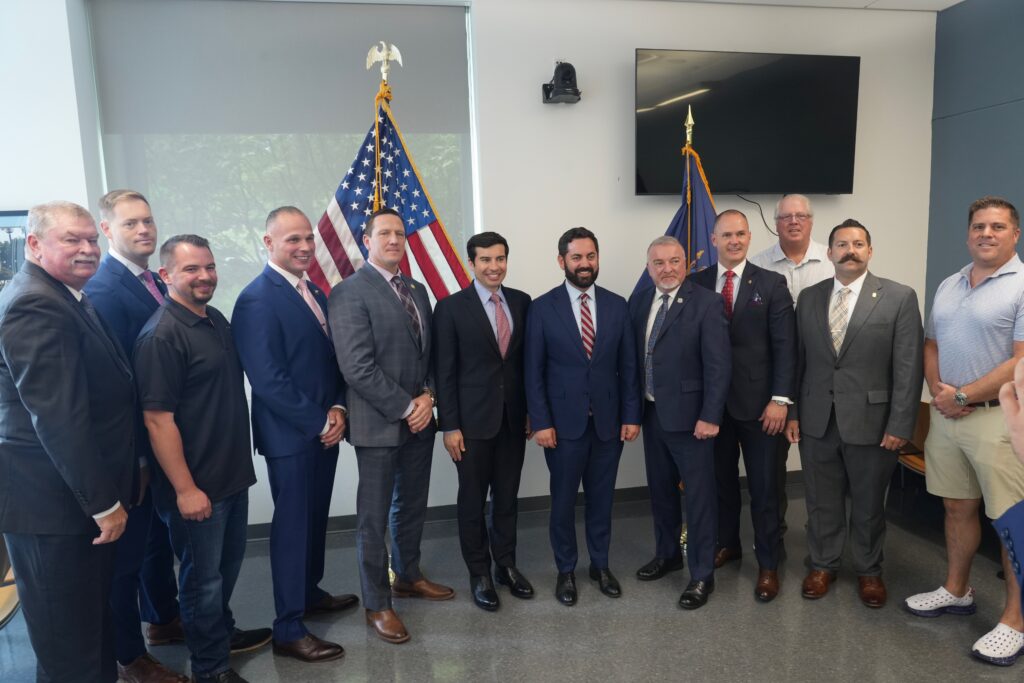
NORPAC Mission attendees meet with Rep Don Bacon

NORPAC Mission attendees meet with Rep Ritchie Torres
This past May, I had the opportunity to attend the NORPAC Mission to Washington with my parents. My older sister and I started going on NORPAC Missions when we were in eighth grade. Now my younger sister is in eighth grade and will be going on her first Mission this year. I’m really excited for her to experience something that has meant so much to me.
The first time I went, I was excited but also pretty nervous. I didn’t fully understand what we were going to be doing. I kept thinking, I’m just a kid—what do I know about politics? What do I know about talking to important adults? What difference could I actually make? But after that first Mission, I knew I wanted to go back.
This isn’t like a regular school trip to Washington where you just take pictures in front of the Capitol. This is seeing how the government actually works. You walk through the office buildings of Senators and Members of Congress and sit down with real decision-makers. In school, we learn how bills are passed and how Congress works, but sitting in those offices made it feel real. In one meeting, a Congresswoman’s chief of staff even complimented me and my friend on our sneakers. It was such a small thing, but it broke the ice and reminded me that these leaders are real people. That made it easier to have real conversations. I realized that building relationships is a huge part of what advocacy is about.
This year’s Mission felt even more meaningful. With everything happening in Israel and antisemitism rising across the country, especially on college campuses and social media, it sometimes feels like there’s nothing you can do. Watching the news makes you feel small. But being in Washington made me feel the opposite. It made me feel like I was actually doing something.
We spoke with members of Congress about the rise of antisemitism and about supporting legislation to protect Jewish students and communities. We also talked about the threat of Iran and the importance of standing strong with Israel. Our group leaders led the conversations, and I spoke when I felt comfortable. I could tell that the members of Congress and their staff really appreciated hearing from students, the next generation of voters. Just being there showed them that we care, and what they do matters.
Walking into those meetings gave me a real sense of responsibility and pride. It wasn’t just about politics. It was about standing up for our community and our values. As a high school student, that felt powerful.
One of the most meaningful parts was going with my parents. Watching them speak confidently and come prepared showed me that advocacy isn’t just something you talk about; it’s something you do. Seeing so many of my friends there with their parents made it even more special. We weren’t just tagging along. We were part of it. We were contributing.
The NORPAC Mission isn’t just a trip. It’s a chance to grow, to learn, and to take responsibility. It shows you how advocacy works in real life. Most importantly, it shows you that even students have a voice.
If you’ve never gone on the Mission, you should. Whether you’re a student or a parent, it changes how you see civic engagement and your role in it. I know it changed me. I’m already looking forward to going again next year, and I hope you’ll join us.
Voter ID For Snow Shovels But Not for Ballots? Mayor Mamdani’s Hypocrisy On Full Display
By Gabriel Boxer
You can’t make this up.
In today’s upside-down progressive political culture, common sense is often treated as controversial, and basic standards are applied only when they serve an ideological narrative. Few examples capture this contradiction more clearly than the stunning hypocrisy now on display from Mayor Zohran Mamdani.
Mamdani has long been a loud and unapologetic opponent of voter ID laws. Like many on the far left, he insists that requiring identification to vote is discriminatory, unnecessary, and even a threat to democracy. According to his worldview, asking a citizen to prove who they are before casting a ballot in the world’s most powerful democracy is an intolerable burden.
Yet at the same time, Mamdani has supported regulations that require multiple forms of ID for something far less consequential: shoveling snow.
Yes, really.
In Mamdani’s policy universe, proving your identity is unreasonable if you want to vote, but perfectly reasonable if you want to clear a sidewalk or perform basic municipal work.
That’s not just inconsistent. It’s indefensible.
Voting is not a trivial act. It’s the foundation of self-government. It determines public policy, taxation, national security, and the direction of our country. Every serious republic in the world recognizes this reality, which is why voter identification is the global norm, not the exception.
Yet, Mamdani and his ideological allies continue to argue that verifying identity at the ballot box somehow undermines democracy rather than protects it. The logical implication is clear: they believe safeguarding election integrity is less important than maintaining a political majority.
But when it comes to municipal regulations, labor compliance, or enforcing bureaucratic rules, suddenly identity verification becomes essential.
Why the double standard?
The answer is simple: political convenience.
On issues where stricter requirements expand government control, progressives are comfortable demanding documentation and compliance. But when it comes to elections, where stronger rules could increase public confidence and reduce opportunities for abuse, those same standards are suddenly labeled “oppressive.”
This contradiction exposes a deeper truth. The debate over voter ID has never truly been about access. It has always been about power.
Most Americans understand this instinctively. Poll after poll shows overwhelming bipartisan support for voter ID requirements, including strong majorities of minority voters. People do not see identification as discrimination. They see it as basic fairness.
After all, Americans must show ID to board an airplane, open a bank account, borrow a library book, enter government buildings, buy medications, or rent an apartment. In many places, they must also show identification to perform regulated work, including snow removal.
The idea that voting alone should require no verification defies both logic and public sentiment.
What truly undermines democracy is not voter ID; it is the erosion of public trust in elections. When citizens believe rules are applied selectively or that politicians oppose basic safeguards for political advantage, confidence in the system erodes.
That is the real danger.
If a political leader believes identification is necessary to regulate who can shovel snow, it is impossible to argue credibly that identification is unnecessary to determine who can choose the President of the United States.
The American people see this contradiction clearly.
And increasingly, they are tired of being told that common sense is controversial. Because in a healthy democracy, the standard for protecting our elections should never be lower than the standard for holding a snow shovel.
Gabriel Boxer is a former NYS Senate Candidate and the CEO of Guru Marketing.
Canzoneri-Fitzpatrick, GOP Lawmakers Rally Over Explosive NYSERDA Cost Memo, CLCPA Costs
Senator Canzoneri-Fitzpatrick and members of the Senate Republican Conference were joined by members of the Assembly Republican Conference at the Capitol in Albany for a press conference to highlight an explosive new memo from the New York State Energy Research and Development Authority (NYSERDA) regarding the shockingly high costs of New York’s so-called “green energy” mandates on New Yorkers. They also called on Democrats to repeal the statute that requires the state to implement a Cap-and-Invest program, a particularly expensive component of Albany’s climate agenda that the state now acknowledges could increase gasoline prices by as much as $2.23 per gallon and raise annual utility bills by up to $4,100 for upstate residents and $2,300 for residents of New York City.
Since Democrats passed the Climate Leadership and Community Protection Act (CLCPA) in 2019, Republicans have demanded answers about its cost, expressed concerns about its mandates, and questioned if its goals were realistic are achievable. Last week, it was disclosed that NYSERDA has issued findings that fundamentally agree with much of what Republicans have been saying for the past seven years, that the Democrats’ Climate Law is unaffordable and fails to meet its own benchmarks.
“For years, we have been warning that the CLCPA’s mandates were detached from economic reality,” said Senator Patricia Canzoneri-Fitzpatrick. “Now NYSERDA’s own memo confirms it. Gas prices rising by more than $2 per gallon, utility bills increasing by thousands of dollars a year, and small businesses facing hikes of up to 45 percent is not an energy plan. It is a financial burden on working families. Cap-and-Invest must be repealed before it drives costs even higher and makes New York even less affordable.”
Senate Democrats’ ideological approach to energy issues in this state has caused the highest utility bills New Yorkers have ever seen. Republicans in both the Senate and Assembly are taking action now to provide relief by pushing to scrap the most damaging parts of the CLCPA, especially Cap-and-Invest.
Governor Hochul’s New York State Energy Research and Development Authority released a memo outlining “likely costs of CLCPA compliance,” noting that, “the greenhouse gas accounting approach incorporated in statute and regulation, in combination with current emission reduction targets, mean that current law attributes higher emissions to New York than other leading jurisdictions do for the same activity.”
According to NYSERDA, absent changes, within five years:
- Gasoline prices could increase by $2.23 per gallon on top of whatever market prices are at that time. At today’s prices, that would mean roughly $5.25 per gallon.
- Natural gas costs could increase by $16.96 per MMBtu.
- Upstate households using oil or natural gas could see energy costs increase by more than $4,100 per year.
- New York City households using natural gas could see a gross cost rise by approximately $2,300 annually.
- Utility costs for small and medium commercial businesses increase by over 45%, which are passed down to consumers.
- Costs for operating a delivery truck would increase by over 60%.
In addition to the disastrous Cap-and-Invest program, the Senate Republican Conference has unanimously opposed other new energy costs and mandates within the CLCPA that have increased costs and decreased choices forced under an extreme climate agenda that is unaffordable, unrealistic, and unattainable.
Potholes Before Politics
By Assemblyman Ari Brown
If you want to understand Albany’s misplaced priorities, just take a drive down a typical local road in New York. The potholes and crumbling pavement tell a clearer story than any political speech ever could.
My colleagues and I in the New York State Assembly and Senate held a press conference to highlight a simple truth: local roads are essential infrastructure. They are the roads New Yorkers use every single day to get to work, take their children to school, reach houses of worship, and permit emergency vehicles to respond when seconds matter. Yet, despite how critical our roads are, Albany continues to treat them as if they were an afterthought.
As the Ranking Member of the Assembly Local Governments Committee, I work closely with the towns, villages, and counties that are responsible for maintaining the vast majority of New York’s roads and bridges. I hear directly from highway superintendents and local officials who are struggling to keep up with growing infrastructure needs while the state fails to provide the resources necessary to do the job properly.
New York’s deteriorating roads and bridges reveal a fundamental failure of priorities under Governor Kathy Hochul’s administration. While the governor frequently speaks about propelling New York into a clean energy future, complete with mandates requiring all new passenger vehicles to be electric by 2035 and major investments in electric vehicle charging infrastructure, the state continues to neglect the basic infrastructure that residents rely on every single day.
The numbers tell the story.
Local governments maintain 87 percent of New York’s 97,000 miles of highways and more than half of the state’s 17,200 bridges. Nearly 48 percent of all vehicle miles traveled occur on these locally maintained roads. Yet only about 13 to 14 percent of transportation taxes and fees collected statewide make their way back to the towns, villages, and counties responsible for maintaining them.
The imbalance becomes even more severe when federal funding is considered. About 97 percent of the state highway system qualifies for federal aid, but the vast majority of local roads do not. That leaves local governments responsible for maintaining the roads most New Yorkers drive on without the funding necessary to keep them in good condition.
The result is predictable. Across New York, local roads are deteriorating faster than communities can repair them. According to assessments from the Federal Highway Administration and engineers at the New York State Department of Transportation, the statewide need for pavement and bridge repairs now exceeds $100 billion. Delaying maintenance makes the situation far worse. It costs five times more to rebuild a deficient bridge than it does to maintain it properly, and sixteen times more to replace deteriorated pavement than to preserve it through routine maintenance.
Yet despite these realities, Governor Hochul’s proposed 2026–27 Executive Budget keeps CHIPS funding (the Consolidated Local Street and Highway Improvement Program) flat at $648.1 million, exactly the same level as last year.
Flat funding may sound harmless, but in practice, it is a cut. Construction materials, asphalt, steel, labor, and equipment costs have surged due to inflation. When funding stays the same while costs rise, municipalities lose purchasing power. Highway departments are forced to postpone preventative work, patch potholes instead of repaving roads, and shift resources toward expensive emergency repairs.
At the same time, the state continues pouring money into electric vehicle initiatives. Millions of dollars are being directed toward fast-charging networks, EV purchase rebates, sales tax exemptions for commercial charging stations, and power grid integration projects designed to support the state’s zero-emission vehicle mandates.
Those initiatives may sound ambitious, but they ignore a basic fact: electric vehicles still drive on roads. School buses, ambulances, police cars, delivery trucks, and family vehicles all depend on safe pavement and reliable bridges. Without these fundamentals, no energy policy, green or otherwise, will work.
There is also a looming fiscal problem that Albany refuses to confront. Gasoline taxes have long been a primary funding source for road maintenance. As more drivers transition to electric vehicles, that revenue will inevitably decline. Yet the state has offered no serious long-term plan to replace the lost funding, leaving local governments facing an even greater shortfall in the years ahead.
Local highway departments are not asking for luxuries. They are asking for the basic tools to maintain the infrastructure that keeps our communities functioning.
The Legislature should reject flat funding and add the requested $250 million increase to CHIPS and related local road programs. New Yorkers deserve leadership that understands a simple principle: before politicians chase the highways of the future, they should fix the roads we’re already driving on.
Assemblyman Ari Brown represents the 20th Assembly District, which includes the towns and villages of Cedarhurst, East Rockaway, Hewlett, Woodmere, Inwood, Island Park, Lawrence and Oceanside, along with the barrier island from Atlantic Beach to Point Lookout.