
Middle East Peace Deal
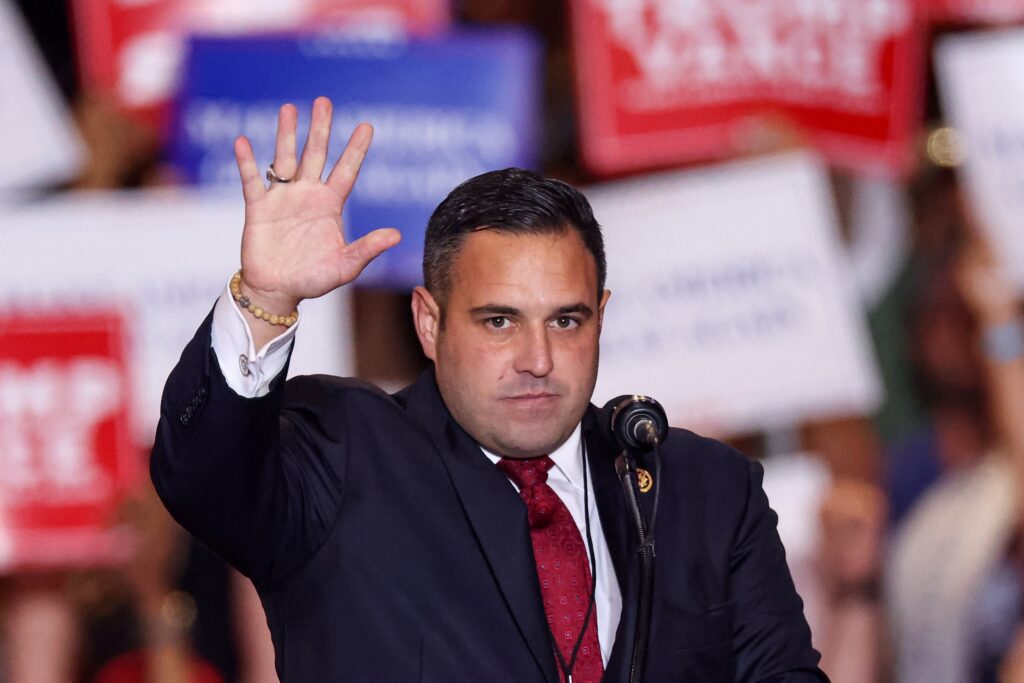
By: Congressman Anthony D’Esposito
By Fmr. Congressman Anthony D’Esposito
When history looks back on 2025, it will remember one thing above all: that President Donald J. Trump brought peace, strength, and moral clarity back to the Middle East—and, in doing so, gave the world hope again.
The newly signed Trump Middle East Peace Deal expands the Abraham Accords and marks a turning point after years of chaos and weakness. It is more than a diplomatic triumph—it’s a declaration that America leads from the front once more.
And for millions of Americans, including families here on Long Island, it is deeply personal. It means hostages returned home. It means Israel can breathe again. It means a safer, more stable world for every freedom-loving nation.
On October 7, 2023, the world witnessed unimaginable horror. Hamas terrorists stormed across Israel’s border, slaughtering innocent families, burning homes, and taking men, women, and children hostage. The brutality shocked the conscience of humanity—but it also revealed the price of weakness.
The Biden administration’s policy of appeasement—restoring funds to the Palestinian Authority, re-opening negotiations with Iran, and hesitating to call evil by its name—emboldened terror. When America signals retreat, the enemies of peace advance.
For months after the massacre, families waited for answers as hostages languished in tunnels. Diplomats issued statements. Bureaucrats held press conferences. The Biden White House spoke of “restraint.”
Then, in 2025, leadership changed—and everything changed with it.
From his first day back in office, President Trump made freeing the hostages one of his top foreign-policy priorities. Where others hesitated, he acted. He built a coalition of pressure and leverage—mobilizing Arab partners, threatening Iran’s proxies, and conditioning American aid on action, not promises.
When the new peace deal took shape, it wasn’t built on naïve trust. It was built on strength.
Through weeks of high-stakes negotiation, coordinated by Secretary of State Marco Rubio, Steve Witkoff, and Jared Kushner, Arab nations joined Israel in demanding the release of every last hostage taken on October 7. And for the first time in years, Hamas blinked.
The result: dozens of hostages—Americans, Israelis, and others—released under the terms of the Trump-brokered accord, returning to their families in scenes of raw relief and gratitude.
It was a triumph of courage and conviction. The deal reminded the world that terrorists only understand power—and that under Trump, America speaks the language of power fluently.
The 2025 Peace Deal doesn’t replace the Abraham Accords—it expands them. Building on the groundbreaking normalization agreements of 2020, the new framework brought Saudi Arabia, Oman, and additional North African nations formally into the coalition for peace.
These countries have committed to joint security arrangements, regional trade routes, and a unified front against Iran’s terror machine.
For Israel, the benefits are enormous: a secure neighborhood, open airspace, intelligence sharing, and a thriving economic corridor stretching from the Mediterranean to the Gulf.
For the Arab world, it means investment, jobs, and modernization. And for America, it means stability in a region that long defined instability.
This is the Trump Doctrine in motion—peace through strength, prosperity through partnership.
We must never forget the work of my dear friend, Ambassador David Friedman, a proud son of the Five Towns on Long Island. A man of deep faith and unwavering principle, Friedman was instrumental in crafting the Abraham Accords, the building blocks of this current deal. He brought to the table something Washington often lacks—moral conviction. He understood that Israel’s survival is non-negotiable, that truth matters more than political convenience, and that peace without security is no peace at all. Friedman’s fingerprints are all over this historic moment—from securing Jerusalem’s recognition as Israel’s eternal capital to ensuring that the new peace deal includes ironclad commitments against terrorism. For Long Islanders, his role is a point of pride. One of our own helped forge a blueprint for peace that honors both faith and freedom.
To understand the magnitude of this success, you have to remember what came before it.
During the Biden administration, America drifted. Iran enriched uranium while Washington issued warnings. Hamas rebuilt tunnels while U.S. diplomats begged for dialogue. The administration’s obsession with re-entering the Iran nuclear deal betrayed Israel and signaled to the world that America could be manipulated again.
Biden’s foreign policy wasn’t just weak, it was dangerous. His failure to deter aggression directly set the stage for October 7. His inability to stand firm with Israel fractured alliances and empowered extremism.
By the time Trump returned to office, the world was on fire. He put it out with leadership, not lip service.
Foreign policy may unfold an ocean away, but its impact lands right here on Long Island.
When the Middle East is stable, global markets stabilize. Energy costs drop. Inflation eases. Families pay less at the pump and on their electric bills. Our local businesses—from trucking companies to fisheries—benefit from predictable fuel prices and secure supply chains.
But the connection goes beyond economics.
Long Island’s Jewish community—one of the largest in the world—has felt the pain of October 7 deeply. Friends and relatives in Israel. Empty seats at Shabbat tables. Communities praying for hostages by name.
The Trump Peace Deal is not just a geopolitical win; it’s a moral one. It’s the answer to every prayer said for those who were kidnapped. It’s proof that America, when led with resolve, stands by its allies and brings its people home.
While President Trump was brokering the most consequential peace agreement of our time, Democrats in Washington were busy shutting down our own government.
Laura Gillen and Chuck Schumer turned partisan brinkmanship into an art form—holding America hostage while Trump was freeing hostages abroad.
It’s a contrast that couldn’t be clearer: Trump brings home captives from Hamas. Democrats can’t even keep federal workers paid.
The same party that appeased Iran and ignored antisemitism on campuses now presides over fiscal collapse and political paralysis. They’ve proven incapable of governing, let alone leading.
To protect the progress of the 2025 Peace Deal, America needs a Republican Congress that shares Trump’s resolve.
Republicans understand that peace isn’t maintained by apologies—it’s secured by deterrence. They know Israel’s right to exist is not up for debate. They support sanctions on Iran, funding for missile defense, and cooperation with our Arab allies.
Democrats, on the other hand, are divided between those who quietly support Israel and those who loudly condemn it. That division is dangerous. It weakens our standing and emboldens extremists.
If America wants to keep the peace, it must keep the pressure—and that means electing Republicans who will stand with Trump in defending the deal’s success.
The images coming out of the region tell the story better than any headline—former adversaries shaking hands in Riyadh and Jerusalem, families reunited after months of captivity.
This is what leadership looks like.
It’s not theoretical. It’s not symbolic. It’s real. And it happened because President Trump refused to accept the old rules of failure.
He proved that peace doesn’t require endless wars—it requires courage, leverage, and faith.
The release of the October 7 hostages will stand as one of the most moving chapters of Trump’s presidency. It wasn’t accomplished through hashtags or hollow speeches. It was achieved through forceful diplomacy and moral clarity.
From the Five Towns to Jerusalem, from Washington to Riyadh, the message is the same: peace comes when America leads with strength, not when it hides behind excuses.
The 2025 Trump Middle East Peace Deal is more than an agreement—it’s a turning point. It brought hostages home, expanded the Abraham Accords, isolated Iran, and reminded the world that the United States remains the arsenal of democracy and the guarantor of peace.
Meanwhile, Democrats at home have proven they can’t even keep our own house in order. They shut down the government, ignored rising antisemitism, and downplayed terror.
That’s why this moment matters—not just for Israel, not just for the Middle East, but for every American who believes in leadership that delivers.
President Trump showed the world that peace through strength isn’t just a slogan—it’s a strategy that works.
And if he can bring peace to the Middle East and hostages back to their families, then surely we can bring competence back to Washington—by electing Republicans who can help finish the job, make sure our troops are paid, and keep the government open. n
Congressman Anthony D’Esposito was nominated by President Donald Trump to serve as Inspector General of the Department of Labor. Previously, he served in Congress, representing New York’s 4th Congressional District. Anthony served as a Councilman in the Town of Hempstead after retiring from the NYPD as a highly decorated Detective. He also served as Chief of the Island Park Fire Department and helped lead the all-volunteer organization’s response to Super-Storm Sandy. The Congressman appears frequently on Fox News, Newsmax, ABC National News, and 77 WABC Sid and Friends in the Morning. To contact, email [email protected].