



Musings Of A Shliach From Montana
By: Rabbi Chaim Bruk
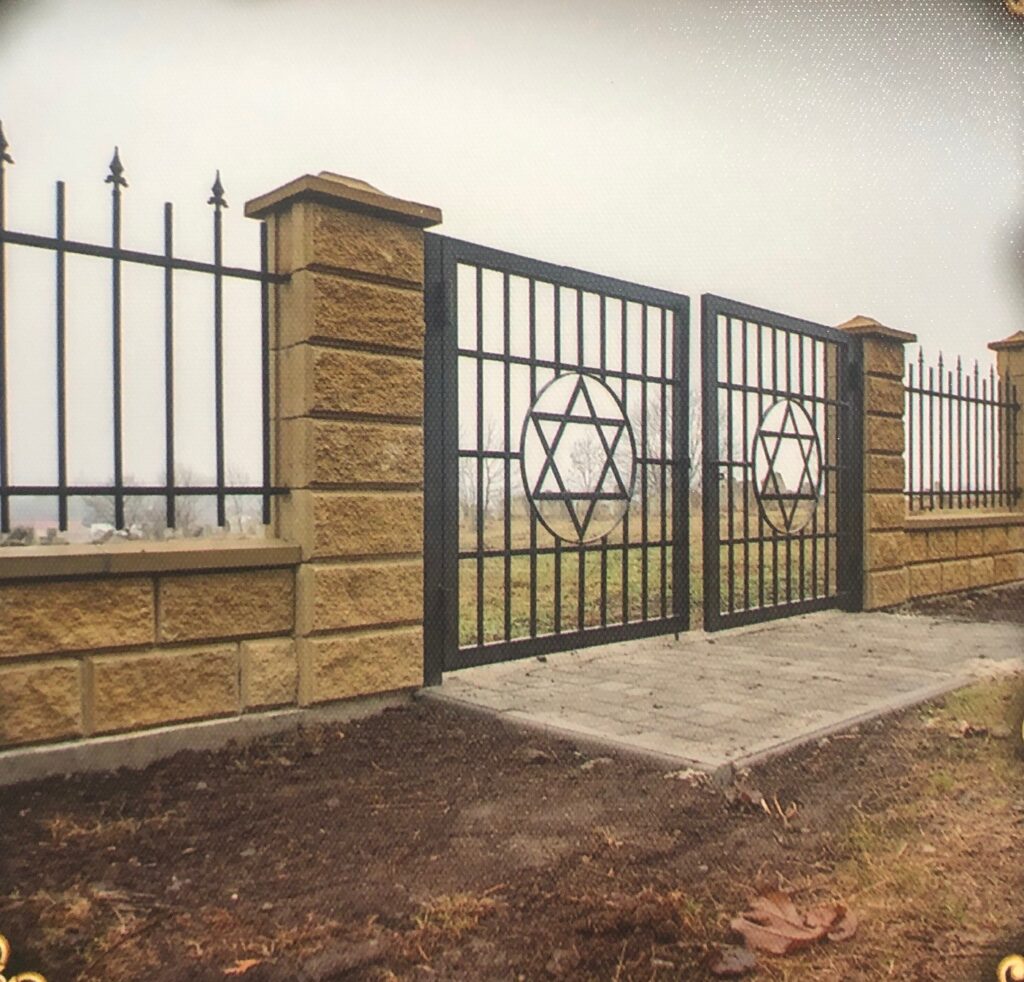
Cemetery of Tovste, Ukraine where the Baal Shem Tov’s mother Sarah is buried
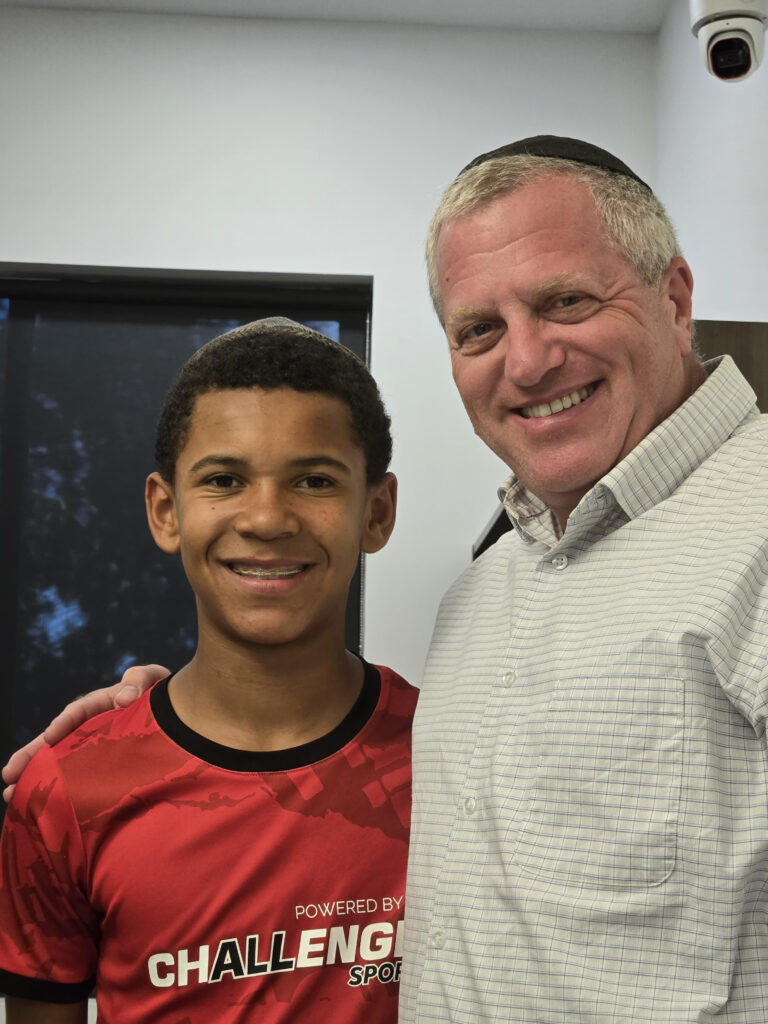
Menny with Uri Lazar of Lawrence, who came to visit with his wife Lisa
I must begin with some personal nachas from this column. While I receive constant feedback on my weekly articles, this past week, two couples (one from Monsey, the other from Lawrence) who are avid readers of “Musings of a Shliach from Montana” personally joined our Wednesday night shiur in Bozeman and shared how much they enjoy reading it, which gave me tremendous chizuk to keep writing it. So, if you’re ever on the way to Yellowstone or in our corner of Montana, please stop by Bozeman so we can meet in person.
On the topic of chizuk, I believe we all need it at times. When life gets rough, emunah (faith) and bitachon (trust) in Hashem are hard. Recognizing hashgachah pratis, Divine Providence, in every aspect of life, even when you’re struggling, even when you don’t see Him, is challenging to say the least, but vital. Chavie and I work well together, reminding each other that Hashem has a plan. But the daily ups and downs of life can take a real toll on a person’s well-being.
Recently we’ve been having another bout of challenges with childrearing. No, there’s no specific event of magnitude, just the realization that some children are harder to raise than others, and it can be super exhausting for the parents who are raising them. Some people are scared to say that out loud for fear of judgement. Others feel inferior because of this reality in their life. Yet, in most cases, it’s just the kids you’ve been gifted and it’s okay to say that some are a little harder than the angels you see at the grocery store.
Especially while serving on shlichus, with no bubby and zaidy, aunts and uncles, friends and Yiddishe classmates down the block, it just exacerbates the hardships. Chavie and I are frequently invited to speak around the country and I have to always explain why we can’t leave at the same time because we don’t have any backup at home to stay with the kids, which is outside the norm in the frum community.
Turns out, every time I struggle with an issue, I end up sharing something in my Shabbos derashah that only later I realize is literally about me in my journey. This past Shabbos, I shared a teaching from the Yaaros Devash of Rav Yonasan Eibshitz.
The Gemara Brachos asks: How could David Hamelech say in Psalm 3: “Mizmor l’David” when he was in such pain fleeing from Avshalom, his own son? Why would he call it a Mizmor (Psalm of praise)? Shouldn’t he call it a “Dirge of David” (Kinah l’David) instead? The Gemara answers that when Hashem prophesized to David, “Behold, I will raise up evil against you from the midst of your house” (Shmuel 2:12-11), David feared it would be a slave or some other foe, but when he saw it was his own son, he was greatly relieved and said a Psalm in praise of Hashem.
Rav Yonasan explains the Gemara as follows: the last thing David expected was that his own beloved son would try to kill him. For a slave or a foe to want to kill a king is normal, but one’s own child? That’s completely bizarre. When that happened, he had no doubt that it was the “Hand of Hashem.” The fact that Hashem Himself was behind this tragedy was the biggest consolation and source of comfort for a man like King David because it meant there was some meaning, purpose, and logic behind it, even if it completely defied logic.
I thought this was such an interesting way to see our challenges in life. The crazier, more unbearable, more illogical the circumstances, the more you know it’s the Yad Hashem, the Hand of Hashem. When the obstacle we face is so crazy, so wacko, so untenable, it’s like Hashem is trying to get our attention and remind us that He’s in charge even though we can’t perceive Him.
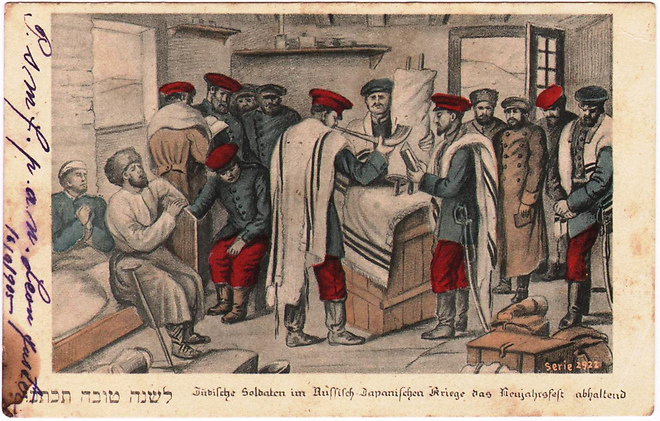
In 1904, during the Russo-Japanese War, many Russian Jewish soldiers were sent to the front. The fifth Lubavitcher Rebbe, Rav Sholom Dovber, known as the Rebbe Rashab, sent matzah and all the Pesach needs to the Jewish soldiers. He received a thank you note in return that was signed, “Soldati Akopi Shanghai,” translated as “the soldiers in the Shanghai trenches.” Upon seeing that, the Rashab commented that he heard in the name of the Alter Rebbe that at times the Baal Shem Tov would sign his name “Yisroel of Akop,” even though he was from Tloste (today called Tovste), because Tloste was a walled city at some point and the wall was destroyed, leaving only trenches where there had once been walls. The Baal Shem Tov’s parents were broke and homeless, so they lived in the tunnels beneath the walls, so he signed his name “from Akop,” meaning from the trenches.
On Pesach of 1960 the Rebbe, zt’l, went on to explain that this is the meaning in Tehillim (118) “From the straits I called Hashem; Hashem answered me with a vast expanse.” We may be calling out from the straits, from a place of such horrifying narrowness that we can’t breathe; we don’t know how to move forward, we feel stuck and paralyzed, but Hashem responds from a place of Infiniteness, answering us with vast expansiveness. This is also part of the verses we say before we blow the shofar on Rosh Hashanah, etching in our heart and brain that come what may, even in dire straits, Hashem knows how to open pathways.
This Shabbos is Shabbos Selichos and I love the fact that sometimes I say it alone in shul and sometimes one or two locals join. I love standing and singing Vahaviosim, Machnisei Rachamim, Rachamana d’anei, and so on. We all need some alone time with Hashem, to sing, cry, pray, think, meditate, dance, and beseech His mercy and guidance. Recently, I was learning Tractate Sanhedrin and there are differing opinions about what happened to Chananya, Mishael, and Azaryah after being saved from Nebuchadnezzar’s fiery furnace. Two opinions agree that they died, but differ on how and why, but the third opinion (based on a verse in Zechariah) said that the three of them made aliyah to Israel and married, bringing sons and daughters into the world.
Could we even fathom the feeling of being thrown into a flaming fire, assuming death is imminent and then miraculously surviving and building a new family? The meitzar, the straits they were in, was as real as it gets. Yet, when worthy, Hashem pulls us out into a place of beloved expansiveness. It’s kind of like the hostages who survived their ordeal in Gaza and are now living life and re-framing their entire experience.
Elul is a time when we reflect on the year that passed and what we can do better in the coming year. In Chabad houses, it’s also a time when you’re reaching out to every Jew in your community to remind them that the High Holidays are coming and inviting them to come home to “Tatty, my King.” Yet, amid all of the yom tovpreparations and spiritual upliftment, we shouldn’t forget the basic truth of how blessed we are to have a Tatty like HaKadosh Baruch Hu who is willing to forgive us and allow us to start over with a new slate.
This week’s double parashah of Nitzavim-Vayelech talks about teshuvah, that when we return to Hashem, He will return to us with the covenant that He made with our ancestors. Let’s make teshuvah great again, let’s make introspection real again, not just on our WhatsApp statuses, but in our hearts, souls, and especially in our actions.
Rabbi Chaim Bruk is co-CEO of Chabad Lubavitch of Montana and spiritual leader of The Shul of Bozeman. For comments or to partner in our holy work, e-mail [email protected] or visit JewishMontana.com/Donate.