
Our Need For Personal Growth
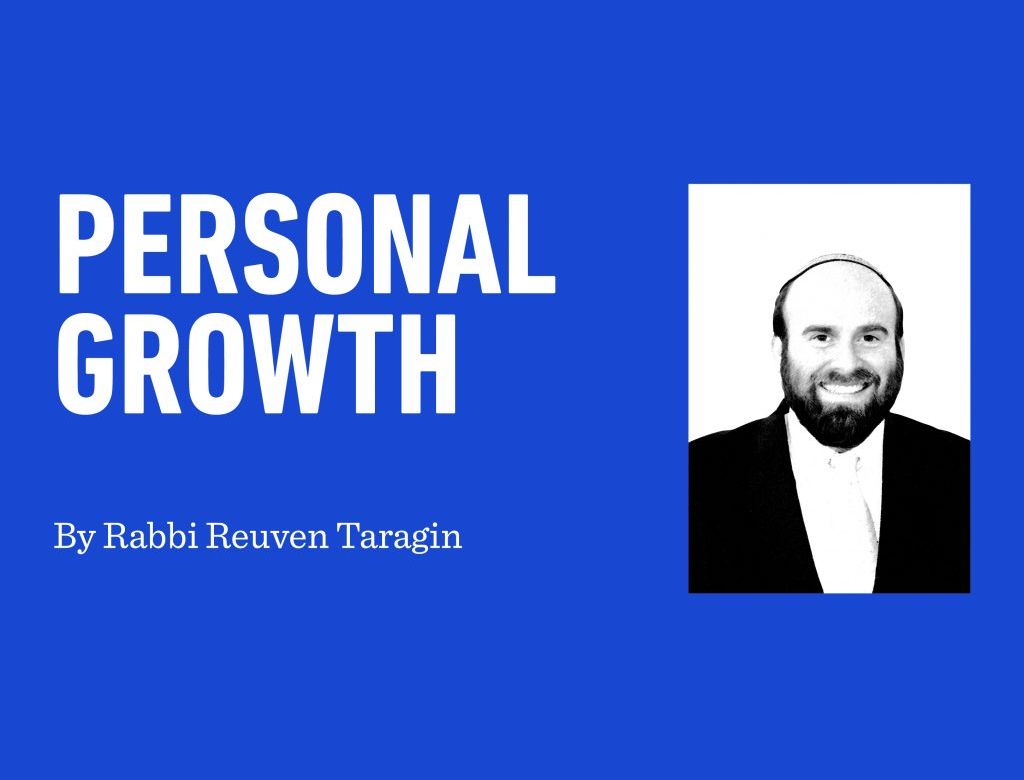
By: Rav Reuven Taragin
Our recent articles have explored our perspective on the world and our collective mission. We now commence a new series, with Hashem’s help, focused on our personal growth.
Our mission in this world includes not only fulfilling mitzvot and improving the world, but also improving ourselves. The Torah emphasizes the need for this self-improvement in its very first chapter.
Hashem created humanity last, as the culmination of Creation. The Torah states that Hashem regarded all that He had created prior to humanity’s arrival as “good.” Everything was arranged in anticipation of humanity’s entrance into this world, which was created for this purpose (San. 38a).
But when it comes to humanity, Hashem does not describe us as inherently “good.” Rav Yosef Albo (HaIkkarim 3:2) attributes this distinction to a fundamental difference between humanity and all other creations. While other creatures are created as objectively good and naturally equipped to fulfill their roles, humanity’s status depends on individual choice and action. Being created in Hashem’s image grants us free will: the capacity to choose good, but also the possibility to choose evil and exert a negative influence.
Human destiny is determined by individual choice, affecting both oneself and the broader world. Hashem did not create us as completed beings but as individuals with the need and responsibility to cultivate ourselves. Unlike angels, whose existence is static, humanity is intended to strive for higher levels of existence. Accordingly, the Gemara teaches that talmidei chachamim “do not have rest” in this world (Ber. 64a). They are constantly tested and continually pursue opportunities for personal growth.
Rabbi Akiva (M”T, Taz. 5) interpreted the mitzvah of brit milah as conveying this message. The Roman general Turnus Rufus rejected the practice, arguing that it constituted a defamation of Hashem’s creation. He asserted that if Hashem wanted humans to be circumcised, He would have created them in that state. Since Hashem’s creations are superior to human modifications, he argued, humanity cannot improve upon His world.
Rabbi Akiva responded that human creations can surpass the original form Hashem provided since He intentionally created the world incomplete to grant us the opportunity to complete it. The mitzvah of milah illustrates that we also require improvement. Just as we transform wheat into bread and other foods, we are tasked with refining our own bodies. Rabbi Akiva further noted that infants are born with an umbilical cord that must be severed for survival, symbolizing our responsibility to develop ourselves.
The Sefer Hachinuch (2) extends Rabbi Akiva’s concept further, explaining that milah instructs us to pursue spiritual self-improvement. Hashem instills in us the need to refine our physical selves as a lesson in cultivating our souls. Our efforts in physical development should inspire our pursuit of spiritual growth.
The Netziv (Ber. 2:7) derives this principle from the Torah’s account of human creation. While animals are described as “nefesh chayah” immediately upon their creation, humanity receives this designation only after Hashem imparts a soul. According to the Netziv, this distinction exists because animals possess purely physical existence, whereas humans attain true life only through spiritual development and a deep appreciation of the soul.
The Zohar (3:91b) applies this concept to another distinction in the Torah’s descriptions of humans and animals. Unlike humans, who are referred to by different names at various stages of life (such as baby, child, or adult), the Torah uses the same terms for both young and mature animals. For example, a baby ram is called a ram, a baby ox, an ox, a baby sheep, a sheep, and a baby goat, a goat (Vay. 22:27).
The Zohar explains that we use different names for the various stages of human life because humans, unlike animals, undergo significant development from one stage to the next. The distinct names convey the meaningful distinction between the stages of a full and meaningful human life.
The Maharal (T”Y 3) saw a hint of our need for personal development in an additional aspect of creation—the physical material used to create man, “afar min ha’adamah” (Ber. 2:7). Man was created from the dust of the earth to teach us that, like the ground, we have potential for growth. This is why Chazal (Sot. 46a) describe man’s accomplishments as his peirot since, like the ground, man produces fruit. The ground’s produce is physical fruit; human produce is personal growth.
The Baal Shem Tov saw this idea as Hashem’s intention when He exclaimed (before creating man), “Na’aseh adam—We will make man” (Ber. 1:26). The commentators wonder who else Hashem involved in the process of creating man. The Baal Shem Tov identifies the man Hashem created as the one He included as His partner in the process. Hashem creates us together with ourselves. He begins the process; we complete it.
Judaism often finds itself at odds with society on this issue. In Greco-Roman times, the debate centered on altering one’s physical appearance. Turnus Rufus and his colleagues rejected Judaism’s belief in the need to change our bodies.
In contemporary times, the debate focuses on one’s emotional makeup. Much of contemporary society celebrates and emphasizes one’s emotions and personal state. The Torah teaches us that our emotional makeup is merely a starting point in personal development. Holiness is a goal, not just a starting point.
For this reason, the Midrash (B”R 84:3) critiques Yaakov Avinu’s desire to “settle” in Eretz Yisrael after twenty years in Lavan’s house. After enduring significant challenges with Lavan and Eisav, Yaakov understandably sought tranquility, likely for virtuous reasons. The Rambam (Tesh. 9:2) explains that prophets and sages yearn for the coming of Moshiach to attain the peace of mind necessary for Torah study and the proper fulfillment of mitzvot. Yaakov’s aspirations were consistent with these objectives.
However, this tranquility was not achieved. Instead, Yaakov faced new challenges, particularly the discord between Yosef and his brothers. The Sefat Emet (Vayeshev, Likutim) teaches that while tranquility is valuable, it is not the primary pursuit in this world. Tranquility is reserved for the next world; this world is intended for personal growth (Av. 4:17).
Personal growth presents a formidable challenge. Rabbi Yisrael Salanter taught that changing a single character trait is more difficult than completing the entire Talmud. Nevertheless, this endeavor defines our life’s mission and the fundamental purpose of our creation.
Bereishit Rabbah (9:12) explains that although humanity is not initially described as “good,” individuals who live righteous lives become the ultimate embodiment of “very good” (Ber. 1:31). By directing our free will toward meaningful personal growth, we surpass other creatures, who fulfill their roles automatically.
May an appreciation of this principle inspire us to pursue self-development and realize our full personal potential. n
Rav Reuven Taragin is the Dean of Overseas Students at Yeshivat Hakotel and the Educational Director of World Mizrachi and the RZA. His new book, Essentials of Judaism, is available at rabbireuventaragin.com.