
The Art Of Forgetfulness In Plastic Surgery
Last week, while I was sitting in a kosher restaurant in Boston before moving my daughter into college, a woman approached me. She smiled and I smiled back. She then tipped her hat upwards and asked if I recognized her. I replied that she looked familiar. She laughed and reminded me that I had done a procedure on her a few weeks prior.
I have always thought that I had a pretty good memory. I can remember an operation I performed years ago, where an incision was placed, which side was more difficult, and some tiny anatomical detail that required an extra twenty minutes of attention. I remember conversations with patients about what bothered them, what they were hoping to change, and what they were afraid of changing too much.
Yet, put that same patient in front of me at a wedding, in shul, at a restaurant, or standing in line at the supermarket, and I suddenly develop a remarkable case of amnesia.
Sometimes people look different outside the context in which you know them. In my office, I see patients under bright lights, often without makeup, sometimes in a gown, and usually while concentrating on one particular part of their anatomy. Then I run into them six months later in fancy dress at a simcha, with their hair done, surrounded by people I’ve never met, and my brain simply refuses to make the connection.
But sometimes, I admit, the forgetfulness is intentional.
One of the unwritten rules of being a plastic surgeon (particularly one who lives and works in a close-knit community), is that you should not always acknowledge your patient in public. Generally, when this occurs, I let the patient decide whether or not we should acknowledge each other. I may know exactly who the patient is; I may remember her surgery, and the fact that she sent me a photograph at 11 p.m. on day 3 post-op, convinced that one side was more swollen than the other. But if she’s standing next to her neighbor at a kiddush, I’m certainly not going to walk over enthusiastically and announce, “You look amazing!”
There are probably very few professions in which a compliment can be quite that incriminating. Plastic surgery has an unusual relationship with privacy. People are increasingly open about Botox, fillers, lasers, and even surgery, and I think removing some of the shame around aesthetic procedures is generally a good thing. But openness has to be a choice, and people are entitled to their privacy (and certainly HIPAA always applies as a default). My comfort discussing plastic surgery does not give me permission to assume someone else is comfortable discussing their plastic surgery. That becomes particularly important in a community where the degrees of separation can feel more like one and a half than six.
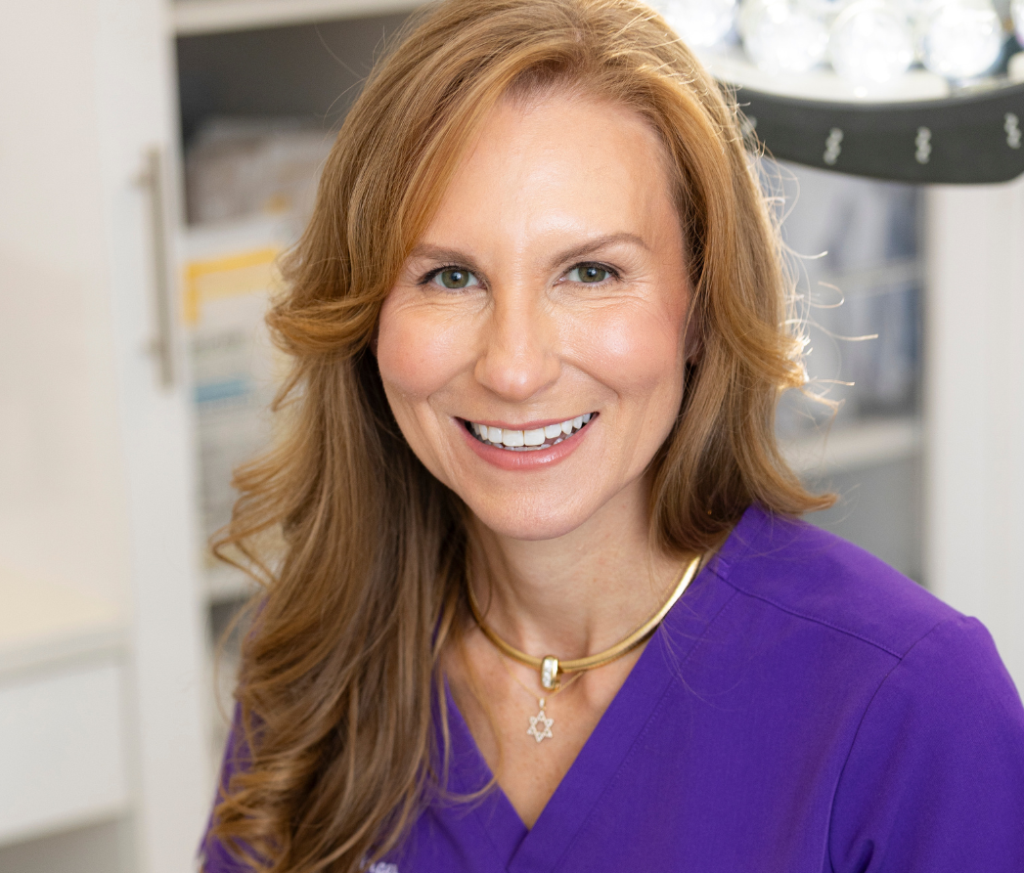
There’s also something strangely humbling about not recognizing patients. Surgeons spend an enormous amount of time studying faces and bodies. We measure millimeters. We photograph people from multiple angles. We notice asymmetries that most human beings would never see. You might assume that this would make us extraordinary at recognizing people. Apparently not. I have had patients come up to me enthusiastically at events and say, “Dr. Preminger!” while I smile warmly and rapidly search the filing cabinet in my brain while scratching my head. Then they give me one tiny clue. “You did my—” And suddenly the entire chart appears in my head. “Of course!” It’s an odd form of memory. Sometimes I remember the operation before I remember the person.
However, I have come to appreciate that a little forgetfulness is not necessarily a bad quality in a physician. Medicine requires us to know extraordinarily intimate things about people and then behave as though we do not. We see people frightened, vulnerable, undressed, sick, unhappy with parts of themselves, or simply sharing things they may not share with anyone else. The privilege of being entrusted with that information comes with an obligation to know when to remember, and when to forget. Sometimes I think it is simply protective of the physician-patient relationship.
There is a Jewish value embedded in that idea as well. We place tremendous importance on shmirat halashon, guarding our speech. Not everything that is true needs to be said. Not everything we know belongs in a conversation. Sometimes discretion is not about keeping a secret after someone asks you to. It is understanding that the information was never yours to share in the first place.
So, if you are my patient and you see me somewhere outside the office, and you want to say hello, please do—I’m always genuinely happy to see you. And if I look at you for one second too long before the light bulb goes on, forgive me. I may truly have forgotten where I know you from. Or I may know exactly who you are and am simply waiting for you to take the lead. n
At Preminger Plastic Surgery, we are committed to educating our patients and providing personalized care tailored to their unique needs. For those considering plastic surgery, we offer guidance every step of the way to help you achieve your aesthetic and wellness goals. Dr. Preminger is a board-certified plastic surgeon with degrees from Harvard, Cornell, and Columbia.
For more information or to schedule a consultation, please visit premingermd.com or call 212-706-1900. Follow us on Instagram @premingerplasticsurgery.