
The Illusion Of Control
We like to believe we’re in control of our lives.
We plan. We calculate. We work harder when things feel uncertain. We tell ourselves that if we stay disciplined and productive, we can protect ourselves from the parts of life that feel too fragile to face head on. Control gives us something solid to stand on. Or at least it feels that way.
There’s a saying I’ve heard all my life. Man plans and G-d laughs. For years, it sounded clever. Almost comforting. Lately, it feels painfully accurate.
Every time I tried to control an outcome in my life, it backfired. Sometimes loudly. Sometimes quietly. The tighter I held on, the more resistant life became. I did not always recognize it as control at the time. It often looked like responsibility or ambition. Like doing what I was supposed to do.
Recently, I started learning Chovos HaLevavos, and I was struck by how much it speaks about money. Not about earning strategies or financial planning, but about trust. About how parnassah is not something we can muscle our way into through sheer effort.
Money might be one of the strongest illusions of control we have.
We tell ourselves that if we work more hours, push harder, sacrifice longer, we will finally feel secure. As if productivity can buy safety. As if effort guarantees outcome. Intellectually, many of us know that is not true. Emotionally, we live as though it is.
If I’m honest, it goes even deeper than money. I’m conditioned to believe that what I produce reflects my worth. That my output proves my intelligence, my ambition, or my value. That working harder earns me not just stability, but validation. From myself and from others.
Letting go of that belief does not feel noble. It feels irresponsible. As if trusting more means caring less. As if loosening my grip means risking everything.
And then life reminds me how little control I actually have.
A year ago, my nephew died.
Nothing can prepare you for that kind of loss. No framing that softens it. His death did not arrive with meaning attached. It did not offer lessons upfront. It simply shattered the assumption that life follows rules.
There was no amount of effort that could have prevented it. No vigilance that would have changed the outcome. No version of planning that would have made sense of it. In one moment, everything shifted, and the illusion that we are managing our way through life dissolved.
In the aftermath, so many of the things we spend our days worrying about felt unbearably small. The stress over money. The pressures to produce. The constant calculation of what comes next. None of it offered protection. None of it mattered in the way we pretend it does.
And yet, even with that awareness, the habits do not disappear.
I still struggle. I still reach for control when I’m scared. I still default to work and effort when uncertainty creeps in. Knowing that outcomes are not mine to determine does not automatically rewire a lifetime of conditioning. Faith, I am learning, is not a switch you flip. It is something you wrestle with, especially when grief has stripped away your illusions.
What this year has changed is not that I have mastered surrender, but that I see the stakes more clearly now.
We do not control how long we live. We do not control the turns life takes. We do not control who stays or who leaves. His death made that painfully stark.
What we do have is the ability to live more awake. To love without guarantees. To stop confusing productivity with protection. To loosen our grip, even when it feels uncomfortable, and trust that our worth was never meant to be earned through output or preserved through control.
A year later, I do not pretend to understand why his life ended when it did. I do not look for neat explanations anymore. I carry the loss inside me. Quietly. Reverently. As a reminder of how fragile life is and how much we waste trying to control what we cannot.
Man plans. G-d laughs. And somewhere in between, we learn how to live. n
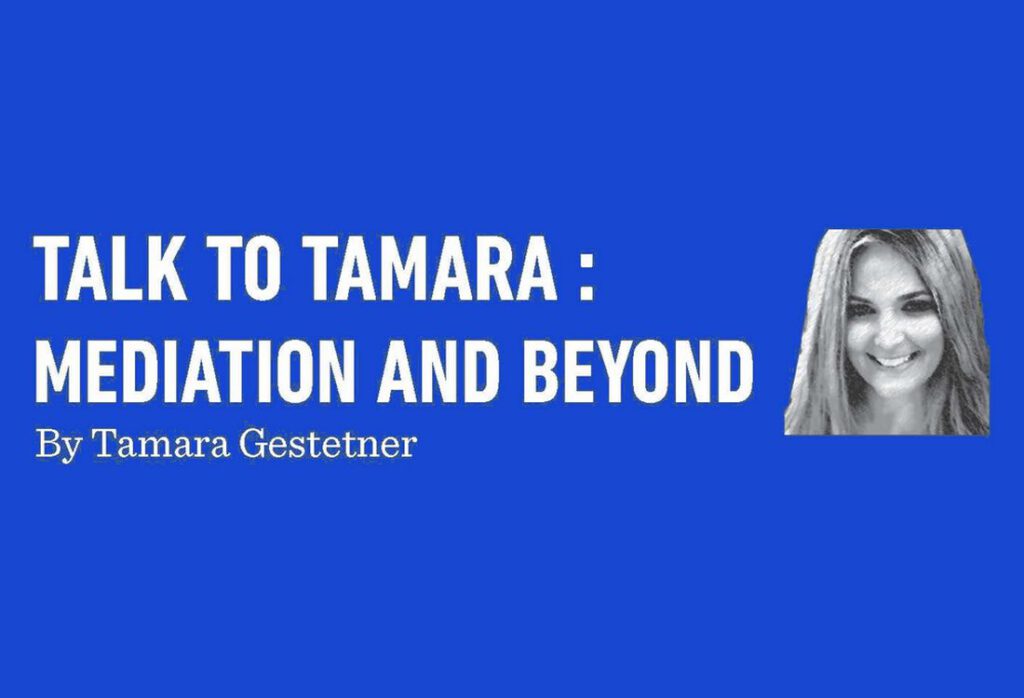
Tamara Gestetner is a certified mediator, psychotherapist, and life and career coach based in Cedarhurst. She helps individuals and couples navigate relationships, career transitions, and life’s uncertainties with clarity and confidence. Through mediation and coaching, she guides clients in resolving conflicts, making tough decisions, and creating meaningful change. Tamara is now taking questions and would love to hear what’s on your mind—whether it’s about life, career, relationships, or anything in between. She can be reached at 646-239-5686 or via email at [email protected]. Please visit TamaraGestetner.com.