



The Time To Prepare For A Market Decline
By: Jack Strulowitz
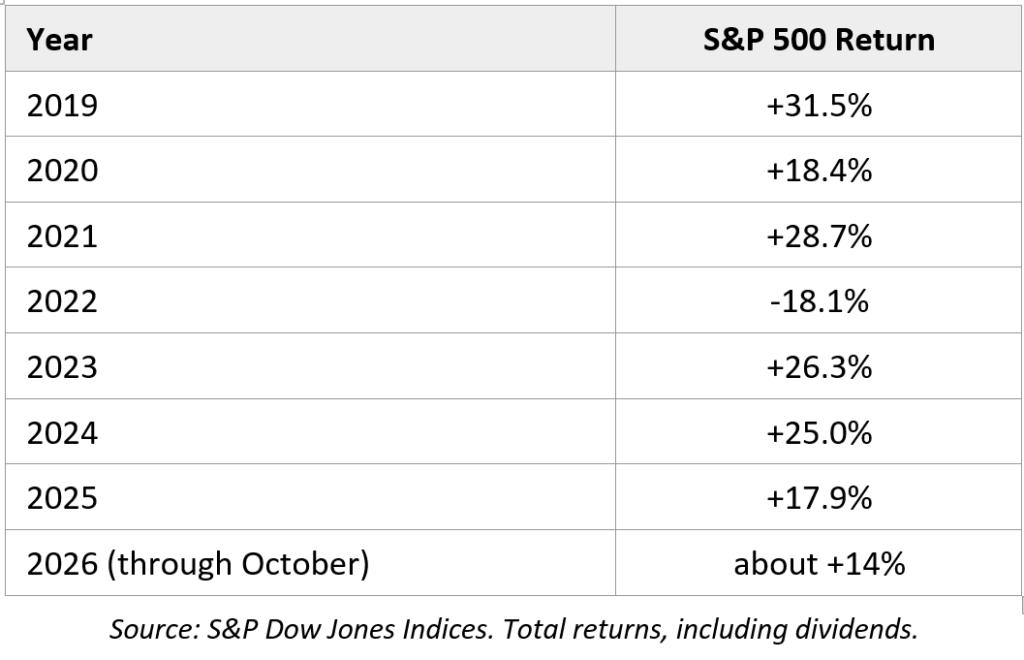
If you’ve been following financial news lately, you’ve probably noticed that the headlines have become considerably more alarming. After a long stretch of strong stock market performance, investors are once again being reminded that markets can go down, sometimes quite sharply. As I write this, the market has been going through a difficult stretch, although by the time you read this, it may have recovered some of those losses or fallen further. Nobody really knows what the market will do over the next few days, and I wouldn’t put much faith in anyone who claims otherwise.
I make a point of educating my clients about market cycles so they know what to expect when the market falls. Stock market declines are inevitable, and some of them can be quite severe. Meanwhile, the financial media has a business model that depends on attracting viewers and readers, and fear is a pretty effective way of doing that. For someone who only casually follows financial news, the occasional frightening headline may be just about the only stock market news they ever see. It’s easy to understand why people get nervous when that’s their primary source of information about the markets.
According to J.P. Morgan Asset Management, the S&P 500 has experienced an average decline of 14% at some point during each calendar year since 1980. Despite these declines, the market finished the year with a positive return in 35 of those 46 years. In most years, investors experienced some meaningful decline along the way, yet the market still ended up higher by December 31. Of course, there have also been periods when the market declined much further and took years to recover, but the occasional sell-off is hardly the extraordinary event that some headlines would have you believe.
When markets fall, my greatest concern is generally for people whose investment accounts are unmanaged or whose portfolios haven’t been properly constructed for their circumstances. I’ve seen plenty of examples over the years of investors who panicked during the financial crisis in 2008 or during COVID in 2020 and sold their retirement savings after watching their account balances fall. Many figured they would simply get back into the market once things settled down. It’s an understandable reaction when you’re watching years of savings disappear on paper. But it creates another problem. At what point do you decide it’s safe to get back in? When the market has recovered 5%? 10%? When the news starts sounding more optimistic? By the time most people feel comfortable about investing again, the market may have already recovered substantially.
J.P. Morgan studied the performance of a hypothetical $10,000 invested in the S&P 500 over the twenty years ending in 2025. An investor who remained steadfast throughout that period would have ended with approximately $80,600. An investor who missed just the ten best trading days would have ended with $35,900. Six of those ten best days occurred within two weeks of the ten worst days. These figures are particularly interesting because they illustrate how closely some of the market’s strongest gains occur alongside its worst declines. Investors who sell during periods of uncertainty run a very real risk of missing those gains.
I also think investors sometimes misunderstand what diversification is supposed to accomplish. When you hear that the S&P 500 has fallen 20% or 30%, that doesn’t necessarily mean your investment portfolio should be experiencing the same losses. The S&P 500 represents large American companies, and while it’s a useful measure of stock market performance, it isn’t a measure of every investment someone might own. A diversified portfolio might include stocks of small and mid-sized American companies, international stocks, U.S. and international bonds, and Treasury securities. Spreading investments across different markets, company sizes, and asset classes reduces reliance on any single segment of the market. Diversification doesn’t guarantee protection against losses, and different investments can decline together, particularly during periods of widespread market stress.
This is one of the reasons why I place so much importance on maintaining a close relationship with my clients and understanding what’s going on in their lives. Someone who expects to use a substantial portion of their savings to purchase a home in the next few years shouldn’t have that money invested the same way as someone who is thirty-five years old and saving for retirement. If your financial advisor doesn’t know about an upcoming need for liquidity, a change in income, or some other major development in life, there’s a good chance your portfolio isn’t properly reflecting your circumstances. These conversations are especially important when markets are doing well, because that’s when people tend to become comfortable taking risks they might not be prepared to live with when the market eventually declines.
Retirement planning is another area where this becomes particularly important. People sometimes assume that once they retire, their investments should become very conservative, but someone retiring at sixty-five may need their savings to last another twenty-five or thirty years, possibly longer. That’s a very long time to be invested, and inflation can do considerable damage to a portfolio that isn’t growing sufficiently. At the same time, someone who is relying on their investments to pay their living expenses needs to have a plan for accessing that money during a market downturn. Maintaining an appropriate amount in cash, Treasuries, or other stable investments can help avoid having to sell stocks at depressed prices just to cover expenses. The challenge is to find the right balance between having enough stability for near-term needs and enough growth to sustain a retirement that could last several decades.
I don’t know whether the recent market declines will turn out to be a brief correction or the beginning of something more serious. I do know that we’ve been through plenty of difficult markets before, and there will certainly be more in the future. Investors who understand that going in, have a portfolio suited to their circumstances, and maintain the discipline to stick with their long-term strategy, are generally in a much better position to deal with these periods. The time to make sure your portfolio is prepared for a market decline is before the decline happens, when you can make decisions based on your financial needs rather than your emotions. n
Jack Strulowitz is a Financial Advisor at Bernath & Rosenberg in Cedarhurst, NY, where he helps high–net worth individuals and families manage their investments and build comprehensive strategies for retirement, tax, and estate planning. For questions or to schedule a consultation, please contact [email protected] or (212) 221-1140, ext. 129.
All performance referenced is historical and is no guarantee of future results. All indices are unmanaged and may not be invested into directly. Investing involves risk including loss of principal. No strategy assures success or protects against loss. The economic forecasts set forth in this material may not develop as predicted and there can be no guarantee that strategies promoted will be successful.
The S&P 500 Index is a capitalization-weighted index of 500 stocks designed to measure performance of the broad domestic economy through changes in the aggregate market value of 500 stocks representing all major industries.
Securities and advisory services offered through LPL Financial, a Registered Investment Advisor. Member FINRA/SIPC.