


The Wells Of Our Fathers
The last time I wasn’t physically present at the Kinus Hashluchim was during COVID-19, when the in-person dinner was canceled. Instead, they livestreamed the Kinus at a time when shluchim across time zones could all tune in.
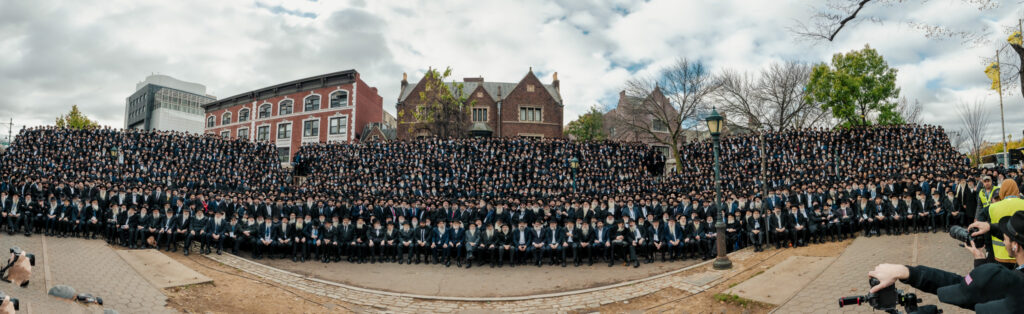
Int’l Conf of Chabad-Lubavitch Emissaries Group Photo 2026
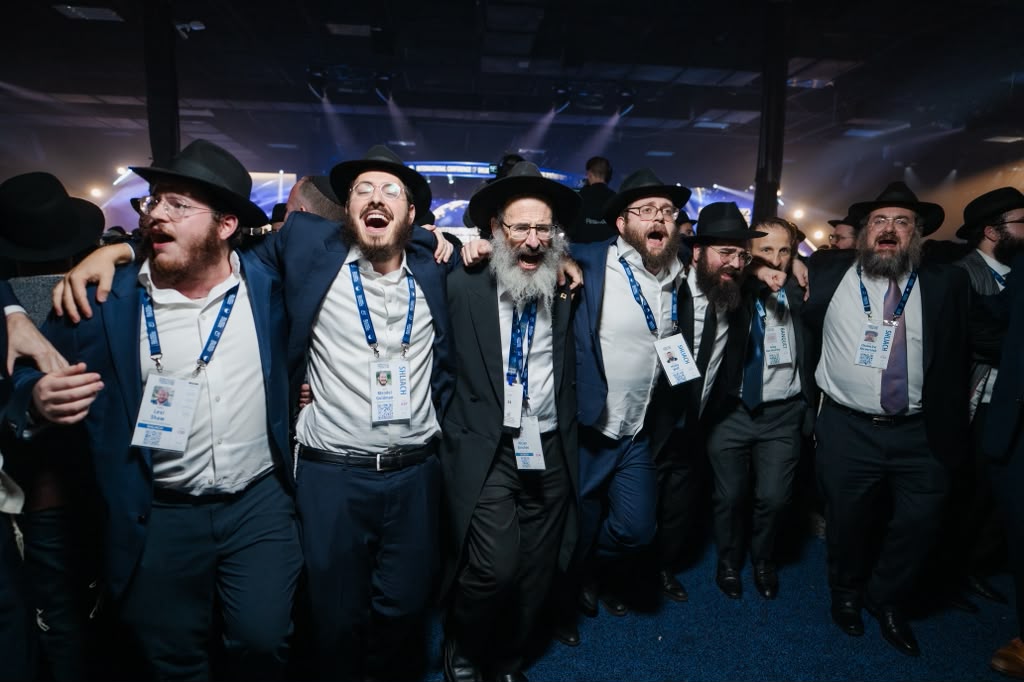
Rabbis and guests dance at the banquet gala at the New Jersey Convention and Exposition Center in Edison, NJ on Sunday, Nov 8, 2026
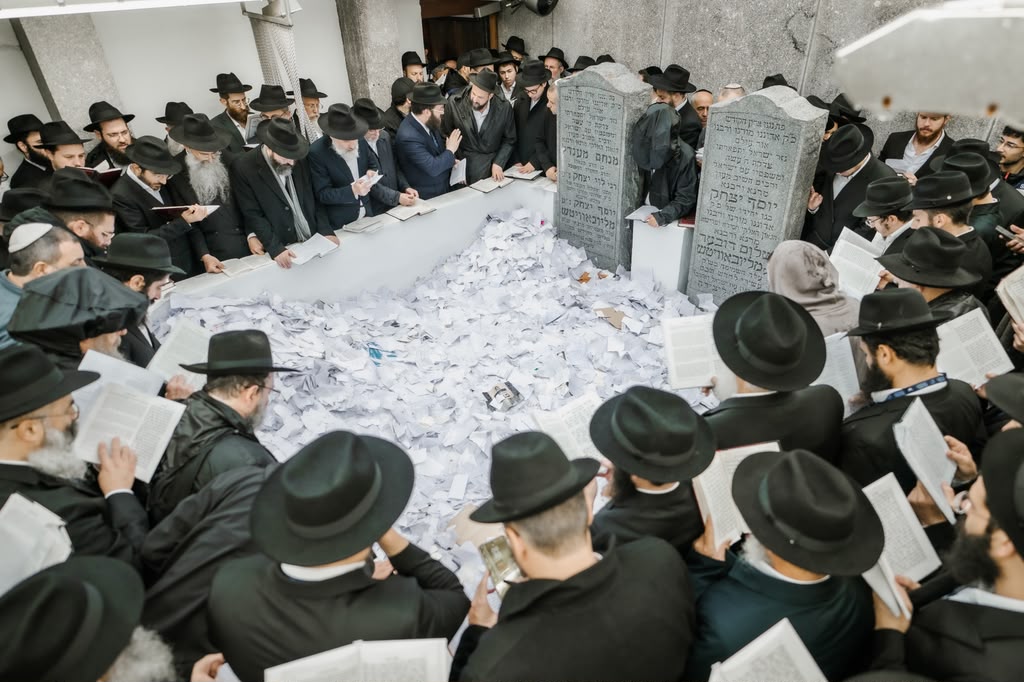
Chabad-Lubavitch rabbis gather at the Ohel, the resting place of the Rebbe, Rabbi Menachem M. Schneerson, in the Queens borough of New York on Friday, Nov. 6, 2026
I was scheduled to attend this year’s Kinus in Edison, New Jersey, along with nearly 7,000 shluchim and Chabad enthusiasts. But I’d lost track of the date of a friend’s wedding. I went to the wedding and tuned in to the livestream.
A few moments from the banquet stood out to me. Taken together, they offer a way to understand the unprecedented growth and impact of Chabad in the nearly 33 years since the Rebbe’s passing.
Nosson Schlanger, the thirteen-year-old son of Rabbi Eli Schlanger, Hy’d, spoke at this year’s banquet. His father was gunned down almost a year ago at a Chanukah festival in Bondi Beach, Australia. In his address, Nosson quoted a verse from this week’s parashah about the wells Avraham dug during his lifetime. The Plishtim filled them with dirt, and Yitzchak dug them again and gave them the same names his father had given them.
I’ll come back to Nosson Schlanger in a moment. I saw that same fire and determination to carry on a father’s legacy in Rabbi Mendy Kotlarsky, son of the late, indefatigable Rabbi Moshe Kotlarsky, of blessed memory. I vividly recall Reb Moshe chairing the Kinus banquet over the years. He always brought a certain power and intensity to that stage, but it was his insistence on continuing to chair the banquet even as illness slowed him down that left a deep impression on me and, I’m sure on many others. Reb Moshe could be described in many ways, but above all he was a well digger. He was always finding new places to send shluchimand spreading the wellsprings of the Baal Shem Tov, which Moshiach told him was the key to bringing the redemption.
Watching Rabbi Mendy at the podium these last couple of years, I’ve seen how seamlessly he has stepped into his father’s role, bringing his own grit and youthful spirit to it. It was almost as if I were seeing Reb Moshe thirty years younger. It reminded me of Yitzchak digging his father’s wells again and giving them the same names.
Two of my brothers, Nison and Nachi, attended the Kinus as part of the Meaningful Minute platform. When I asked Nison how it was, he answered with a resounding “Amazing.” The first thing he told me was that there wasn’t a dry eye in the room when Nosson Schlanger addressed the crowd of nearly 7,000, among them rabbanim, entrepreneurs, dignitaries, and lay leaders. Nosson committed himself to carrying on his father’s legacy and declared that he would stand firm in the face of the hatred that had sought to fill the wells his father had dug.
It’s easy to imagine being moved to tears in that room. I was lying in bed, tired from a sleepless night on motzaei Shabbos, watching the Kinus on the same iPhone 16 Pro Max I’m typing this article on. As Nosson Schlanger spoke, the tears welled up and began to flow. It’s hard enough to sit on a plane for more than twenty hours from Australia. I can’t imagine getting up after that and addressing nearly 7,000 people with the strength and determination Nosson showed. It was otherworldly. We use words like nachas or pride to describe what a parent feels when a child accomplishes something extraordinary. I don’t know what words could capture what a parent must feel watching a young son whose life changed in an instant find the strength to carry his father’s light forward in the face of such paralyzing darkness.
Ambassador Yechiel Leiter concluded his address with a story about his son Moshe, who was killed a few weeks into the war that began on October 7. He recalled asking Moshe where he found the courage to go into battle. Moshe told him that when the load he was carrying began to feel unbearable, he added to it the weight of the generations that came before him. He thought of our forefathers counting on him to finish the job and resettle Eretz Yisrael in its entirety. That was where he found his strength.
People often look at our generation and, with a resigned wave of the hand and a defeatist sigh, invoke yeridas hadoros when comparing us with earlier generations. When I look at Rabbi Mendy Kotlarsky, Nosson Schlanger, and Alex Kaller of Miami’s Russian center, and yibadlu bein chaim l’chaim, at Moshe Leiter, I see a generation with a biblical intensity and a clear sense of its mission to make a dirah batachtonim and usher in the era of Moshiach.
Toward that end, a whole slew of initiatives were announced at the banquet, including new CTeen chapters, a Sefer Torah gemach, Simcha Grants to help shluchim cover the costs of family simchas, the Chabad Building Fund, and the Chabad Senior Network. There was also Project Noah, which builds on the Rebbe’s call to follow in the footsteps of our forefather Avraham and teach the nations of the world a code of ethics and morality.
I mentioned at the outset that a friend’s wedding kept me from attending the banquet in person. At first, I thought of it as a scheduling conflict. But the more I thought about it, the more I saw what the two had in common. A wedding brings together a chosson and kallah, and the work of the Kinus is to bring together the cosmic chosson and kallah, Hashem and Knesses Yisrael. May we see that day very soon. n
Yochanan Gordon can be reached at [email protected]. Read more of Yochanan’s articles at 5TJT.com.


