
Triumph Of The Precious Jewish Heart: In Conversation With Moshe Fundo, Author Of From Baptism To Brit Milah
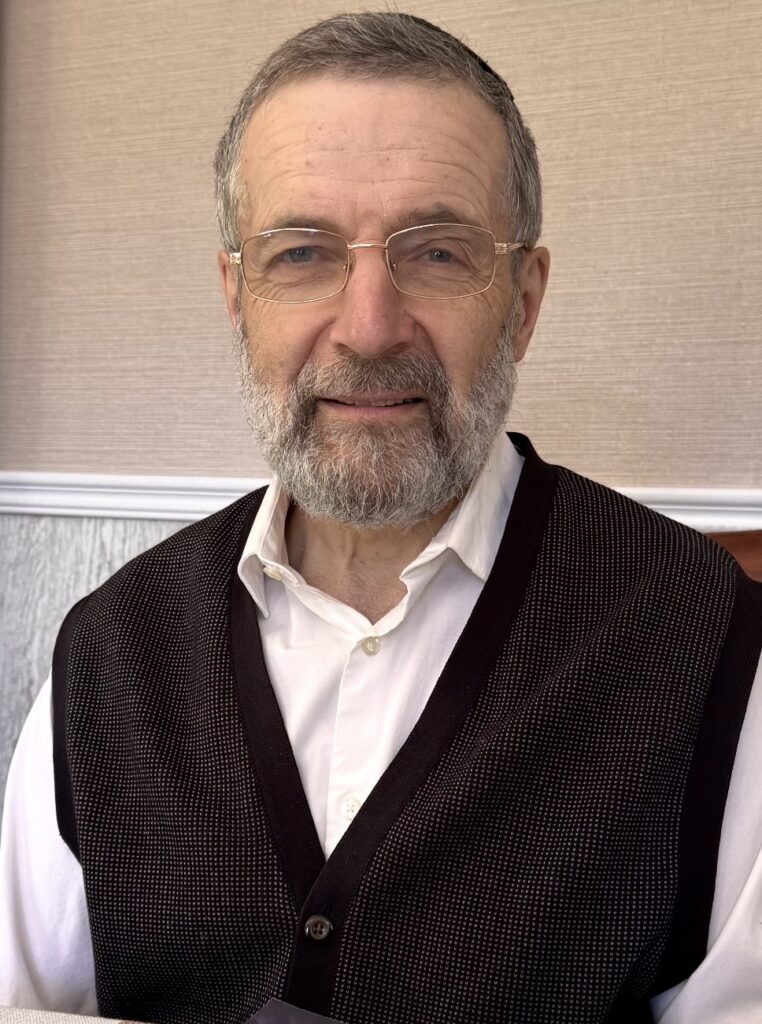
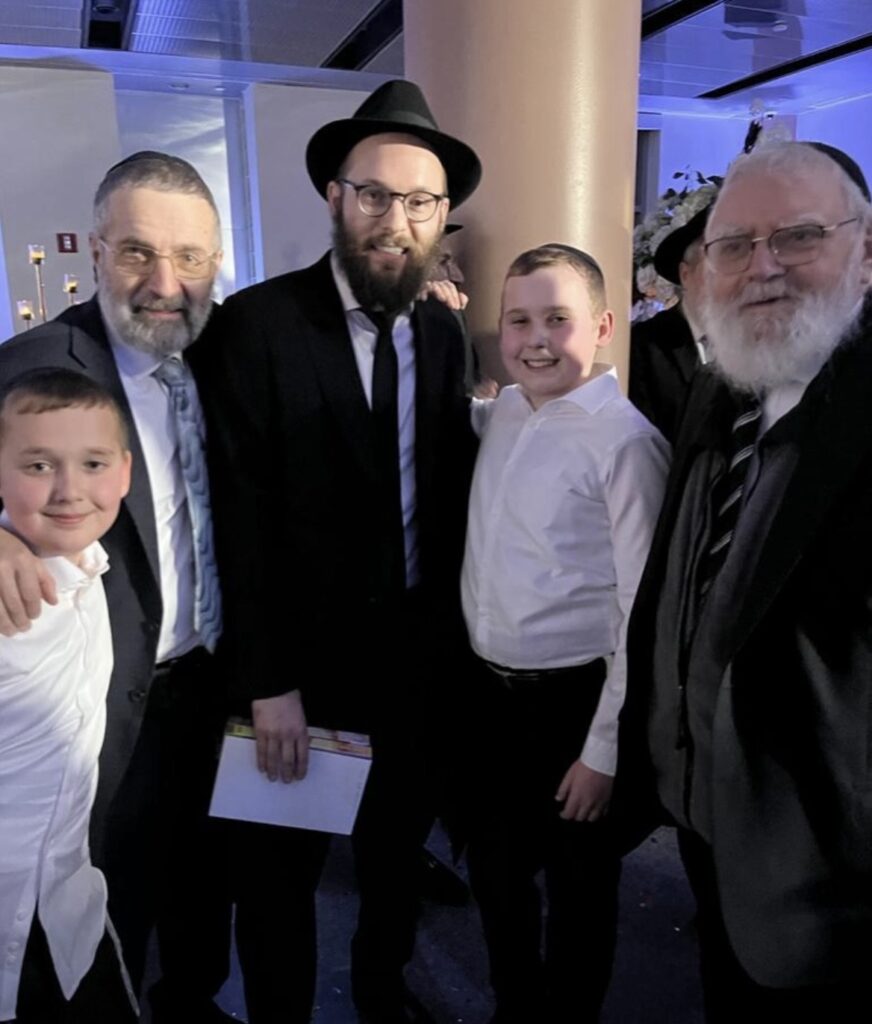
Moshe with his son Menachem Mendel and Rabbi Haskelevich at Moshe’s grandson’s bar mitzvah
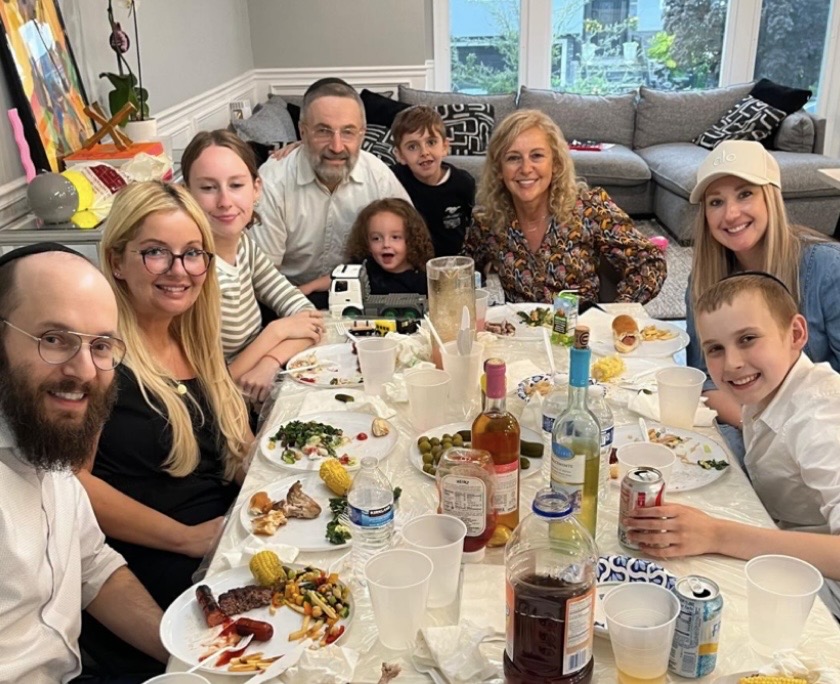
Moshe and Marina with their mishpocha (not all grandkids present)
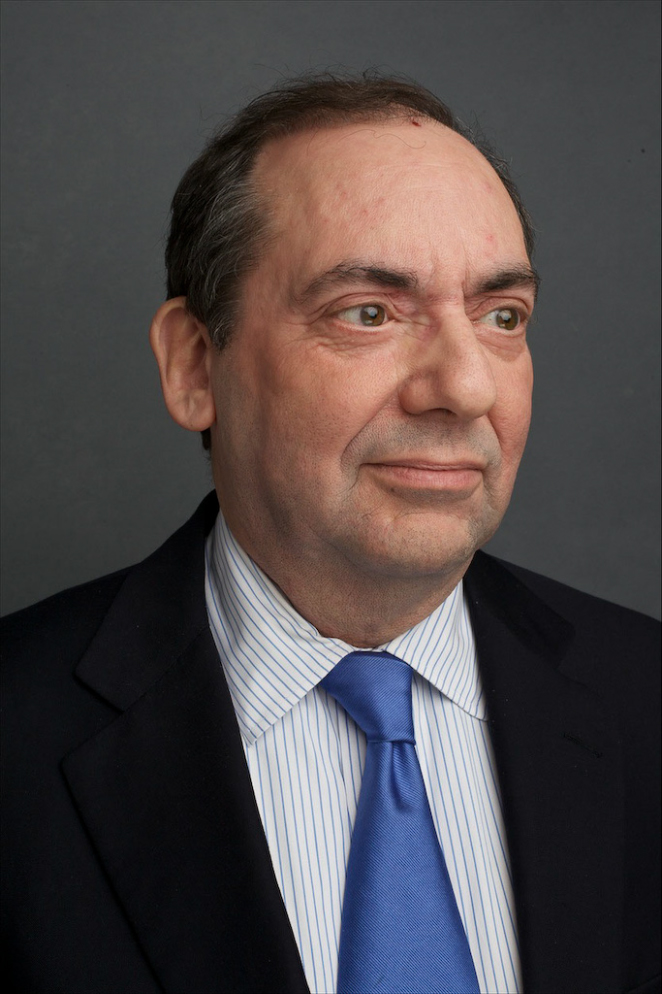
Moshe Fundo carries himself like a man who has spent a lifetime in the beis midrash. Soft-spoken, unassuming, and visibly at home in Torah learning, he could easily be mistaken for a seasoned rav or a Torah luminary. That first impression makes the truth of his life all the harder to absorb. His grandfather helped found the Soviet Union. Moshe himself, a Jew by birth, spent the better part of several decades inside Christianity, and for years he stood at a pulpit as an ordained pastor known to his congregation as Brother Leon. He was respected, even beloved, by his colleagues and his followers. And yet he was never at peace. The pintele Yidburied deep in his soul refused to be extinguished, and it kept beating from within until he finally listened to it.
His recently released book, From Baptism to Brit Milah, is the record of that long return. Twenty-five years in the making, it traces a journey that ran from disbelief, through the Christian underground of the USSR, to a pulpit in the official Church, and finally back to the Torah-observant life he leads today. Moshe and his wife Marina are now beloved, integral members of the West Hempstead Orthodox community, raising their family in a home steeped in Torah and chesed.
{A Grandfather Among the Founders
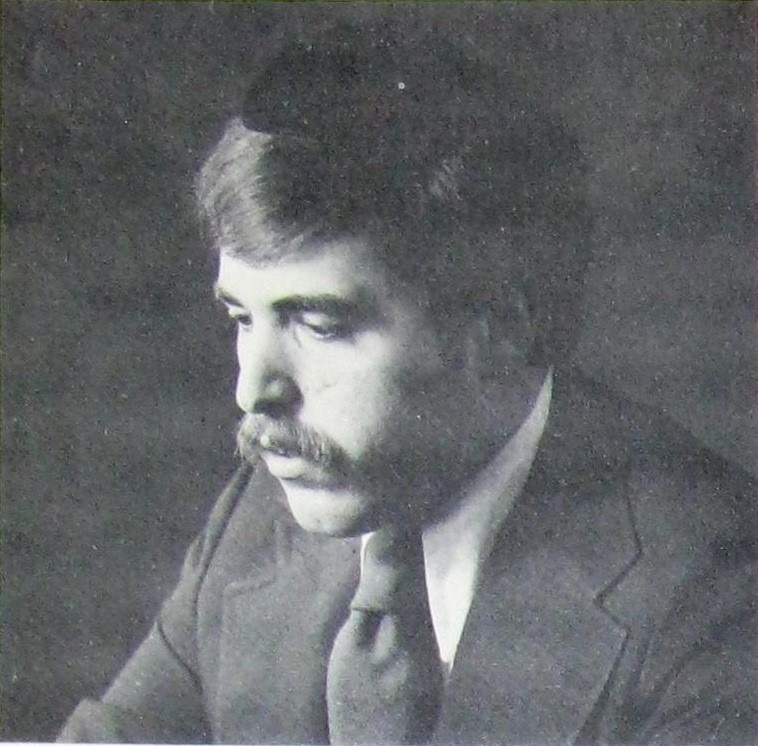
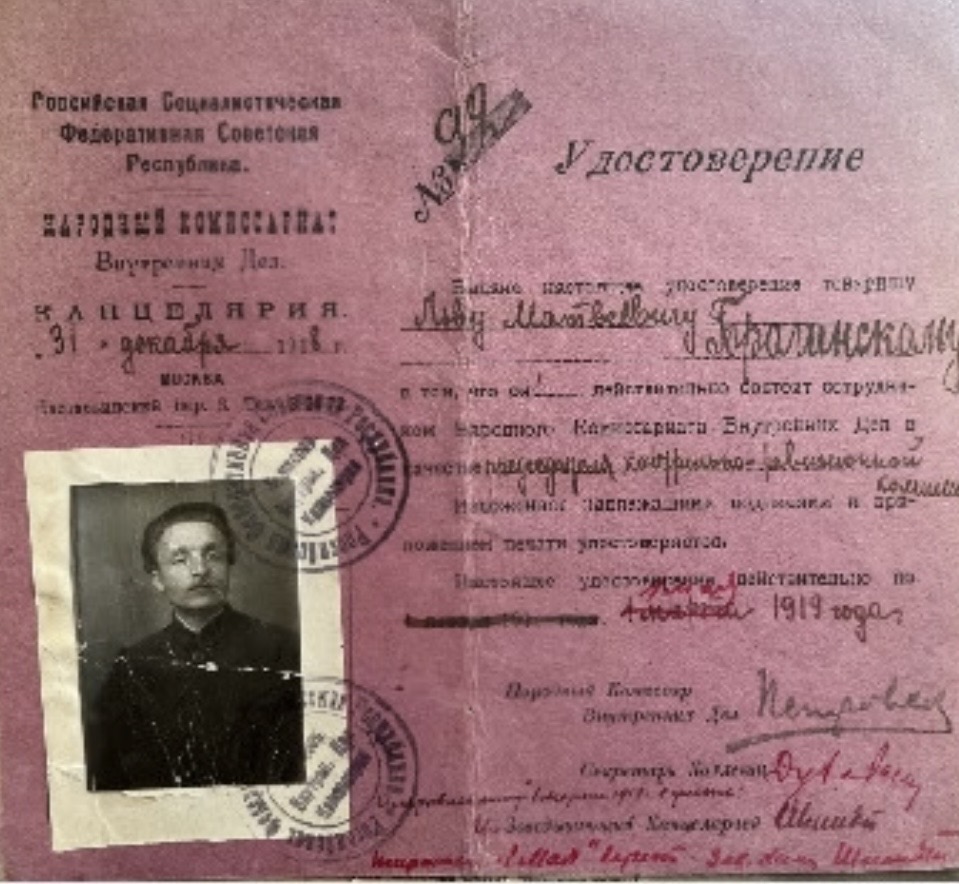
To understand the depth of Moshe’s journey, you have to start with the man who cast the longest shadow over his family: his grandfather, Lev Braginsky.
Braginsky was born into a religious family in the Russian empire and attended cheder as a boy. Living under the czar, he resolved while still young to build a new world order, a paradise for the proletariat who suffered so badly under the old regime. “My grandfather’s goal was to bring equality to the working masses,” Moshe explains. “He was inspired by the communist dream of paradise on earth. He sincerely believed in his cause. Tragically, to him, the end justified the means.” In trying to replace one reign of terror, he helped install another.
After the Revolution, Braginsky was appointed assistant to Felix Dzerzhinsky, head of the Cheka, the secret police that would later become the NKVD and then the KGB. He rose steadily through the ranks of the Party, serving as Chairman of the Revisionist Commission, auditing accounts of various Soviet organizations, “which certainly led to uncovering and exposure of financial crimes.” Most likely, as a result of these reports, the offenders were handed over to punitive authorities. He was a leader of Bolshevik authorities in the Far East, and was an assistant to the mayor of Moscow. The family lived close to Red Square, a privilege that flowed directly from his standing. High officials came to dinner. The stories Moshe’s mother and grandmother told painted Lev as a devoted husband and father. “Your grandfather wouldn’t hurt a fly,” his mother would say.
The documents Moshe later uncovered told a harsher story. “My grandfather never knocked on an innocent person’s door in the dead of night to ship him off to the Gulag, or interrogated and tortured a prisoner until he confessed to some absurd plot,” Moshe notes. “His position was too important. He relegated the dirty deeds to his underlings, which in many ways was an even more horrific fate.”
It all collapsed when Stalin consolidated power in 1924. “Stalin began executing the first-generation revolutionaries who had created the country, in order to eliminate anyone who knew about his past,” Moshe explains. Watching his former comrades tortured and killed broke Braginsky. He suffered a stroke, and in 1952, broken in body and spirit, he died, seven years before his grandson was born.
That history is the reason religion was forbidden in Moshe’s childhood home. “My mother and grandmother were terrified to talk about religion or anything related to being Jewish,” he shared. “Because of my grandfather’s involvement, they knew firsthand how dangerous those years could be, when the KGB could whisk anyone away in the middle of the night.”
Moshe was born into a Jewish family that lived in the shadow of a major synagogue, yet he was raised with no religion at all. In his home, the word “Jew” was effectively unspeakable. He first encountered it in second grade, and the context was ugly. A teacher sternly asked the class which of them were Jewish. To young Leon, as he was then called, the word sounded malevolent, as if she were asking which of them were hooligans. “I’m not,” he answered quickly. That night he asked his grandmother what a Jew even was. Hoping to close the subject, she told him, “We’ll talk about it some other time.”
The questions did not go away. By tenth grade Moshe was already turning over the meaning of life, a dangerous preoccupation in a society where no one felt safe straying from the Party line. Religion was treated as a rival authority that could weaken loyalty to the state. Churches that were permitted operated under tight government control, and the handful of synagogues left open were closely watched, with Jewish observance heavily suppressed.
A voracious reader, Moshe hunted for any book that touched on religion or life after death and kept coming up empty. At the university library, a wary librarian first insisted there was nothing of the kind, afraid he might be a KGB agent. When she became convinced of his sincerity, she quietly led him to a hidden section in the back where the religious books were kept. For Moshe, it felt like uncovering buried treasure, and it introduced him to the idea of life after death.
Soon after, he met Senya, another student chasing forbidden questions, who brought him to his first underground meeting of a Christian sect. “It was a gamechanger,” Moshe recalls. Rebelling against a repressive regime while finally getting answers to questions that had been building in him for years was intoxicating. For the first time he was among people who believed in G-d.
His mother was horrified, though not for the reason one might expect. She was not mourning his drift from Jewish roots. She was terrified of his passion itself, because it reminded her of his grandfather. To her it could mean only one ending: arrest, and possibly a labor camp. Her fear was not irrational. Before Moshe joined the Underground Adventist group, its leader had been arrested and sent to Siberia, tortured, and beaten so severely that a hand was left paralyzed. The others were slow to trust Moshe, half-convinced he might be a planted KGB agent.
From 1980 to 1983, Moshe and Marina, the brilliant college student he married and who has stood beside him for more than four decades, lived inside the Christian underground. There were texts to study, discussions to savor, and comrades who shared their hunger. But his deepest questions remained unanswered, and the sect’s rigidity began to wear on him. It preached eternal damnation, and Moshe could not accept that his parents and grandmother would burn in Gehinnom for failing to accept a figure he was already beginning to doubt.
He tried, briefly, to explore his own heritage. He walked to the corner synagogue and heaved open its enormous oak doors. Two elderly women inside asked what he wanted, and when he said he was looking for something to read, they told him there was nothing and sent him away. Only later did he understand that they were guarding his safety, not turning him out. Rebuffed, he turned to Eastern religions, which the regime tolerated because most do not center on a Creator. That path also led nowhere, because Moshe believed in a Creator.
By 1988, in the thaw of perestroika, Senya resurfaced, now disillusioned with the Seventh-day Adventists, and drew Moshe into the state-sanctioned official Church. Moshe was baptized and ordained as a minister, and he proved a gifted one. He preached to enthusiastic crowds, and his command of English raised his profile further. When American and British preachers toured Russia, he became their official translator, carrying their message to crowds intoxicated by their new religious freedom.
The cracks appeared in the text itself. More and more often, Moshe found glaring alterations from the Tanach. When he pressed church elders about the inconsistencies, they grew evasive and told him to pray for clarity. Unwilling to preach what he now saw as deception, he began adjusting his sermons, at first subtly, then openly. Once, translating a church leader live on stage, he simply changed the message, explaining afterward that what the man had said was not supported by Scripture. He was dismissed on the spot. With every distortion he uncovered, his faith in Christianity drained away. He came to regard Yoshke as a benevolent figure, but not the messiah.
When the Iron Curtain fell, Soviet Jews emigrated in record numbers, and in 1992 Moshe and Marina left with their two young children, traveling with a group of American pastors on a fundraising tour. In California, Moshe befriended a fellow Jewish pastor, the scion of a distinguished family of Torah scholars who had tragically abandoned his sacred and time-treasured heritage for Christianity and then suffered the Church’s antisemitism. Together they resolved to preach against it.
Moshe started a Russian ministry in Brooklyn that he described as something like a Messianic congregation. It grew quickly to fifty members, most of them Soviet immigrants and roughly half of them Jewish. “In the Bronx, I worked translating missionary booklets for Russian Jews,” Moshe says. With far more Jewish material now available, they read voraciously, working through the ArtScroll Tanach. Slowly the ministry began dismantling itself. “We began erasing Yoshke’s name from all the texts, putting on kippahs, wearing talleisim. We even started lighting candles for Shabbos.” Not yet understanding halachah, they still drove to services.
In 1994, on a church-sponsored cruise to Canada, Moshe spotted a man with a long black beard, tzitzis, sneakers, and a baseball cap. He asked if the man was Jewish and said he had questions. “He told me to put on tefillin. Then we talked for hours.” For the first time, Moshe learned about Torah she’baal peh, the oral Torah he had never known existed. Through the ensuing days of the voyage, the Chabad chasid and the Jewish pastor engaged in deep theological discourse, and before they parted, the rabbi handed Moshe the phone number of Rabbi Haskelevich in Crown Heights, who would become his rav.
Moshe called, was invited over, and the two stayed up the entire night talking. At last, he felt he had found the truth and was nearing the end of his long road. The following Shabbos, he stunned his congregation by announcing that this would be his final sermon. “From now on, we will learn from a real rabbi.” Then the whole group climbed into their cars and drove to Crown Heights. “We must have been quite a sight,” he recalls. Their first shiur was on Pirkei Avos. After learning that driving on Shabbos is forbidden, they relocated their gatherings closer to home in Brighton Beach, and the Jewish members gradually began attending local shuls and living an authentically observant life. Today all of them are at various levels of observance, and one of the non-Jewish members has become a Noahide.
At his bris milah, the mohel, Rabbi Fischer, suggested the name Lev or Leib, a natural fit for a man called Leon. Moshe had already decided otherwise. “No,” he replied without hesitating. “I took my family and most of my congregation out of Mitzrayim, just like Moshe. Our Mitzrayim was the false religion of Christianity. I want to be called Moshe.”
Together with Marina, he had led most of his group out of theological confusion and back to their eternal Jewish roots, one soul at a time.
From Baptism to Brit Milah tells that story with warmth, honesty, and humility. It reads less like a treatise on faith than an account of discovering where you truly belong, asking the questions that matter, and finding the courage to follow your heart wherever it leads. It is the story of a true teshuvah, a former pastor’s uncompromising return to emes.
From Baptism to Brit Milah is available on Amazon and Kindle.
Moshe Fundo is available to speak at corporate events, shul functions, Pesach and Sukkot programs, and private celebrations. For bookings, please contact [email protected].
Rochelle Maruch Miller is a contributing editor for the Five Towns Jewish Times. She is a journalist, creative media consultant, lecturer, and educator, and writes for magazines, newspapers, websites, and private clients. She welcomes your comments at [email protected]. Read more of Rochelle Miller’s articles at 5TJT.com.