
What Israel Can Learn From Them
By: Sivan Rahav Meir
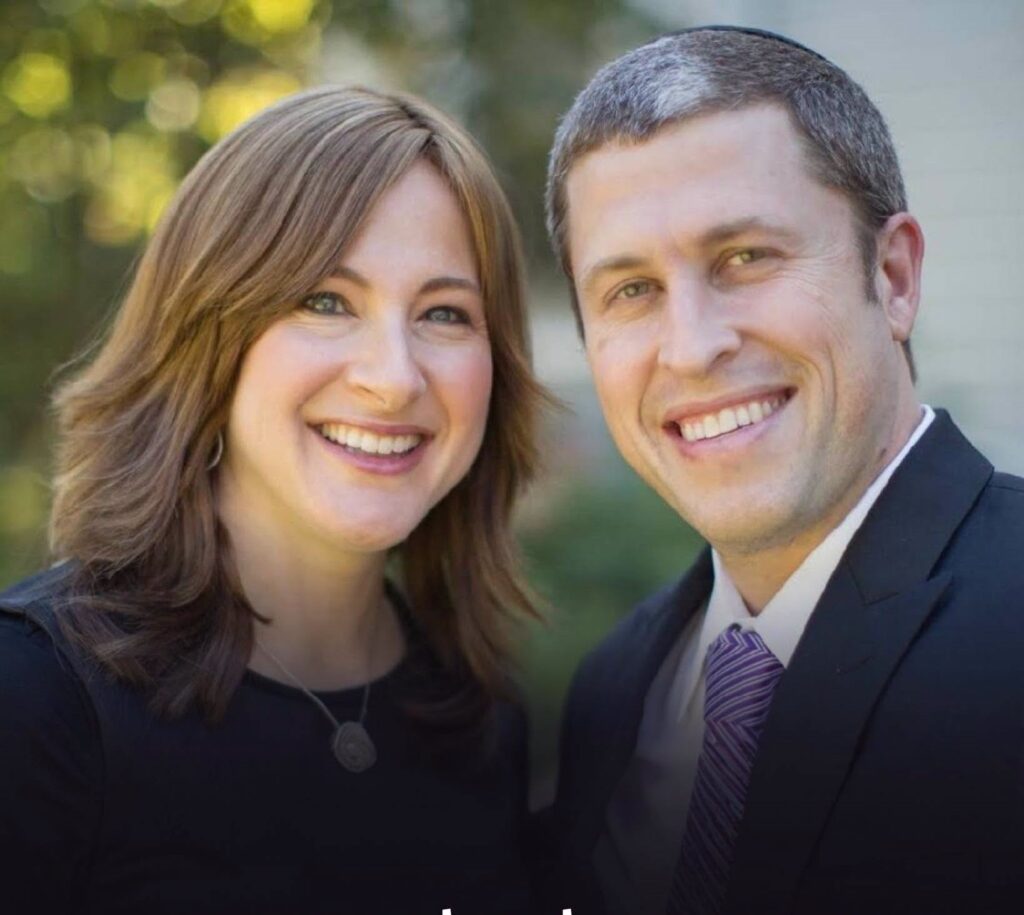
Rabbi Kalman Topp and his wife, Jordana, recently announced that they are making aliyah to Israel.
For the past 17 years, Rabbi Topp has led Beth Jacob Congregation in Beverly Hills, one of the area’s largest and most influential Jewish communities. Now he is coming to Israel to establish a new community for olim in Jerusalem’s Givat Hamatos neighborhood.
Once known for the temporary housing built there for Ethiopian immigrants, Givat Hamatos is now being developed as an upscale neighborhood, with growing numbers of Anglos moving in. It has already earned the nickname “Beit Shemesh in Jerusalem.”
I still remember my first encounter with Rabbi Topp. Years ago, I was invited to speak at his synagogue. At the time, I knew almost nothing about how American Jewish communities function.
When I arrived, a man greeted me and introduced himself as “the synagogue president.” I thought he was joking. Why does a synagogue need a president?
Then he began introducing the rest of the team—the rabbi, associate rabbi, youth director, and others. I quickly realized that in America, a synagogue is often the center of an entire Jewish community, with programs, classes, activities, and an extensive leadership structure.
In many American Jewish communities, the rabbi is expected to be far more than a religious authority. He is also a teacher, counselor, community builder, and often the person who helps people recognize the significance of moments they might otherwise overlook.
I remember one small moment that showed me exactly what that can mean. It was toward the end of a long Shabbat morning service. People had begun closing their siddurim, folding their tallitot, and preparing to leave. But there was still one final Kaddish to be recited—the Mourner’s Kaddish.
Before it began, Rabbi Topp stood up and said, “There are people here who have lost someone dear to them, and they are about to say Kaddish in their memory. Let’s give them one more moment of our attention.”
Wow.
The room fell silent. Everyone listened, and then answered, “Amen.”
Rabbi Topp had hardly said anything. He had simply drawn attention to what was about to happen. But sometimes that is all it takes: to remind us, to give a moment of context, to connect us more deeply to what is happening around us.
There is much that Jewish communities abroad can bring with them to Israel—not only their families and talents, but a deeply rooted culture of community, responsibility, and belonging.
Welcome home.
Israeli singer and songwriter Yagel Oshri
What Comes First?
The wave of renewed Jewish connection sweeping through the Jewish world is producing all kinds of interesting developments. Here’s one that spoke to me.
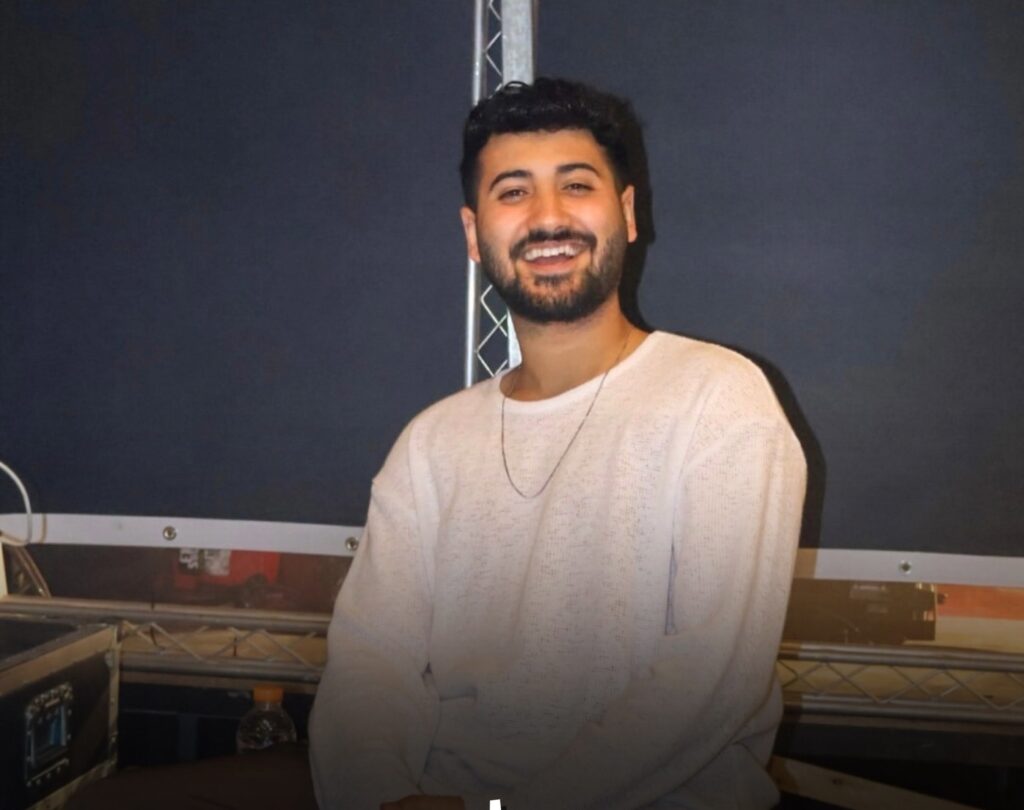
Popular Israeli singer Yagel Oshri shared this story this week:
“Until recently, I didn’t put on tefillin every morning, but after October 7, I decided I was going to make it a regular part of my day. In practice, though, I’d wake up in the morning and go straight to Instagram, TikTok, phone calls, work, meetings. Suddenly it would be six or seven in the evening, and I still hadn’t gotten around to it.
“I created an app on my phone called: ‘Tefillin First, Then the World.’ It locks all my other apps, and whenever I try to open one of them, a single message appears on the screen: ‘Put on tefillin yet, tzaddik?’”
I think this is a beautiful example of how we can “force” ourselves to do what our soul really wants—what we know is good for us, but don’t always manage to make happen. And the idea can be applied to so many other meaningful and sacred parts of life: Where else would we like to say, “This first and then the world”?
A Time for Miracles
Do you feel a different kind of energy in the air? Have you noticed how many conversations now end with “Shanah tovah” or “Gmar Chatimah Tovah”—may you be inscribed and sealed in the Book of Life?
It may be worth tuning out the background noise for a moment and listening to this frequency instead. We call it optimism. We call it a new year. We call it Tishrei and Aseret Yemei Teshuvah.
Netanel Peretz, a teacher from Ashdod, describes it this way:
“Every year at this time, a small miracle happens. For a few days, all of us manage to believe that change is truly possible.
“Even those who feel most discouraged, stuck, or broken open a window and allow a little light into the darkness of their daily routine. Suddenly, millions of people begin to believe, sincerely, that this year really can be different and beautiful. That they can become better than they were before. That their hearts can open to receive the abundance of goodness that is constantly flowing from Above. That they can find the courage to move forward without fear, and the strength to repair what needs repairing.
“Something softens, and not just for a fleeting moment. So many people decide to let go, to open themselves up, and to give goodness and kindness a chance. I find myself thinking how extraordinary that is—this ability to keep believing in the power of goodness and kindness. How fitting, then, to give thanks for this miracle that returns each year with the beginning of Tishrei.
“May the new year, and all its blessings, begin.”
Translated by Yehoshua Siskin and Janine Muller Sherr
Read more by Sivan Rahav Meir at SivanRahavMeir.com.