





When Different Perspectives Lead To Better Investing
By: Jack Strulowitz and Alan J. Steinberg
Several weeks ago, readers of this publication may have noticed an unusual exchange.
One of us (Jack) published an article highlighting risks that may be associated with passive real estate investing. A week later, the other (Alan) responded by making the case for the tremendous benefits that professionally managed real estate has provided investors for generations.
If you only read the headlines, you might assume we walked away convinced the other person couldn’t possibly be more wrong.
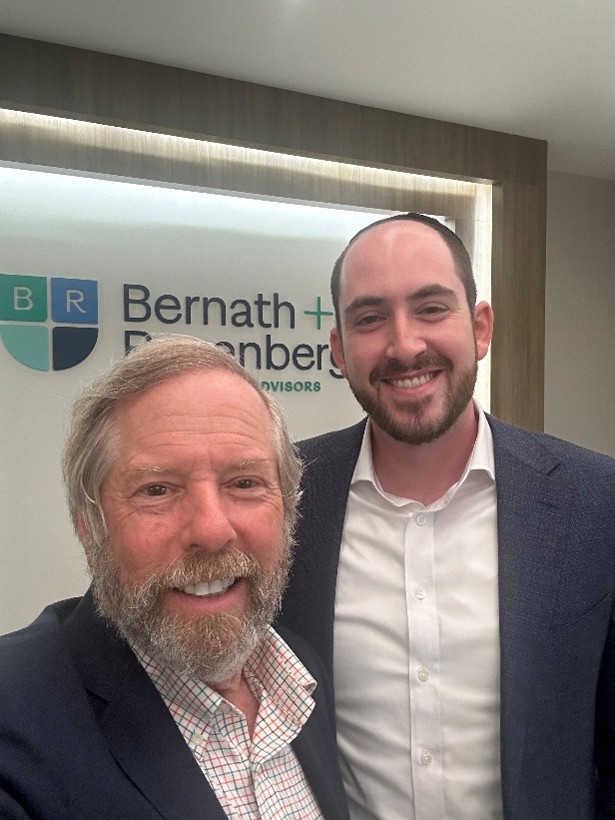
Instead, we used the opportunity to connect with each other in person at Jack’s office, shook hands, spent over an hour talking, and discovered that we actually agree on far more than we disagree.
In today’s world, we’re often encouraged to think in absolutes. Stocks or real estate. Active or passive. Wall Street or Main Street. This investment or that investment.
Real life—and successful investing—is rarely that simple.
The truth is that both of us have spent our careers helping families build wealth. We simply approach it from different sides of the table. Jack advises families on comprehensive financial planning, portfolio management, retirement, and estate planning. Alan’s firm, Park Row Equity Partners, manages a platform that allows easy access for people to invest in real estate, an inaccessible asset class to many. Different expertise, same objective: helping people build long-term financial independence.
{The Real Investment Isn’t the Asset, It’s the People
During our conversation, we quickly realized something important. Whether you’re buying shares of an S&P 500 index fund, investing with a financial advisor, or participating in a multifamily real estate syndication, your greatest risk often isn’t the investment itself. It’s the people.
Who is managing your money? Who is making decisions on your behalf? Whose judgment are you trusting when markets become difficult? A brilliant investment managed by the wrong person can become a terrible outcome. A good investment managed by someone with integrity, discipline, transparency, and aligned incentives often produces a far better experience.
Too many investors spend countless hours analyzing returns while spending very little time evaluating character. We think that should be reversed. Trust is earned through consistency, transparency, communication, and doing the right thing when no one is watching.
One thing we wholeheartedly agree on is that passive income and capital appreciation are both essential pieces of building real wealth.
Cash flows come from dividend-paying stocks, professionally managed multifamily real estate, municipal bonds, or other investments. For many families, passive income creates options. It can supplement retirement. Help pay tuition. Create flexibility to spend more time with family. Fund charitable giving. Or simply provide additional breathing room.
Capital appreciation, whether from stocks or real estate, aims to grow your net worth today and become the foundation of generational wealth tomorrow. There is something incredibly powerful about having your money work for you.
{Every Investment Makes a Tradeoff
One reason our original articles generated discussion is because both asset classes genuinely have strengths and weaknesses.
Public equities offer exceptional liquidity, daily transparency, broad diversification, low investment minimums, and ownership in many of the world’s greatest businesses. Real estate can offer cash flow, tax advantages, inflation safeguard, leverage, and ownership of tangible income-producing assets.
Neither is perfect. Stocks can be emotionally difficult during periods of volatility. Real estate can require patience and reduced liquidity. Neither guarantees success. Neither eliminates risk. The objective isn’t finding an investment with no drawbacks. It’s understanding the tradeoffs before you invest.
Perhaps the biggest lesson from our conversation was this: investing doesn’t have to be an either-or decision. Some investors become convinced that every dollar belongs in the stock market. Others believe every dollar belongs in real estate. History has shown that concentrating too heavily in any single asset class increases risk.
Different assets often perform differently during different economic environments. Owning investments that don’t all react the same way can reduce overall portfolio risk while creating multiple avenues for long-term wealth creation. Nobody rings a bell before the next rally or the next downturn and trying to guess which asset class wins next year is a bit like picking a line at the car rental counter—somehow, the one you don’t pick always moves faster. Build a portfolio meant to survive surprises, not predict them.
Diversification isn’t exciting, but it remains one of the most reliable principles in investing.
One thing we both appreciate is that respectful disagreement sharpens thinking. Neither of us changed careers after our meeting. Jack still believes investors should carefully understand the liquidity tradeoffs and risks of private real estate before investing. Alan still believes many investors underestimate how emotionally difficult it is to stay invested in the stock market through a real downturn, and that thoughtfully selected multifamily real estate deserves an important place in many diversified portfolios. Those views aren’t contradictory, they’re complementary.
Good financial decisions are rarely made by listening only to people who agree with us. Sometimes the best decisions come from hearing thoughtful perspectives from both sides.
Before asking whether an investment is “good,” perhaps ask a different question. Does this investment fit my goals? My time horizon? My liquidity needs? My tax situation? My tolerance for risk? And just as importantly: do I trust the people helping me make these decisions?
If the answer to that final question is yes, you’re already much farther along than many investors realize. Because while markets will always fluctuate and investment opportunities will always come and go, trust remains one of the most valuable assets any investor can own.
Jack Strulowitz is a Financial Advisor at Bernath & Rosenberg in Cedarhurst, NY, where he helps high-net worth individuals and families manage their investments and build comprehensive strategies for retirement, tax, and estate planning. For questions or to schedule a consultation, please contact [email protected] or 847-962-3352.
Alan J. Steinberg is the President & CEO of Park Row Equity Partners (PREP), a robust multifamily real estate investment platform with a portfolio of 50+ multifamily properties and $560MM in assets under management. The firm’s mission is to provide easy access for those who wish to invest in real estate, a highly profitable yet often inaccessible asset class. parkrowep.com.
The opinions voiced in this material are for general information only and are not intended to provide specific advice or recommendations for any individual. All performance referenced is historical and is no guarantee of future results. All indices are unmanaged and may not be invested into directly.
Investing involves risk including loss of principal. No strategy assures success or protects against loss.
There is no guarantee that a diversified portfolio will enhance overall returns or outperform a non-diversified portfolio. Diversification does not protect against market risk.
Dividend payments are not guaranteed and may be reduced or eliminated at any time by the company.
Investments in real estate may be subject to a higher degree of market risk because of concentration in a specific industry, sector or geographical sector. Other risks can include, but are not limited to, declines in the value of real estate, potential illiquidity, risks related to general and economic conditions, stage of development, and defaults by borrower.