


Where The Messenger Meets His Mandate
By: Yochanan Gordon
A Kinus HaShluchim 5786 Retrospective
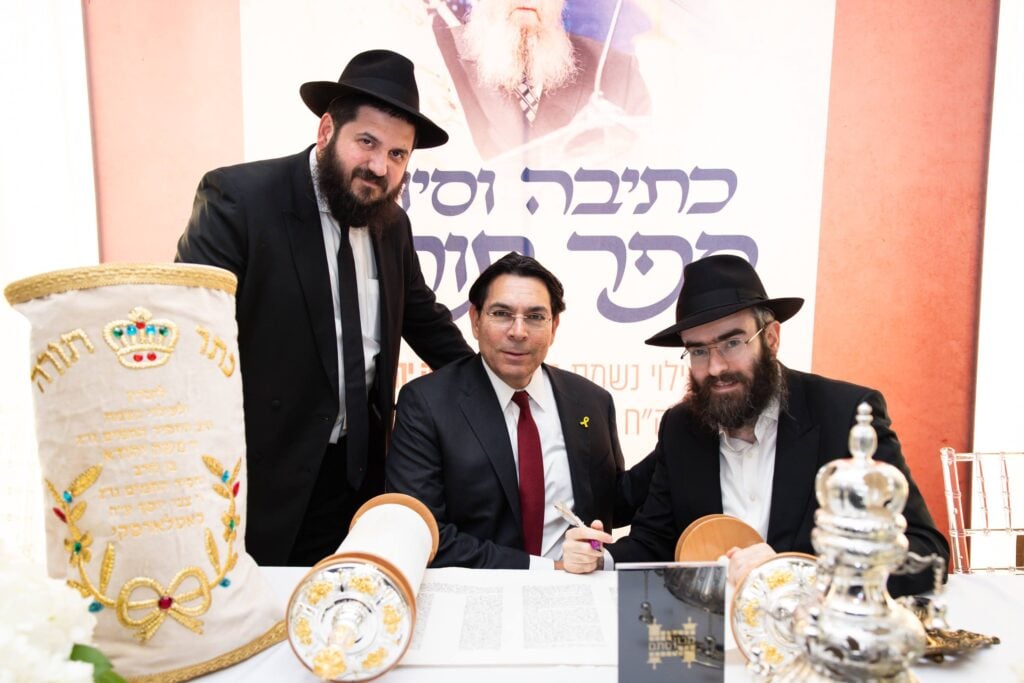
Once a year, the Jewish world performs a quiet recalibration. Dots scattered across the atlas—Montego Bay, Mumbai, Montana, Morocco—lean inward, pulled by a gravitational center that forms for one night inside an industrial expo hall in Edison, New Jersey. The venue itself, the New Jersey Expo Center, was built for trade shows and heavy machinery, not holiness. Yet on this night, with more than 6,500 emissaries and supporters filling its expanse for the largest sit-down dinner in the world and the largest Kinus HaShluchim ever held, the room felt less like a convention hall and more like a living artery pulsing with Jewish destiny. The transformation was astonishing. Endless rows of linen-draped tables stretched toward a vanishing point. Screens flickered with images of shluchim who spend their days lighting menorahs in jungles, building mikvaos in deserts, teaching alef-beis under missile fire.

Photo Credit Itzik BelenitzkI – Kinus.com

Photo Credit Itzik BelenitzkI – Kinus.com

Photo Credit Itzik BelenitzkI – Kinus.com
A current of purpose moved through the air—something not visual but palpable, like the low hum of electricity that tells you a circuit is alive long before the lights turn on. Presiding over the evening was Rabbi Mendy Kotlarsky, stepping into the role long held by his legendary father, Rabbi Moshe Kotlarsky, a’h. His presence at the podium carried a weight of continuity—a son lifting a torch passed to him not by ceremony but by lived example. The applause that followed was not merely for a chairman; it was an ovation for the seamless continuation of a mandate that built the very infrastructure of global shlichus. Then the screens dimmed, and a familiar face appeared across the massive HD displays—Rabbi Yehuda (“Yudel”) Krinsky, chairman of Merkos L’inyonei Chinuch. His greetings, prerecorded yet resonant, washed over the room with a quiet authority. His voice—calm, steady, suffused with memory—carried the weight of someone who lived in the Rebbe’s orbit not as legend but as life. The hall grew still, not out of formality but from reverence. Rabbi Krinsky remains a living hinge between a modest office at 770 Eastern Parkway and the global network of Jewish infrastructure that has since blossomed across continents.
Against this backdrop of continuity and mission, the stories began—stories that remind the world that Chabad’s engine has never been driven by PR campaigns or clever branding, but by the raw, unfiltered courage of individuals who move mountains with nothing but conviction and the Rebbe’s mandate echoing in their bones. The first belonged to Rabbi Raskin, the Rebbe’s shliach in Montego Bay, Jamaica. Just weeks earlier, Hurricane Melissa had torn through the island and reduced his Chabad House to ruin. The screens lit with images of destruction: walls bowed inward, ceilings collapsed, stormwater tearing through shelves like claws. Most people confronted with such devastation, would fold inward, instinctively recalibrating life around survival. But Rabbi Raskin’s first instinct was not where his family would sleep—it was how he would continue serving his community. His resilience made more sense when he spoke of his lineage. His grandfather had been one of the earliest shluchim dispatched by the Frierdiker Rebbe to Morocco. In his later years, as Moroccan Jewry dwindled and the world assumed his mission was nearing completion, he was asked how long he intended to remain. His answer became a sentence worthy of inscription: “As long as there is one Jew in Morocco, there will be a Chabad House for him.” This same grandfather had placed his hands on young Raskin’s shoulders at his bar mitzvah and made him take a vow—a literal vow—that he would one day dedicate his life to shlichus. Some promises echo louder with age. And that vow would prove stronger than hurricanes. So in Montego Bay, when there were no Torah classes, he started them. When there was no cholov Yisrael, he produced it. When there was no mikveh, he built one. Limitation never stalled him; it energized him. And when the hurricane toppled even his home, he simply returned to the vow that had shaped him and carried on.
He recalled a moment with Lord Rabbi Jonathan Sacks, a’h, who once said to the Rebbe, “In the situation I find myself…” only to be interrupted—gently, firmly, definitively—by the Rebbe’s correction: “You do not find yourself in a situation. You put yourself in a situation.” For Rabbi Raskin, these were not words of inspiration but a philosophy of survival. He didn’t find himself in Jamaica; he placed himself there because the Rebbe had sent him. And so long as he was sent, he would not leave.
The next story emerged from a different kind of storm—one that tears not buildings but hearts. Rabbi Menachem Feldman and his wife, shluchim to Nes Ziona, Israel, were young and idealistic when their two-year-old son, Zalmy, developed a sudden bacterial infection that left doctors no choice but to amputate both of his legs. The Feldmans were plunged into a darkness they never imagined: Could they continue their shlichus? Should they? Could they pour into a community while their own reserves were emptying? A local psychologist approached them, offering help, guidance, and therapy. Her concern was sincere. But Rabbi Feldman declined. “I am a shliach of the Lubavitcher Rebbe,” he told her. “I have the strength to persevere.” It wasn’t bravado; it was conviction—the deep, quiet certainty that a shliach does not operate from his own power, but from an invisible wellspring tied to the One who sent him. Twelve years passed. And then Zalmy—now tall with prosthetic legs, but taller still with spirit—ascended the stage before 6,500 people. In a voice filled with resolve, he said, “My parents taught me to focus on what I have, not on what I lack.” He listed them: eyes, ears, hands, limbs, blessings. The room held its breath. It was not optimism that spoke—it was leadership.
Listening to these stories, one begins to grasp the hidden architecture of shlichus. According to halachah, a shliach retains his full identity, yet the identity of the sender flows through him. He is himself, and he is the Rebbe—at the same time. In the early years, when shlichus was still misunderstood, the Rebbe would tell young couples, “I am going with you.” Even decades after Gimmel Tammuz, shluchim speak as though the promise were made yesterday. Children born long after the Rebbe’s physical passing choose shlichus as if they were personally dispatched. And who is to say they weren’t? As the evening drew to a close, thousands rose arm in arm for the final niggun. The screens dimmed. The hall softened. And there it was—that unmistakable silence, the one that follows revelation. It was the silence of messengers who had once again met their mandate, of men who had come to be reminded not simply of where they work, but why they work, for whom they work, and with whom they walk. From hurricanes to hospital rooms, from vows whispered at bar mitzvahs to vows lived out on islands, one truth remained: the chain has not broken. Still sending. Still guiding. Still alive.
Yochanan Gordon can be reached at [email protected]. Read more of Yochanan’s articles at 5TJT.com.