


ZOA Superstar Gala: Supporting Israel Through Mounting Global Uncertainty
By: Moshe Gerstley
Several hundred Jewish leaders, media personalities, philanthropists, and other prominent community figures came together at the 2026 ZOA Superstar Gala in Manhattan on Sunday night to reaffirm their support for freedom, democracy, the United States, and Israel.
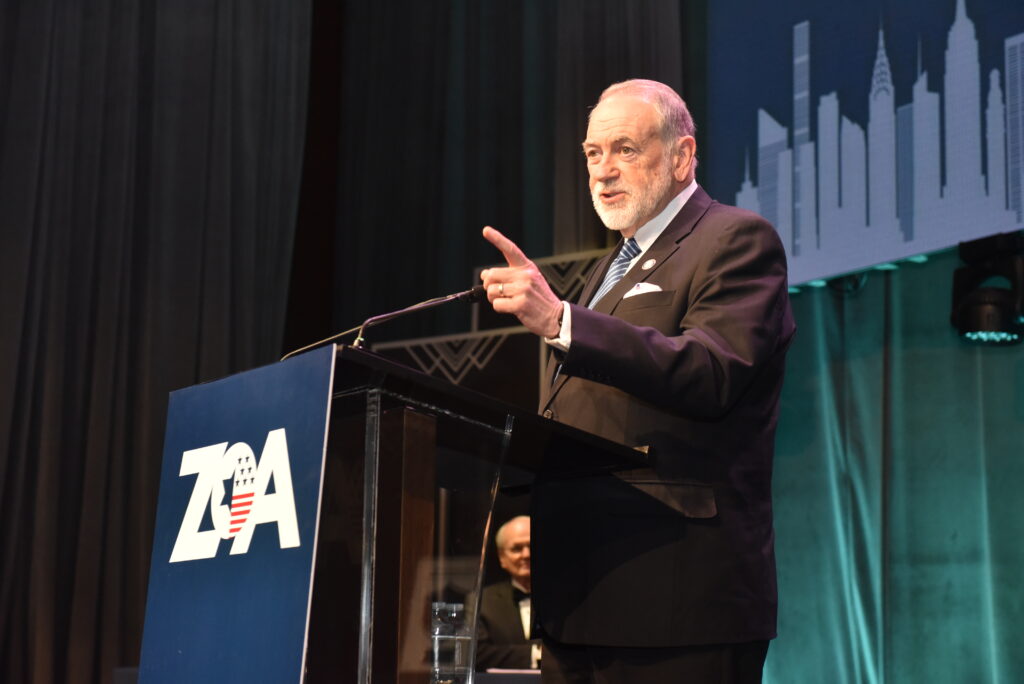
Amb. Mike Huckabee
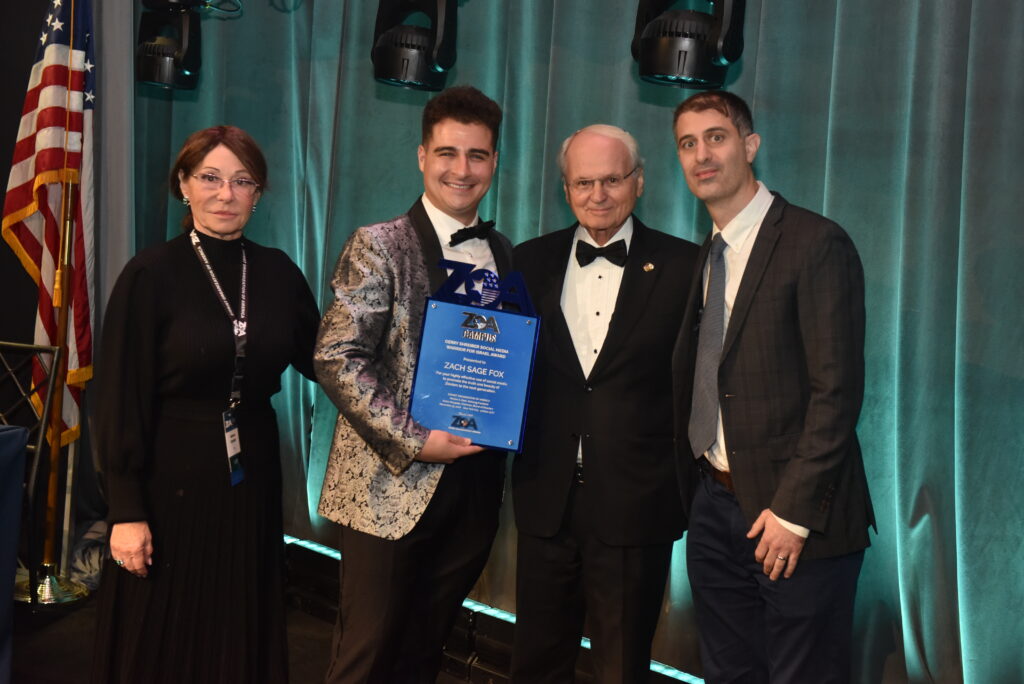
ZOA National Board Member Melanie Schreiber, Zach Sage Fox, ZOA National President Morton Klein, and ZOA Campus Managing Director Jonathan Ginsburg
Mort Klein, ZOA’s longtime president, spoke of the rise in antisemitism across the country since October 7. “Jews are being blacklisted as we speak and pushed out of American cultural life,” he said.
As an observer, I’m sure everyone in the room felt the very real and concrete threat that lies just outside that New York City’s ballroom doors.
What the evening raised was a much harder question: What does it mean to fight antisemitism? And more than that: What exactly are we fighting for?
Shabbos Kestenbaum, a gifted activist who has led much of the legal campaign against Harvard over its failure to confront antisemitism, emceed the event and told what I thought to be the extremely resonant story of A.J. Muste.
Muste was a Dutch-born American clergyman and political activist who used to stand alone with a candle just outside the White House during the Vietnam War.
A reporter asked whether he truly believed that standing there in the middle of the night in the pouring rain would change the country.
“Oh, I don’t do this to change the country,” Muste replied. “I do this so the country won’t change me.”
That powerful line reframed the whole evening for me.
Muste wasn’t measuring his work by whether it moved policy. He was guarding his own conscience, and that vigil was how he reminded himself what was true in a world full of lies.
Western Jewry has spent years answering antisemitism via statements, lawsuits, rallies, letters, and posts.
That work is necessary, and we do it with courage.
ZOA is one of the organizations fighting the hardest, and events like Sunday night’s Gala are where that work gets funded and sustained. ZOA’s campus programs, fellowships, leadership trips to Israel, legal and advocacy support, and international relief arm are a remarkable body of work that deserve to be recognized.
Muste’s lesson, though, is one ZOA’s supporters can carry out of the ballroom.
Despite all the work we put in, it often feels as if the wider world is unmoved by what we are fighting for. But staying rooted in what we know to be true keeps us steady in that dark work, and working in unity makes the world just a bit brighter.
Thousands of people who keep their Judaism and their conscience intact are a force no one can match. I felt that on the way out.
As an Orthodox Jew, I walked through Times Square just after dinner to catch a train at Penn Station. A passerby yelled a profanity at me and shouted “Free Palestine.” I kept walking, yarmulke on.
“I do this so the country won’t change me.”
Much of the real work happens on the sidewalk, in the subway, and at the Shabbos table—not only in the ballroom. Sunday night’s gala is where we gathered to reaffirm and recommit, but it is on the streets where we live out that commitment.
Wearing a Magen Dovid, a chai necklace, a yarmulke, or whatever you display to proclaim your faith proudly, that is the work we do.
Opposing the evils of Iran, its proxies, and the millions of people around the world defending them is more than a worthwhile fight.
But we’ve been in that survival mode for a long time.
Life has battered us, and the idea that America’s protected bubble since World War II will last has started to crack.
For the last three years, we proud pro-Israel Jews have thrown money, resources, time, and energy in counteracting that hate, hardly stopping to breathe. Millions of us around the world posted, shared, liked, and spoke the truth.
That needed to happen, and it needs to keep happening. Thanks to organizations like the ZOA, it’s happening with professionalism and organization.
But fighting only against something, and never for something, leaves us battered and uncertain when the dust settles. When this war ends, a lack of purpose will leave us either dissolving or turning on our own.
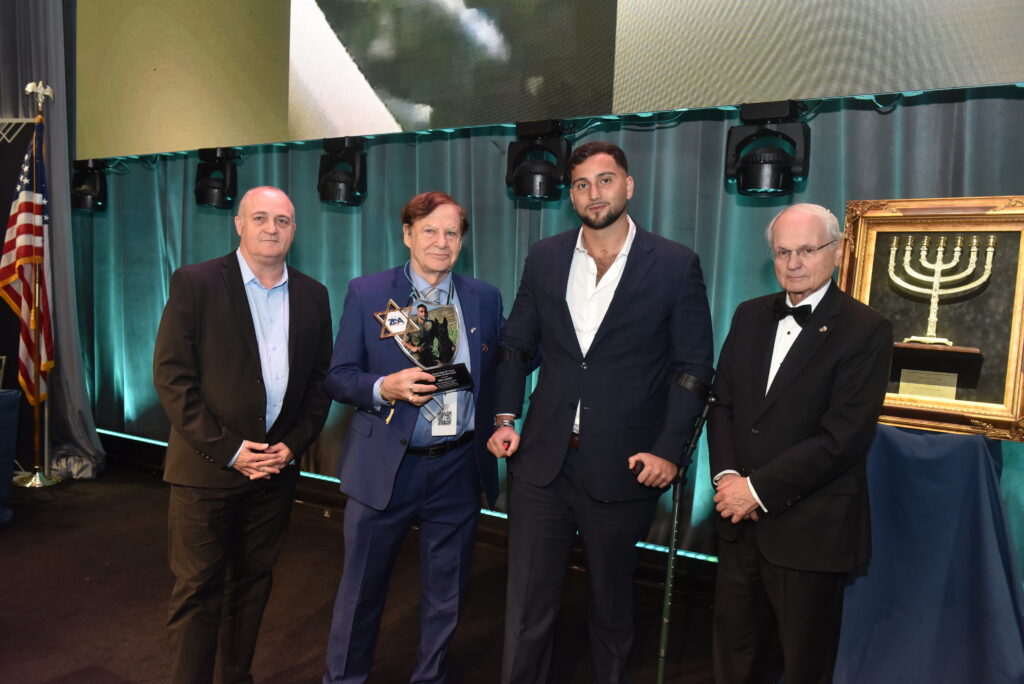
The antidote to that came from the most striking speaker of the night: Ben Ladany, a former South African-Israeli sergeant and combat dog handler in the elite IDF Oketz K-9 unit, who was severely wounded in Gaza in an ambush in which he was shot seven times. He told the room that each bullet taught him a lesson. While he described himself as not very religious, he puts on tefillin and urged the audience to talk to Hashem. This man who fought his way out of an ambush still reaches for something beyond himself. This is the difference between a movement that only resists and one that is building something.
But the highlight of the evening, no doubt, was Ambassador Mike Huckabee, the night’s headline awardee, who said something we Jews need to keep reminding ourselves: “For those who think that there’s a possibility that Israel will fall, let me just say to you that I’ve read the whole book. And I don’t care what it looks like in the middle of the fourth quarter, at the end of this game: we will win. Never forget it. We will win.”