





Yehuda And Shomron Are Calling
By: Yochanan Gordon
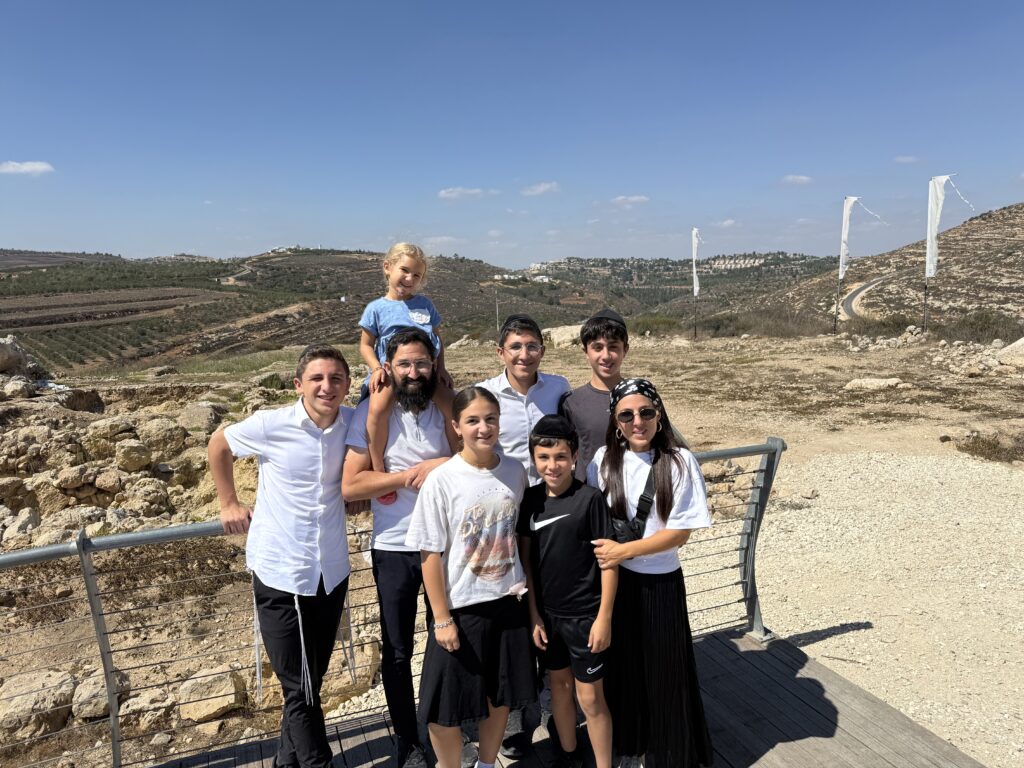
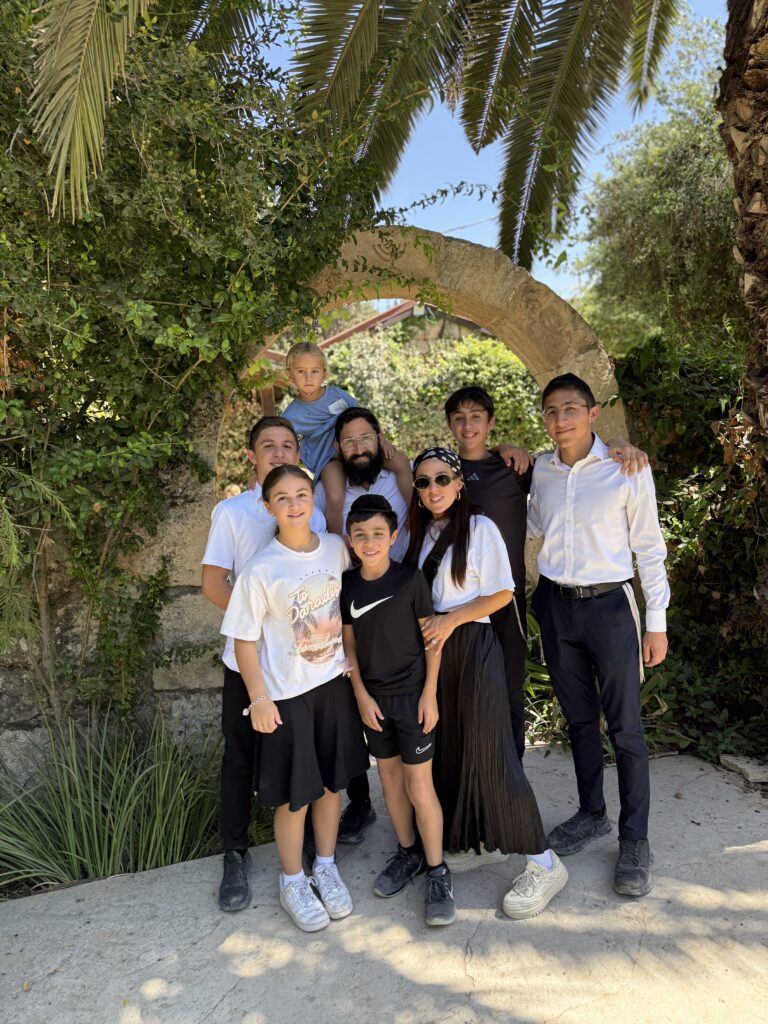
There are names that identify a person, and then there are names that seem to anticipate a mission. The Gemara relates that when Betzalel understood the proper order in which the Mishkan and its keilim were to be constructed, Moshe Rabbeinu exclaimed, Shema b’tzel Kel hayitah v’yadatah—perhaps you were in the shadow of G-d and knew. It was embedded in his name: B’tzel Kel, in the shadow of G-d. I couldn’t stop thinking about those words this chol ha’moed. Sukkos, after all, is the yom tov of tzel. A sukkah is defined by its shade. If chammatah merubbah mitzilatah—its sunlight exceeds its shade—it is invalid.
For seven days we leave the security of our homes and dwell beneath the Divine shade. And on one of those days, I found myself traveling through Shiloh, Itamar, Elon Moreh, and the Gav HaHar region of the Shomron, witnessing the tremendous amount of Jewish building taking place there and hearing about the work of another man named Bezalel: Finance Minister Bezalel Smotrich. I’m obviously not drawing a comparison between the two personalities. It was the imagery that stayed with me because so much of what we saw that day was about building, but even more than that, it was about learning how to see. There was another word I kept thinking about throughout the day: tour. The English word sounds remarkably similar to a familiar Hebrew one: lator et ha’aretz. The first great “tour” of Eretz Yisrael didn’t end particularly well. Twelve men walked the land. They saw its mountains and cities and carried back its magnificent fruit. Yet ten returned with complaints. Perhaps their failure wasn’t only in what they saw, but in how they saw it. They toured Eretz Yisrael as outsiders. That distinction would become something of a theme throughout our day. We began at ancient Shiloh. For 369 years, the Mishkan stood there. Elkanah and Chana came there. Shmuel HaNavi grew up there. There is something about standing in Shiloh that causes Tanach to stop feeling like a book about events that happened somewhere else a very long time ago. From there, the geography itself began telling the story. We traced the route by which Bnei Yisrael entered the land, from the Yarden through Nachal Tirtza into its mountainous center. Har Gerizim and Har Eival, names we’ve known since childhood, were suddenly right there in front of us.
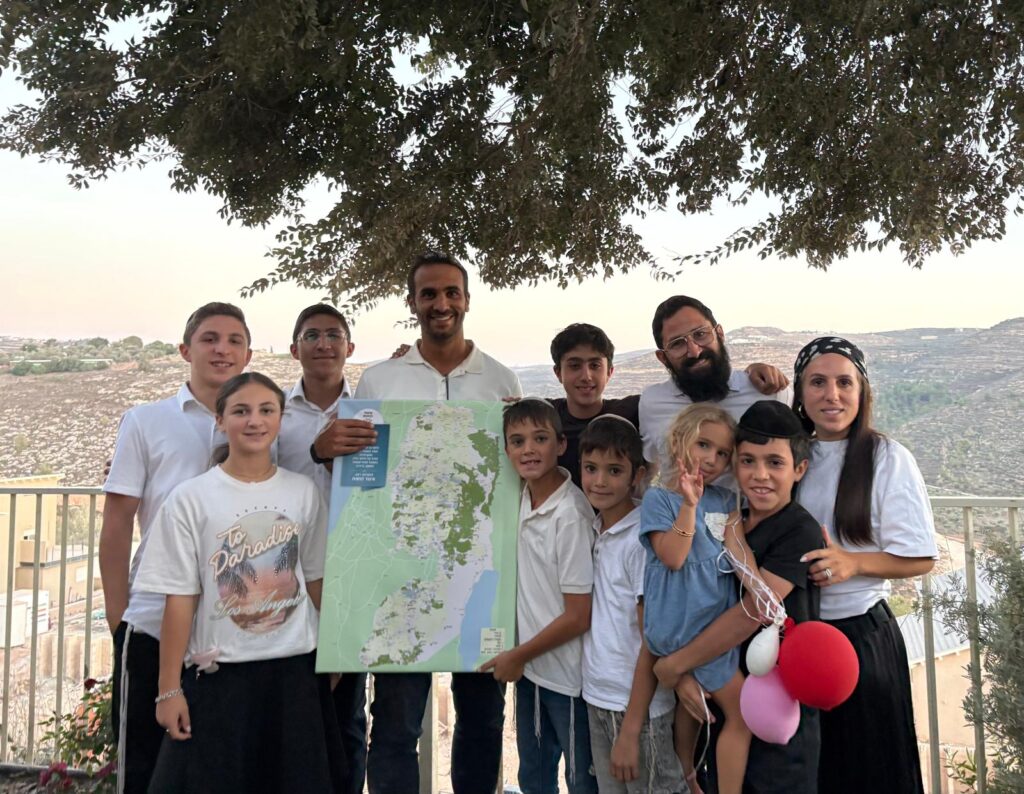
Our guide throughout the day was Rav Adiel Mhazri, CEO of Lavi Olami, a Religious Zionist faction in the National Institutions, who was accompanied by two of his children, Regev and Tzur. Adiel was less interested in simply showing us places than in teaching us how to see them. He and his wife, Yonit, know American Jewry well. They spent years as shlichim of the World Zionist Organization, first in Chicago and more recently in New Jersey, educating Jewish children and their families and encouraging them to embrace the dream of aliyah. In the past, Adiel also served as a senior adviser to Minister Smotrich.
His message throughout the day was simple: Don’t come to Israel merely as a tourist. Of course, take your children to the Kotel. Visit Yerushalayim, Tiveria, and Tzefas. But don’t stop there. Bring them to Shiloh. Drive through Itamar and Elon Moreh. Stand with them on the mountains they’ve been learning about since they first opened a Chumash. Tell them that this isn’t somebody else’s country. This is nachalas avoseinu. This is home.
Our trip was organized and sponsored by Lavi Olami. As the day progressed, I began to understand why Aryeh and Adiel were so intent on taking us there. There are things about Yehuda and Shomron that simply can’t be communicated through a newspaper article or a press release. You have to see them for yourself.
As we traveled by off-road vehicles through the ridges surrounding Itamar, the biblical story increasingly merged with the contemporary one. We saw growing communities and agricultural farms spread across the ridges. We heard about the yeshivos and about the community’s punctilious attention to halacha, not as some abstract ideal but as the rhythm of everyday life. We experienced a small example ourselves at Kabir Winery. After touring the winery, we naturally expected to sample some of its wines. But because there were non-Jewish visitors present and the wine was non-mevushal, we were unable to taste it. It wasn’t a major event in the context of the day, but it stayed with me. The story of Jewish settlement in these mountains isn’t simply about putting Jews on strategically important pieces of land. The people we met are trying to build communities rooted in Torah and halacha. It’s not merely about possessing Eretz Yisrael but about living Jewishly within it. Our hosts also explained that they view the farms as far more than agriculture. Establishing a Jewish presence across otherwise empty areas, they argue, creates buffers between hostile areas and Jewish population centers—a security concern that has taken on an entirely different meaning since October 7. The same is true of the roads. Smotrich’s supporters point to government investment in alternate access and security roads throughout Yehuda and Shomron as one of the less glamorous but more consequential accomplishments of recent years. A road doesn’t make much of a headline. But when you’re driving through these mountains, you begin to appreciate what roads make possible. Access allows families to move in, and families eventually become communities. This is also part of the work being promoted by Lavi Olami, whose representatives describe their mission as connecting Diaspora Jewry with the land and people of Israel and strengthening Jewish and Zionist identity abroad.
One message that came through repeatedly during the day was that the Jews living on these mountains don’t believe they’re holding the land only for themselves. They believe they’re doing it for Jews everywhere, including those of us living comfortably thousands of miles away who may never have heard their names. At the very least, I came away feeling that we ought to meet them. There was a large chol ha’moed gathering taking place that day, and strangely enough, after everything we saw, it may have been the highlight of the trip for me. There were people of all ages everywhere. Children were running around and playing. There were sukkahs on site, food, a café serving all sorts of delicacies, and families simply enjoying chol ha’moed together. After spending so much of the day discussing history, politics, security, and settlement, it was refreshing to see something so ordinary. Jewish families having a good time. Because for all the arguments surrounding Yehuda and Shomron, for the people who live there this isn’t primarily a political issue. It’s home.
From America, it’s easy to encounter Yehuda and Shomron primarily through headlines. Terms such as “settlements” and “settler violence” become categories through which an extraordinarily complicated place and hundreds of thousands of people are understood.
There have been acts of violence committed by a minority of Jews, and those acts are not defended nor ignored. But they should certainly not be casually equated with organized Palestinian terrorism or allowed to define an entire population. The people living in these communities have themselves endured years of terrorism, including attacks encouraged, celebrated, or legitimized by extremist organizations and political actors on the Palestinian side.
The point isn’t to ignore uncomfortable facts. It is to refuse to allow a slogan or headline to do all of our seeing for us.
Go there. Meet the people. Ask them questions. See it for yourself.
At the end of our day, we gathered for Mincha and Ma’ariv in the sukkah of Aryeh Goldberger in Itamar. Aryeh handles public relations for the Itamar Yeshiva and works closely with Finance Minister Bezalel Smotrich.
After davening, we danced around the table, hand in hand. It was a simple, joyous chol ha’moed moment after a very full day. As we were preparing to leave, Aryeh pulled me aside and pointed toward one of the young men who had just been dancing with us. “Do you know who that is?” he asked. I didn’t. He told me that he was one of the surviving children of the Fogel family. I froze. In 2011, Udi and Ruth Fogel and three of their children—Yoav, Elad, and three-month-old Hadas—were murdered in their home in Itamar. I knew the story. We all knew the story. But suddenly I was standing in Itamar realizing that one of the children who survived that horrific night had just been dancing with us around the table in a sukkah. It changed the way I thought about everything we had seen that day. We had spent hours hearing about farms, roads, security, infrastructure, and the importance of strengthening Jewish communities throughout Yehuda and Shomron. All of those things are important. But standing there in Aryeh’s sukkah, it suddenly seemed much simpler. Fifteen years after terrorists entered a Jewish home in Itamar and tried to extinguish Jewish life, one of the children who survived was dancing on chol ha’moed Sukkos in Itamar. Jewish life had continued. And it was growing.
Which brought me back to something I had been thinking about all day. We had come lator et ha’aretz. We had come for a tour. But perhaps the purpose of the day was to stop being tourists. Eretz Yisrael isn’t somewhere Jews are meant merely to admire from a tour bus. We need to know its roads and mountains, meet its people and bring our children to places like Shiloh and Elon Moreh so they understand that these aren’t simply names from a Chumash or Navi test. They’re part of their inheritance. Perhaps that’s the message those of us living in the Diaspora need to take home. The next time you come to Israel, add a day in Yehuda and Shomron to your itinerary. Bring your children. See Shiloh. Drive through Itamar. Stand on Elon Moreh. Visit the communities and meet the families. Don’t teach your children merely to tour Eretz Yisrael. Teach them to recognize home. And perhaps that’s why the image I brought back with me from this chol ha’moed wasn’t the breathtaking view from one of the mountaintops. It was that circle of Jews dancing around a table in a sukkah in Itamar, among them a surviving child of the Fogel family. And there we were, on Sukkos, beneath the tzel, watching Jewish life continue to be built. B’tzel Kel hayitah v’yadatah.
Yochanan Gordon can be reached at [email protected]. Read more of Yochanan’s articles at 5TJT.com.



